
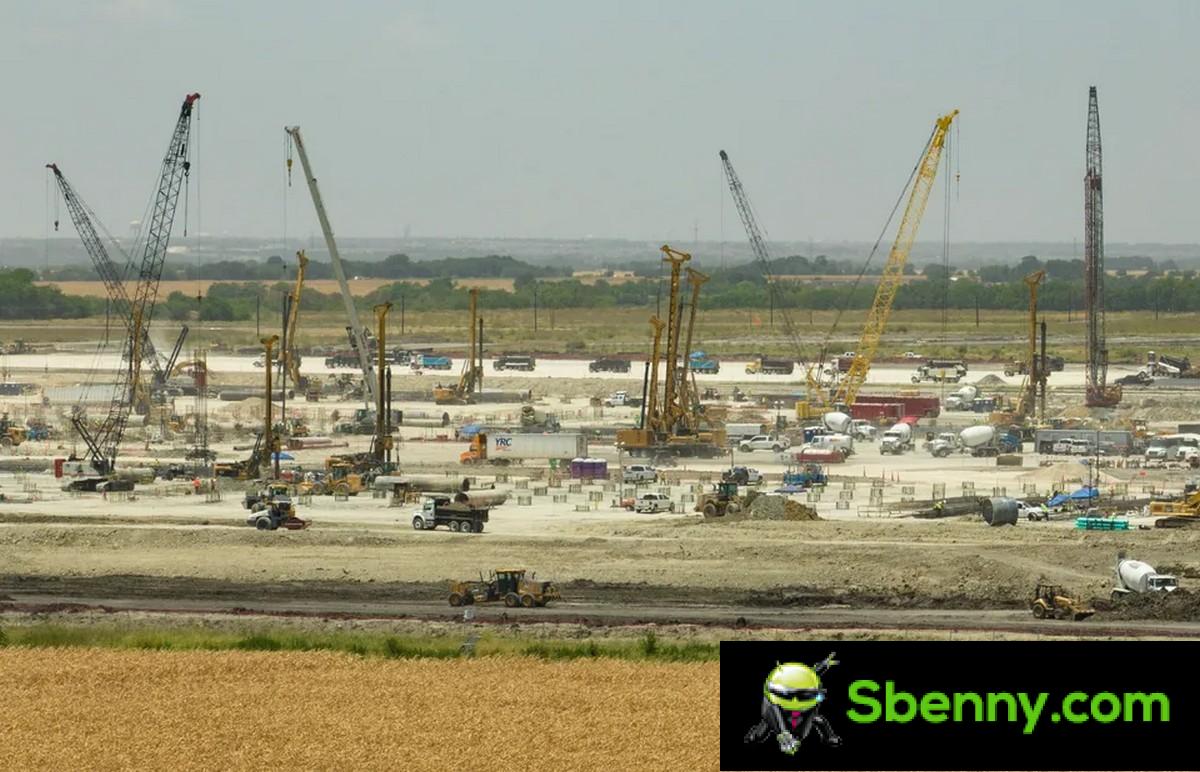
Samsung is building a fab chip in the Austin, Texas area of the United States, which is estimated to cost around $ 17 billion. But this is far from the only fab that the company is considering building in that area.
In fact, Samsung has applied for tax breaks for 11 other fabs it wants to build in Texas, in the Taylor and Manor districts.
Of course, this is far from a done deal – and no doubt a lot depends on whether or not Samsung gets those tax breaks – add up to a whopping $ 4.8 billion. If not, these plans will clearly be shelved. But if it received the incentives from local authorities, the total investment in the 11 factories could amount to about $ 192 billion, which is just a staggering figure.

Samsung could also create more than 10,000 jobs in the area if all of that goes well. In fact, if all goes well, this will be the largest economic investment in Central Texas history.
Two of the 11 proposed factories would be in Austin and nine in Taylor, a city of about 17,000 people 25 miles northeast of Austin, where the Samsung building currently under construction is also located. The Austin plants would represent $ 25.4 billion of the new investment and 1,800 jobs, while Taylor would get $ 167.6 billion and 8,200 jobs, respectively.
The first of these factories could be operational in 2034, while two of them are only slated for 2042. That said, it’s important to note that none of this is binding – Samsung hasn’t guaranteed it will actually build any facilities, so plans could however be modified or set aside altogether, even if the company gets its incentives.
A Samsung spokesperson said the incentive applications just filed are part of the company’s long-term planning. He is trying to “assess the feasibility of potentially building additional manufacturing facilities in the United States.” The Texas incentive program will expire at the end of this year, and this has led to a wave of companies applying for the past few months – Samsung is only the latest to do so.
Still, there are many reasons why the company can actually carry out its plans. For one thing, it already has a very strong presence in Austin, where it has been operating since 1997 and currently employs around 10,000 people, more than anywhere else outside of Korea.


Start a new Thread