
Samsung has added two new sensors to its ISOCELL Vizion range. The first is a time-of-flight (ToF) sensor that measures distance to things, the other is a global shutter image sensor.
Starting with the Samsung ISOCELL Vizion 63D, this is the industry’s first sensor to have a built-in ISP for depth sensing, so it can perform calculations on its own instead of relying on an additional chip. This reduces system power consumption by up to 40% compared to the previous Vizion 33D sensor.
The 63D can capture 320 x 240 px depth information at up to 60 fps and is also capable of a 640 x 480 px mode. It is an indirect ToF sensor, so it measures the phase shift between the emitted and received light, which makes the measurements more accurate. It is a 1/6.4” sensor with 3.5μm pixels.
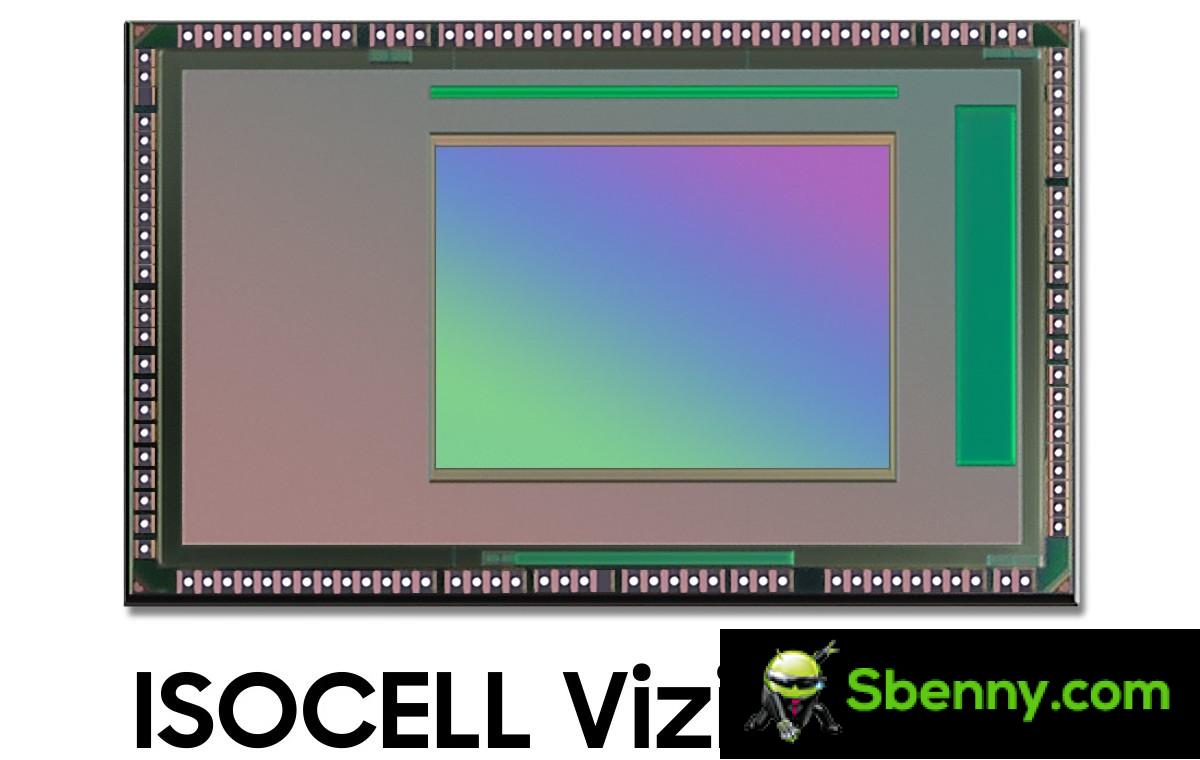
The sensor supports both diffuse and spot illumination models: the former offers high resolution at a short range of 5 m (16 ft), the other extends the maximum range to 10 m (33 ft) at the expense of resolution . The sensor is built with Backside Scattering Technology (BST), which makes it more sensitive to the infrared light it uses.
The Samsung ISOCELL Vizion 63D will be used in service and industrial robots, as well as in XR devices and facial recognition. XR (i.e. AR and VR) is an important focal point for the other sensor as well.
ISOCELL Vizion 931 is a global shutter image sensor. Typically, an image sensor is read line by line, but this means that a fast-moving object would move between the lines over time. This is true even if the camera itself is moving quickly. In any case, you get the so-called “jello” or rolling shutter effect, which makes image recognition tasks even more difficult since the software has to deal with a distorted image.

The Vizion 931 is a global shutter sensor, meaning all pixels are captured at once, leaving no distortion. This is a 640 x 640 px sensor that can be used for iris recognition, eye tracking, and face and gesture detection in devices with head-mounted displays such as the XR headphones.
Such devices will likely need more than one sensor, so Samsung has implemented something called “multi-drop”: this allows you to connect up to four Vizion 931 sensors with a single cable, simplifying product wiring.
Both the Samsung ISOCELL Vizion 63D and ISOCELL Vizion 931 are sampling OEMs around the world. Samsung Electronics could be one of them as the company is rumored to be back in the XR game in a partnership with Google and Qualcomm.


Start a new Thread