
Practical sessions
Practice sessions have the added benefit of providing the opportunity to earn some resource points. These can be used to improve the car’s performance across four main areas. Completing tasks such as track acclimatization or fuel economy racing will reward points, as will achieving certain goals such as setting a particular lap time. This is a clear idea and it really invests you in the research and development of your car, allowing you to choose which direction to go with improvements so that it better suits your strengths. Combined together, these elements of Career Mode give it real depth and allow you to experience, at least in part, what a real Formula 1 driver could be like.
Game
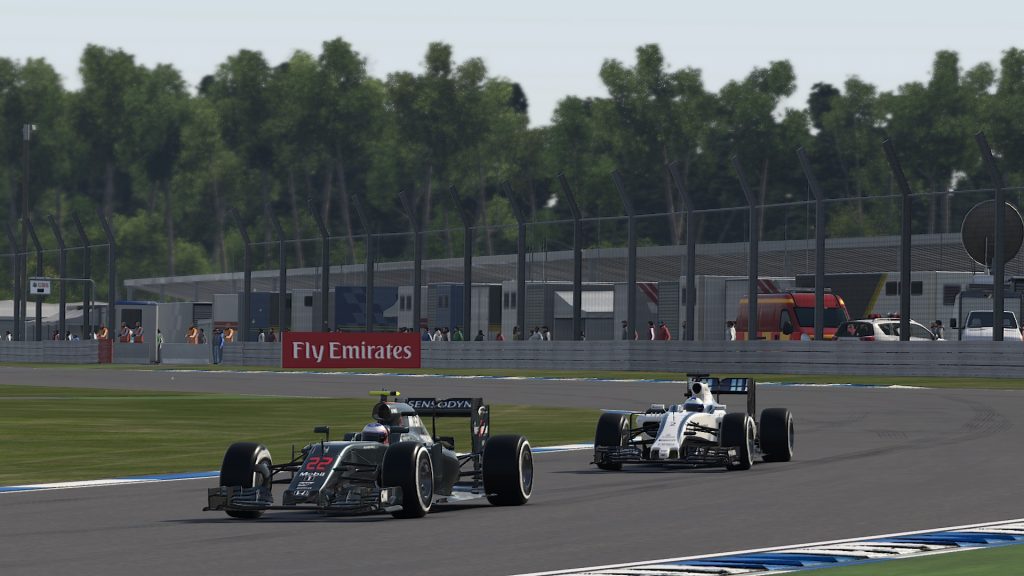
From a gameplay standpoint, F1 2016 is more of an evolution than a revolution. One notable change is that you now have more control over the starting procedure at the start of the race. Now you need to hold the clutch and increase the revs before letting go at the right time for a perfect start. To be honest, it’s a tough thing to master, but that adds some danger to racing and allows you to really earn a few spots if you nail it. Handling, tire wear and AI driver behavior are roughly the same as its predecessors. There are no noteworthy improvements in any area – everything feels responsive and finely balanced.
What is outstanding is the ability to increase the difficulty of the game. Experienced drivers may want to turn off all driving aids and go full weeks, which include three free practice sessions, qualifying and a 90-minute race. Others may want a little more flexibility when it comes to enforcing the rules. The options available give you the ability to make those decisions. Perhaps the best thing about this is that it allows you to slowly become a better driver by turning off things like traction control and ABS braking as you become more confident in your abilities. However, you must never take a huge step that would leave you uncomfortable.


Start a new Thread