
Presentation
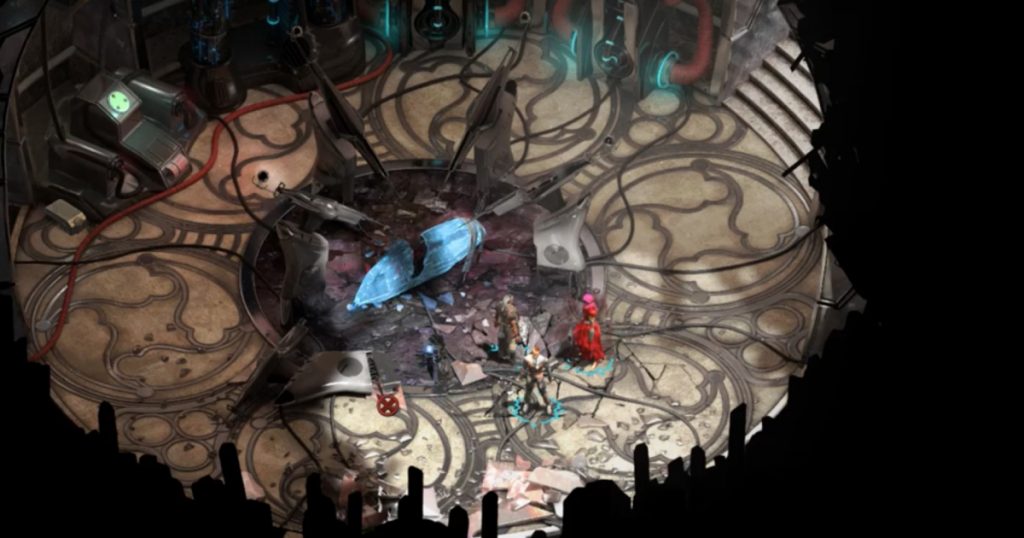
These environments have the level of hyperspecificity of an author. Everything you see is meticulous and the construction of the world is unlike anything else. Once I saw how many details went into each seemingly meaningless transaction, the game won me over.
As a huge fan of games like Myst and Fallout, I was fascinated by the all too familiar environmental details of western-style RPGs. The playing fields you run through serve as a visual aid to the actual story, which simultaneously exists in your imagination through the game’s burgeoning precision text. To put it in a simplistic way, this video game is like reading a book. As a sequel and spiritual successor to the 1999 cult hit Planetscape: Torment, one would expect nothing less.
Fight
Combat is turn-based, just like you might find in a D&D campaign. You are in charge of your party, which has movement, attacks, special abilities and use of items at your disposal. You will earn, lose and replace party members in a progression that will bury you alive if you are a completist.
You should experience Torment in many different ways across multiple playthroughs, ideally changing your approach each time. In other words, there is no need to be precious about a particular decision. Just go with it!
I found that the combat has incredible depth, but at the same time it felt pretty hollow to me. This will probably sound ignorant, but many moves / attacks felt like iterations of the same thing. So many of the combat mechanics seemed to be guessing.
Torment is a game that explains itself too much while still feeling rather dull. Despite this, there were many hours of fun. But understanding the deeper layers of Torment felt a long way off, especially at the speed at which I was playing.


Start a new Thread