
Last year Indian carrier Reliance Jio (in partnership with Google) unveiled the JioPhone Next, a super affordable 4G smartphone, which could be purchased for as little as ₹ 2,000 ($ 27 at the time) with a monthly plan starting from ₹ 300 (and a ₹ 501 processing fee). Buying the phone cost ₹ 6,500 ($ 87 at the time).
The goal of this device was to move millions upon millions of Jio subscribers from their outdated 2G and 3G phones to the carrier’s 4G network. According to Counterpoint analysts, the company will build a 5G follow-up to get people to switch to Jio’s new 5G network once coverage expands enough.
The phone is expected to be between ₹ 8,000-12,000 (under $ 100 to under $ 150). Looking further into the future until 2024, the carrier will also want to launch an affordable mmWave phone, analysts say.
Information leaked about the JioPhone Next 5G claims that it will be upgraded to a Snapdragon 480 chipset with 4GB of RAM and 32GB of storage, plus it will have a larger 6.5 “LCD (HD +) and a larger battery from 5,000 mAh (from 5.45 “and 3,500 mAh, respectively).


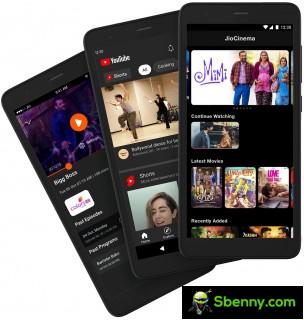
The JioPhone Next (4G)
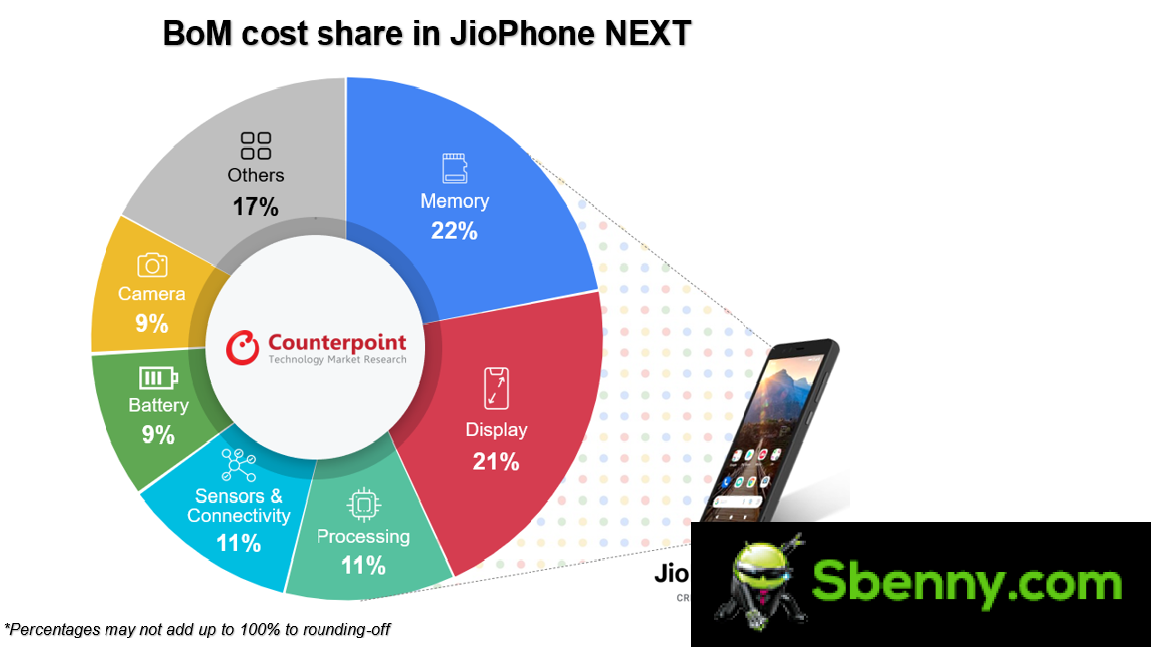
The predictions on cheap 5G phones come at the end of Counterpoint’s detailed bill of materials (BoM) report for the JioPhone Next 4G, which costs around $ 58 to build. It is manufactured at Reliance Jio’s Neolync facilities in southern India using a mix of components from Chinese, Korean and American suppliers.
The Next’s display, a 5.45-inch LCD with a resolution of 720 x 1,440 px, comes from TXD (an emerging display manufacturer from China) and is covered in Gorilla Glass 3 from Corning. The entire assembly costs almost one fifth of the total BOM.
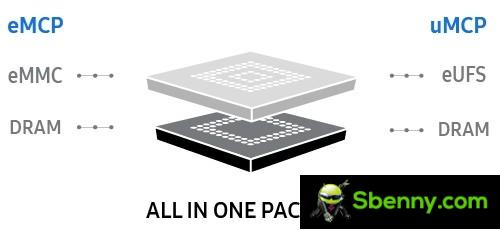
Storage and memory are also expensive – 2GB of LPDDR3 RAM and 32GB of eMMC flash. These come in the form of an “integrated multi-chip package” (eMCP), which stacks RAM and storage chips for a small footprint on the motherboard. The eMCP comes from Samsung and represents about 22% of the BoM.
Add the chipset, Qualcomm’s QM215, and half the budget has been spent. That doesn’t even cover the additional connectivity hardware, sensors, battery, and more. The detailed breakdown of the BOM is given below and you can also read Counterpoint’s full report for more details.
To make the most of the phone’s limited resources, Jio partnered with Google to customize Android Go and turn it into Pragati OS. The higher cost of 5G components will make the new JioPhone more expensive, even with optimized builds, supply chains and software.


Start a new Thread