
We put the Google Pixel 9 Pro Fold through our rigorous suite of SBMARK Camera tests to measure its performance in terms of photo, video, and zoom quality from an end-user perspective. This article takes a closer look at how the device performed across a range of tests and several common use cases, and aims to highlight the most important results from our tests with an excerpt of the data we captured.
Overview
Camera Key Specifications:
- Primary: 48MP 1/2″ sensor, f/1.7 aperture lens, 82° field of view, Quad PD, OIS
- Ultra Wide Angle: 10.5MP 1/3.4″ sensor, f/2.2 aperture lens, 127° field of view, Dual PD
- Telephoto: 10.8MP 1/3.2″ sensor, f/3.1 aperture lens, 23° field of view, Dual PD, OIS, 5x optical zoom
Pros
- Good exposure in all test conditions, both for photos and videos
- Fast and accurate autofocus in most test conditions
- Fairly low photo noise, even in low light conditions
- Good details in long range telephoto shots
- Effective video stabilization
Against
- Limited dynamic range in high contrast scenes, slight lack of detail in high contrast portraits
- Occasional white balance
- Ghosting in low-light and motion scenes
- Lack of detail in close-up and medium range telephoto shots
- Depth estimation and blur intensity errors are quite low in bokeh shots
- Video noise in all recording conditions
The Google Pixel 9 Pro Fold scored highly in the SBMARK Camera tests, especially for photo capture, and is the best foldable device in our rankings to date. Compared to its predecessor, the Pixel Fold, the new model features a new ultra-wide camera with a shorter focal length, allowing it to fit more of the scene in. There’s also a new macro mode for close-up photography.
Our reviewers were particularly impressed by the Pixel 9 Pro Fold’s fast and accurate autofocus, good exposure in all lighting conditions, and beautiful colors. Still images are now captured in HDR format by default, offering improved contrast and color when viewed on a compatible HDR display.
However, the Google Pixel 9 Pro Fold failed to match the performance of Google’s latest conventional non-foldable devices. For a smartphone in its premium price range, video output could have been better. Our testers observed fairly high levels of noise in all lighting conditions. Telephoto images at close and medium ranges lacked detail, and in bokeh mode, the amount of blur was quite low, with some isolation errors around the subject.
Test summary
About SBMARK Camera Tests: SBMARK camera ratings are conducted in laboratories and in real-world situations using a wide variety of subjects. Scores are based on objective tests where results are calculated directly from measurement software on our laboratory setups, and perceptual tests where a sophisticated set of parameters allows a panel of image experts to compare aspects of image quality that require human judgment. A smartphone test involves a team of engineers and technicians for approximately one week. Photo, zoom and video quality are evaluated separately and then combined into an overall score for comparing cameras in different devices. For more information on the SBMARK Camera protocol, click here. More details on smartphone camera scores can be found here. The following section summarizes key elements of SBMARK’s comprehensive testing and analysis. Full performance ratings are available upon request. Contact us to learn how to receive a full report.
Google Pixel 9 Pro Fold vs. Ultra-Premium Camera Scores
This chart compares SBMARK scores for photo, zoom and video between the tested device and the references. The average and maximum scores for the price segment are also shown. The average and maximum scores for each price segment are calculated based on the SBMARK database of tested devices.
Photo
150
Huawei PURA 70 ULTRA
Huawei PURA 70 ULTRA
About SBMARK Camera Photo Tests
For evaluation and analysis, SBMARK engineers capture and evaluate more than 2,600 test images in both controlled laboratory environments and natural outdoor, indoor and low-light scenes, using default camera settings. The photographic protocol is designed to account for key use cases and is based on typical shooting scenarios, such as portrait, family and landscape photography. Evaluation is performed by visually inspecting images Cons a natural scene reference and performing objective measurements on chart images captured in the laboratory under various lighting conditions from 1 to 1,000+ lux and color temperatures from 2,300K to 6,500K.
The Google Pixel 9 Pro Fold is the best foldable phone for photography we’ve tested so far, far outperforming its foldable rivals. Subject exposure was excellent in all lighting conditions, but dynamic range was a little more limited on Google’s latest foldable than on last year’s Pixel Fold. Our testers observed slightly more highlight clipping, as well as a slight loss of contrast in HDR conditions. In terms of color, our experts noted some white balance casts, but otherwise color rendition was fairly accurate and pleasing.
As with its predecessor, autofocus was a strong point, thanks in particular to the zero shutter lag capabilities that allow for instantaneous capture. The texture/noise trade-off was quite good, with noise well controlled, even in low-light conditions. However, detail levels could be low in high-contrast portrait scenes. We also observed slight ghosting artefacts in some scenes with motion.
Google Pixel 9 Pro Fold vs. Ultra-Premium Photo Scores
Photographic tests analyze image quality attributes such as exposure, color, texture, and noise under various lighting conditions. Autofocus performance and artifacts are also evaluated on all images captured under controlled laboratory conditions and in real-world images. All of these attributes have a significant impact on the final quality of images captured with the tested device and can help to understand the main strengths and weaknesses of the camera.

Exposure
111
Huawei PURA 70 ULTRA
Huawei PURA 70 ULTRA

Google Pixel 9 Pro Fold – Good exposure but slight highlight clipping

Google Pixel Fold – Good exposure, very light highlight clipping

Samsung Galaxy Z Fold6 – Good exposure and wide dynamic range

Color
118
Huawei PURA 70 ULTRA
Huawei PURA 70 ULTRA
Exposure and color are the key attributes for technically good images. For exposure, the primary attribute evaluated is the brightness of the main subject across various use cases such as landscape, portrait, or still life. Other factors evaluated are contrast and dynamic range, i.e. the ability to render details in both the bright and dark areas of the image. Repeatability is also important because it demonstrates the camera’s ability to provide the same rendering when taking multiple images of the same scene.
For color, the image quality attributes analyzed are skin tone rendition, white balance, color hue, and repeatability. For color and skin tone rendition, we penalize unnatural colors but respect the manufacturer’s choice of color signature.
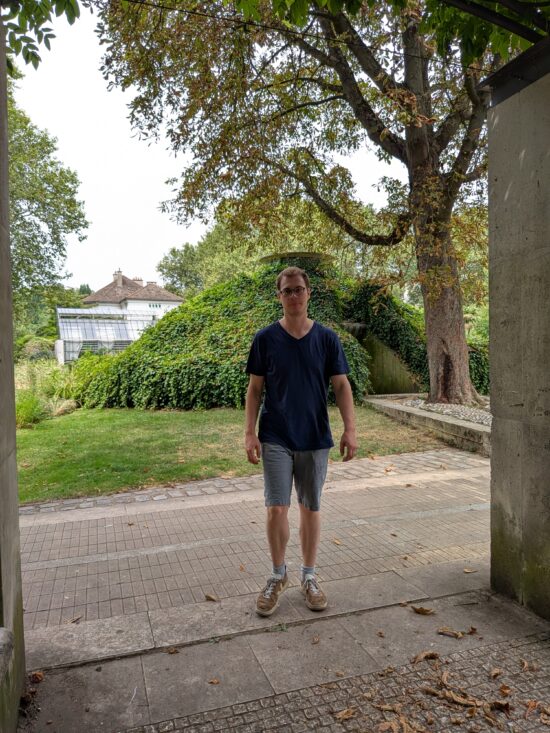
Google Pixel 9 Pro Fold – Fairly neutral white balance and pleasing colors
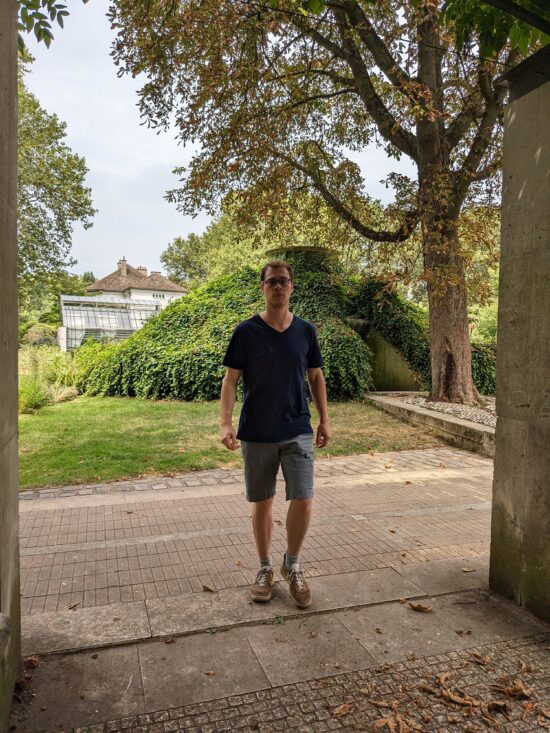
Google Pixel Fold – Visible Orange Cast Affects Skin Tones

Samsung Galaxy Z Fold6 – Neutral white balance but slightly oversaturated colors

Auto focus
114
Huawei PURA 70 ULTRA
Huawei PURA 70 ULTRA
Autofocus tests focus on focus accuracy, focus repeatability, shutter lag, and depth of field. Shutter lag is the difference between when the user presses the capture button and when the image is actually taken. It includes the speed of focusing and the ability of the device to capture images at the right time, what is called “zero shutter lag” capability. While a shallow depth of field can be nice for a single subject portrait or a close-up shot, it can also be a problem in some specific conditions such as group portraits; both are tested. Focus accuracy is also evaluated in all real-world images taken, from infinity to close-up objects and in low-light conditions to outdoors.
Autofocus speed and irregularity: 20Lux Δ4EV Tungsten tripod

Structure
104
Apple iPhone 15 Pro
Apple iPhone 15 Pro
Texture tests analyze the level of detail and texture of subjects in images shot in the lab and in real-life scenarios. For natural shots, special attention is paid to the level of detail in the bright and dark areas of the image. Objective measurements are performed on chart images taken under various lighting conditions from 1 to 1000 lux and different types of dynamic range conditions. The charts used are the proprietary SBMARK (DMC) chart and the Dead Leaves chart.
SBMARK CHART (DMC) Detail Retention Score vs. Lux Levels for Tripod and Handheld Conditions
This graph shows the evolution of the DMC Detail Retention Score with lux level, for two holding conditions. The DMC Detail Retention Score is derived from an AI-based metric trained to evaluate texture and detail rendering on a selection of crops from our SBMARK chart.

Noise
103
Huawei PURA 70 ULTRA
Huawei PURA 70 ULTRA
Noise tests analyze various noise attributes such as intensity, chromaticity, grain, structure on real images and chart images taken in the laboratory. For natural images, special attention is paid to noise on faces, landscapes, but also on dark areas and high dynamic range conditions. Noise on moving objects is also evaluated on natural images. Objective measurements are performed on chart images taken in various conditions from 1 to 1000 lux and different types of dynamic range conditions. The chart used is the Dead Leaves chart and the measurement standardized as Visual Noise derived from ISO 15739.
Evolution of visual noise with illuminance levels in portable conditions
This graph shows the evolution of the visual noise metric with lux level in handheld conditions. The visual noise metric is the average of the visual noise measurement across all Dead Leaves plot patches in the AFHDR configuration. The SBMARK visual noise measurement is derived from the ISO15739 standard.

Artifacts
79
Xiaomi Redmi 12 5G
Xiaomi Redmi 12 5G
Artifact grading examines lens shading, chromatic aberrations, geometric distortion, edge ringing, halos, ghosting, quantization, unexpected color shifts, among other types of possible unnatural effects on photos. The more severe and frequent the artifact, the higher the points deducted from the score. The main artifacts observed and the corresponding loss of points are listed below.
Penalty for main photo artifacts
Preview
77
Apple iPhone 14 Pro Max
Apple iPhone 14 Pro Max
Preview tests analyze the image quality of the camera app’s image preview, with a focus on the difference between capture and preview, particularly with respect to dynamic range and the application of bokeh. The smoothness of exposure, color, and focus adaptation when zooming from the minimum to the maximum zoom factor available is also evaluated. Preview frame rate is measured using the LED Universal Timer.

Google Pixel 9 Pro Fold – Capture
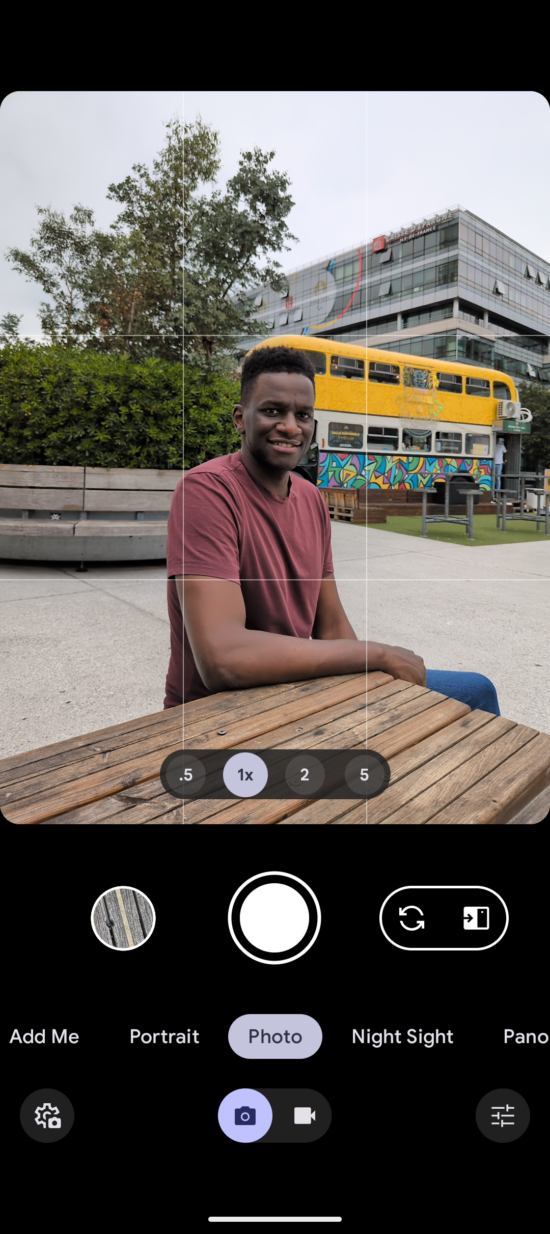
Google Pixel 9 Pro Fold – Preview – Rendering quite similar to the capture, slightly stronger contrast
Enlarge
124
Huawei PURA 70 ULTRA
Huawei PURA 70 ULTRA
About SBMARK Camera Zoom Tests
SBMARK engineers capture and evaluate over 400 test images in controlled laboratory environments and in natural scenes, indoors, and in low light, using the camera’s default settings and pinch zoom at various zoom factors, from ultra-wide to ultra-long range zoom. Evaluation is performed by visually inspecting images Cons a natural scene reference and by performing objective measurements of chart images captured in the laboratory under various conditions from 20 to 1000 lux and color temperatures from 2300K to 6500K.
In our tests, zoom performance varied widely depending on the zoom factor and camera module in use. At the ultra-wide end of the zoom spectrum, the new model features a 13mm equivalent lens, compared to the Pixel Fold’s 16mm. The increased field of view allows for a wider view, bringing Google’s new foldable phone in line with many other ultra-premium devices. In our tests, the ultra-wide module performed decently overall, but the level of detail it captured could have been higher.
The telephoto zoom performance at close and medium ranges left some room for improvement, with texture levels being very low, especially when shooting indoors and in low-light conditions. Noise was well under control, but images lacked color saturation and contrast. Things looked much better at the longer end of the telephoto zoom. After switching to the dedicated 5x telephoto module, the camera produced pretty convincing image quality overall with good detail.
Google Pixel 9 Pro Fold Zoom scores vs Ultra-Premium
This graph illustrates the relative scores for the different zoom ranges evaluated. The x-axis is expressed in 35mm equivalent focal length. Zoom in scores are displayed on the right and zoom out scores on the left.

Wide
102
Huawei PURA 70 ULTRA
Huawei PURA 70 ULTRA
These tests analyze the performance of the ultra-wide-angle camera at different focal lengths from 12mm to 20mm. All image quality attributes are evaluated, with particular attention to artifacts such as chromatic aberrations, lens softness, and distortion. The images below are an excerpt of tested scenes.
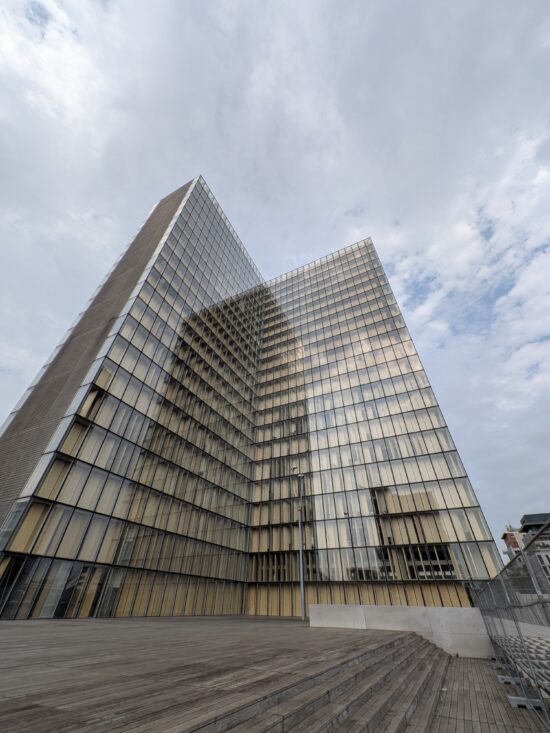
Google Pixel 9 Pro Fold – Wide field of view, very little noise
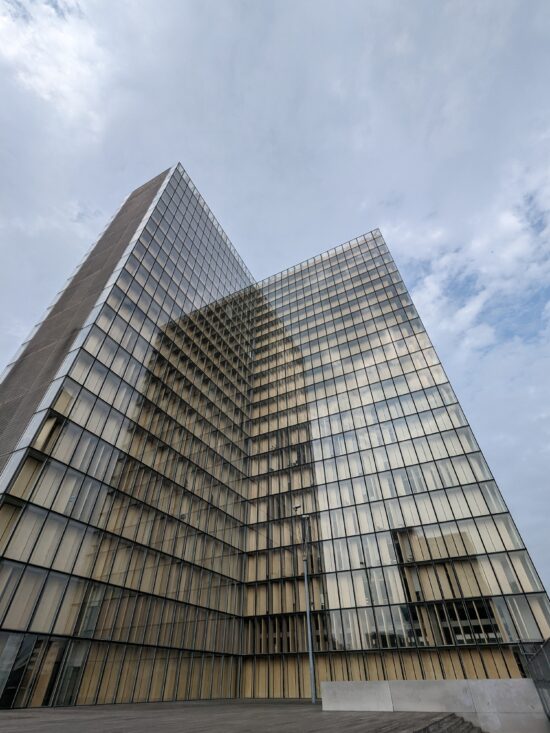
Google Pixel Fold – Narrower field of view, slight noise
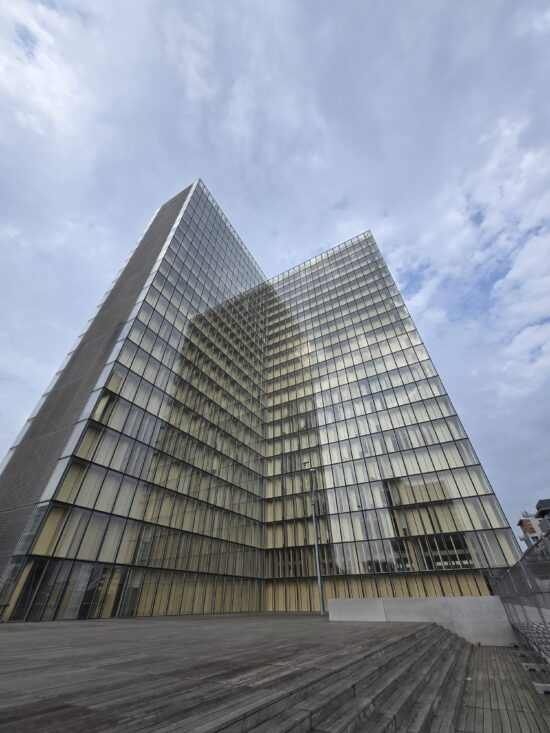
Samsung Galaxy Z Fold6 – Wide field of view, slight noise

TV
93
Xiaomi 14 Ultra
Xiaomi 14 Ultra
All image quality attributes are evaluated at focal lengths from approximately 40mm to 300mm, with particular attention to texture and detail. The score is derived from a series of objective laboratory measurements and perceptual analysis of real images.
SBMARK (DMC) Detail Retention Score by Focal Length
SBMARK (DMC) Detail Retention Score by Focal Length
This graph shows the evolution of the DMC Detail Retention Score versus the full-frame equivalent focal length for different lighting conditions. The x-axis represents the equivalent focal length measured for each corresponding shooting distance and the y-axis represents the maximum Detail Retention metric score: a higher value indicates better quality. The large dots correspond to the zoom ratio available in the camera application UI.
SBMARK (DMC) Detail Retention Score by Focal Length
This graph shows the evolution of the DMC detail preservation score versus the full-frame equivalent focal length for different lighting conditions. The x-axis represents the equivalent focal length measured for each corresponding shooting distance and the y-axis represents the maximum score of the detail preservation metric: a higher value indicates better quality. The large dots correspond to the zoom ratio available in the camera application UI.
SBMARK (DMC) Detail Retention Score by Focal Length
This graph shows the evolution of the DMC detail preservation score versus the full-frame equivalent focal length for different lighting conditions. The x-axis represents the equivalent focal length measured for each corresponding shooting distance and the y-axis represents the maximum score of the detail preservation metric: a higher value indicates better quality. The large dots correspond to the zoom ratio available in the camera application UI.
Video
131
Apple iPhone 15 Pro
Apple iPhone 15 Pro
About SBMARK Camera Video Tests
SBMARK engineers capture and evaluate more than 2.5 hours of video in controlled laboratory environments and natural low-light scenes, indoors and outdoors, using the camera’s default settings. The evaluation consists of visually inspecting natural video captured under various conditions and performing objective measurements on lab-recorded chart videos under various conditions from 1 to 1000+ lux and color temperatures from 2,300K to 6,500K.
The Google Pixel 9 Pro Fold is Google’s first foldable phone that we tested for video using the 10-bit HDR video mode. The results were mixed, with great image stabilization keeping things steady and smooth, accurate autofocus, and accurate subject exposure in all lighting conditions.
However, switching to an HDR video format did introduce some noticeable noise, especially when recording in low-light conditions. Our experts also noted some local instabilities in exposure adaptation, which could be expected in most lighting conditions. Additionally, the texture/noise trade-off in the video could have been better, with detail levels being quite low in difficult, high-contrast scenes.
Google Pixel 9 Pro Fold vs. Ultra-Premium Video Scores
Exposure
106
Apple iPhone 15 Pro
Apple iPhone 15 Pro
Color
101
Honor Magic6 Pro
Honor Magic6 Pro
Exposure tests evaluate the brightness of the main subject and the dynamic range, i.e. the ability to make details visible in both the bright and dark areas of the image. Exposure stability and temporal adaptation are also analyzed.
Image quality color analysis examines color rendition, skin tone rendition, white balance, color hue, white balance stability and its adaptation to changing light.
Google Pixel 9 Pro Fold – Good exposure, nice colors, slight instabilities in exposure adaptation
Google Pixel Fold – Good display, nice colors, minor adjustment issues
Samsung Galaxy Z Fold6 – Good exposure, nice colors, slight adjustment and autofocus instabilities
Structure
90
Oppo Find X6 Pro
Oppo Find X6 Pro
Texture tests analyze the level of detail and texture of real videos and laboratory-recorded graphic videos. Natural video recordings are evaluated visually, with particular attention to the level of detail in bright and dark areas. Objective measurements are performed on graphic images taken under various conditions from 1 to 1000 lux. The graphs used are the SBMARK (DMC) chart and the Dead Leaves chart.
SBMARK CHART (DMC) Video Detail Retention Score vs. Lux Levels
This graph shows the evolution of the DMC Detail Preservation video score with the level of lux in the video. The DMC Detail Preservation score is derived from an AI-based metric trained to evaluate the rendering of texture and detail on a selection of crops from our SBMARK chart.
Noise
96
Oppo Find X7 Ultra
Oppo Find X7 Ultra
Noise tests analyze various noise attributes such as intensity, chromaticity, grain, structure, temporal aspects on real video recordings and lab-shot chart videos. Natural videos are evaluated visually, with special attention to noise in dark areas and under high dynamic range conditions. Objective measurements are performed on chart videos recorded under various conditions from 1 to 1000 lux. The chart used is the SBMARK Visual Noise Chart.
Evolution of spatial visual noise with the illuminance level
Temporal evolution of visual noise with the level of illumination
This graph shows the evolution of temporal visual noise with lux level. Temporal visual noise is measured on the visual noise graph in the video noise configuration.

Stabilization
115
Apple iPhone 15 Pro
Apple iPhone 15 Pro
Stabilization rating tests the device’s ability to stabilize footage using software or hardware technologies such as OIS, EIS, or any other means. The rating looks at residual motion, smoothness, yellow artifacts, and residual motion blur in walking and running usage cases under various lighting conditions. The video below is an excerpt from one of the scenes tested.
Google Pixel 9 Pro Fold – Effective stabilization, very little camera shake
Google Pixel Fold – Effective stabilization, despite slight camera shake during the running sequence
Samsung Galaxy Z Fold6 – Effective stabilization, very little camera shake
Artifacts
80
Xiaomi 12S Ultra
Xiaomi 12S Ultra
Artifacts are evaluated with MTF and ringing measurements on the SFR chart in the lab, as well as frame rate measurements using the LED Universal Timer. Natural videos are evaluated visually with special attention to artifacts such as aliasing, quantization, blocking, and hue shift, among others. The more severe and frequent the artifact, the higher the points deducted from the score. The main artifacts and the corresponding point loss are listed below.
Penalty for major video artifacts


Start a new Thread