
The cores of the second generation ARMv9 processors have just been introduced by the parent company: Cortex-X3 and A715. The small A510 core also received a small refinement. The new design will allow for improved performance, greater efficiency and new, more powerful configurations.

Let’s start with the Cortex-X3. According to ARM, this is the third year of two-digit IPC growth (Instructions Per Cycle, i.e. how much the CPU can do at a set clock speed). Like its predecessors, the X-core focuses on maximum performance.
Compared to the best Android chipsets right now (which use Cortex-X2), the new core will offer a 25% performance increase (an average of the improvements shown on Geekbench 5 and two SPECint tests). As for Windows designs on ARM (which lag slightly behind smartphone chips), the expected improvements will be 34%.

Note: This is a per-core enhancement, ARM has redesigned the supporting hardware to allow the use of more CPU cores in performance oriented chipsets.
The new Cortex-A715 core completes ARM’s transition from 32-bit processors (as far as smartphones are concerned). This allowed the engineering team to make the instruction decoder hardware 4 times smaller. Although the X2 was already a 64-bit core, ARM had more time to work on and improve the X3’s design to better fit the ARMv9 instruction set (which the company says is more predictable and smooth than ARMv8).
Going back to the A715, it is 20% more energy efficient than the A710 for the same performance. Or it can provide 5% more performance for the same power consumption (this assumes the cores are manufactured on the same node).

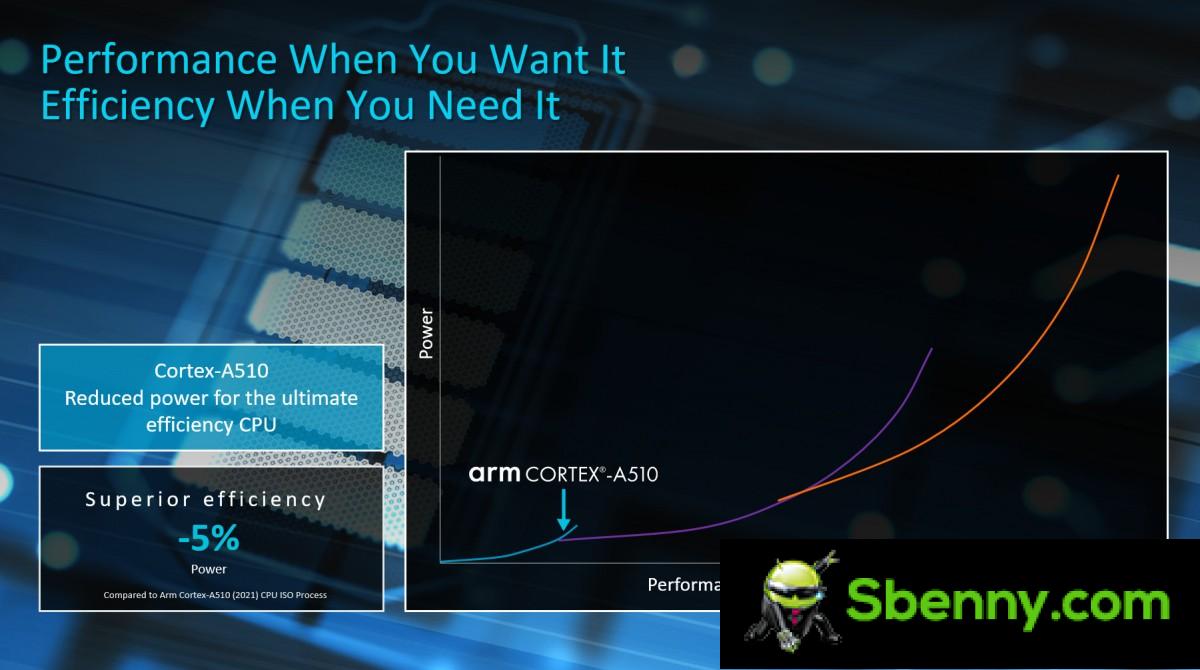
There are no new small cores, but with some tweaks ARM managed to do the Cortex-A510 5% more energy efficiency than its 2021 incarnation.
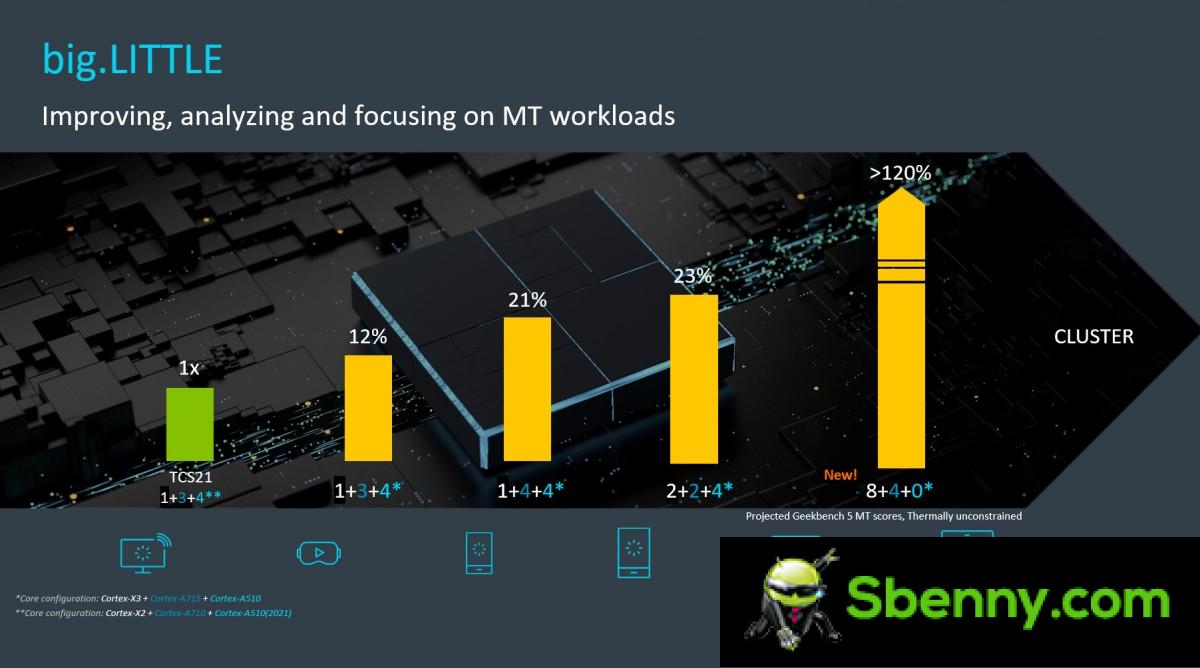
Let’s zoom out from the main level and look at the entire chipset. ARM has reworked its DynamIQ shared drive system to allow processors up to 12 cores with 16MB of L3 cache. And note the composition: the most powerful designs will feature 8x Cortex-X3 and 4x Cortex-A715 without small cores.
1 + 3 + 4 designs like the current flagship chips will still be possible, as well as 1 + 4 + 4 and 2 + 2 + 4. This will allow ARM’s customers (Qualcomm, Samsung, MediaTek) to design chips that perfectly match a particular performance and power package.


Start a new Thread