
Samsung’s robust XCover line dates back to 2010 and started with feature phones, but even when it moved into smartphones it was never a premium line. For hard + premium there was the Galaxy S Active line.
The Samsung Galaxy S4 Active was introduced in 2013. This was the first S-phone with an IP rating for dust and water resistance: IP67, meaning “dustproof” and “immersion up to 1 m/ 3.3 feet” for half an hour. This was a year before the Galaxy S5, which had both an IP67 rating and a removable back cover (though, as you’ll recall, the S6 dropped the IP rating before the S7 reintroduced it).
There were some downgrades, for example the display was an LCD instead of Super AMOLED and it was protected by Gorilla Glass 2 (instead of GG3 like on the regular S4). Additionally, the main camera has been downsized from 13MP to 8MP. Interestingly, the Galaxy S4 Active used a Snapdragon 600 chipset instead of the usual Exynos 5410 Octa. Samsung later released an enhanced version of the Galaxy S4 with a more powerful Snapdragon 800 and added an active version of that too
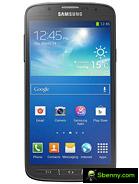

Samsung Galaxy S4 Active • Samsung Galaxy S4 • Samsung Galaxy S4 Active LTE-A • Samsung Galaxy S4
The following year came the Galaxy S5, a phone that was already dust and water resistant, so an S Active made even less sense. However, the Galaxy S5 Active was launched as an AT&T exclusive.
For the S5 Active has added MIL-STD-810F testing to the mix. The S Active phones also made a statement with grippy textures on the back panels and exposed screws.
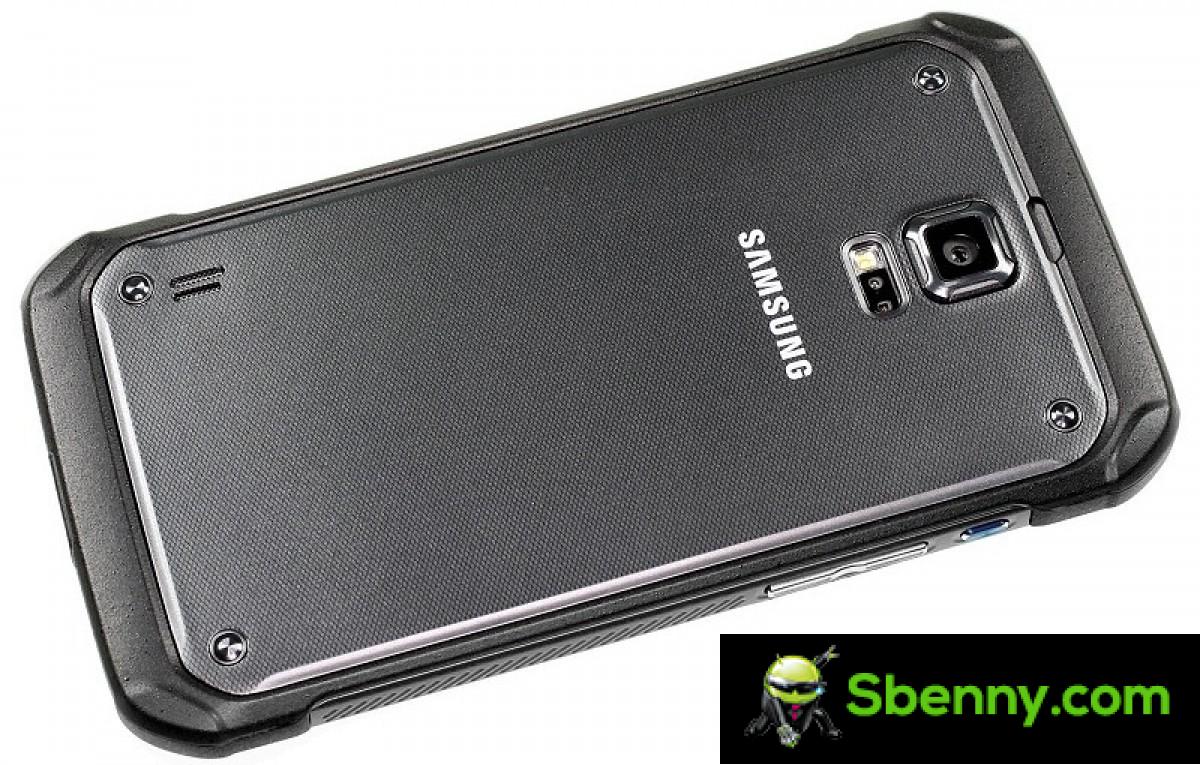
The Samsung Galaxy S5 Active looked the part
The Galaxy S5 Active was much closer to the regular S5, with the same Super AMOLED display, same camera, and same chipset. The only two downgrades were the missing wireless charging and the microUSB port, which reverted to USB 2.0 (the Galaxy S5 was one of the few phones to use microUSB 3.0).

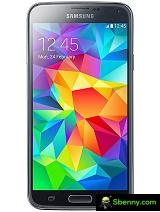
Samsung Galaxy S5 active • Samsung Galaxy S5
You may have noticed the physical buttons on the front. Not so unusual for the time, the S4 and S5 still had physical home buttons. However, the S Active also had physical Back and Menu buttons instead of capacitive ones like on more urban S-phones.
They work when wet and while you are wearing gloves, capacitive buttons are much less reliable in such situations. Unfortunately, the big new Home button didn’t have a built-in fingerprint reader (and the reader hasn’t been moved anywhere; the Actives simply didn’t have one). Samsung missed the opportunity to add a customizable button for extra actions, although it fixed the mistake later.
The Samsung Galaxy S6 Active was also an AT&T exclusive. This was more necessary than the S5 Active since the regular S6 lacked the dust and water resistance of the S5. However, it was also the first Galaxy S with a non-removable battery and for that it attracted a lot of hate.
Surely the outdoorsy S6 Active had a user-accessible battery, right? Wrong, but at least Samsung increased the capacity from 2,550 mAh on the standard S6 to 3,500 mAh on the S6 Active (and kept wireless charging this time). This had a huge impact on battery life as it increased the endurance rating in our tests from 73 hours to 109 hours. Everything else was more or less the same, except for the IP68 rating (up to 1.5m underwater for 30 minutes).


Samsung Galaxy S6 active • Samsung Galaxy S6
Another year, another rugged flagship. The Galaxy S7 reintroduced the IP rating (IP68), the Galaxy S7 Active just added MIL-STD-810G compliance. It had a plastic back instead of glass, which was more likely to survive drops and bumps. The battery was even larger (4,000 mAh vs. 3,000 mAh), although this time it had much less impact on the endurance rating (96 hours vs. 80 hours).
The S7 Active used a Snapdragon 820 chipset instead of the Exynos 8890, but that’s less of a surprise considering this was once again a phone built for AT&T.

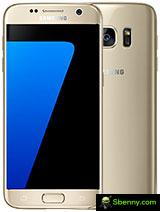
Samsung Galaxy S7 active • Samsung Galaxy S7
And take a look: the Home button contained a fingerprint reader! Even better, the volume rocker on the side has been replaced by the Activity button. Using the Activity Zone app you can set short, long and double press actions.
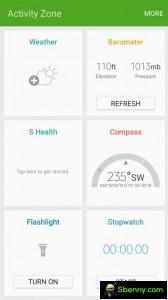
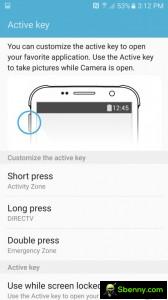
The Activity Zone app on the Galaxy S7 Active
By default, a single tap launched the app, which displayed useful information like weather, barometer/altitude reading, and compass. You could also turn on the flashlight, launch the camera to take a photo, and so on, even if the phone was underwater.

Hiking with the Galaxy S7 Active
Browsing the calendar up to 2017 we find the Samsung Galaxy S8 Active. As you may recall, the Galaxy S8 was a major redesign that adopted a curved screen and eliminated buttons from the front. Finally it’s time for the physical buttons on the S Active phones to shine… oops, they’re gone too, the fingerprint reader has been moved to the back. As for the front, at least Samsung went with a flat screen so you can more easily add a screen protector. The Activity button is also gone, replaced by the Bixby button.
This year there were versions of the Galaxy S8 Active for AT&T, T-Mobile and Sprint. The chipset is the Snapdragon 835, the same as the North American version of the regular S8. The battery was once again larger, 4,000 mAh versus 3,000 mAh (111 hours versus 84 hours of endurance).


Samsung Galaxy S8 active • Samsung Galaxy S8
This was the end of the Galaxy S Active series. There were rumors of an S9 Active, but no such phone was ever released. Samsung hasn’t given up on rugged S-phones, but has moved towards a different target market: the military one.
The Samsung Galaxy S9 Tactical Edition had access to special radios and tactical apps with names straight out of a Hollywood movie: ATAK (Android Team Awareness Kit), KILSWITCH (Kinetic Integrated Lightweight SoftWare Individual Tactical Combat Handheld), and more.


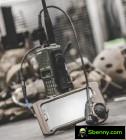
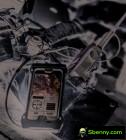
Samsung Galaxy S9 Tactical Edition
Next up was the Samsung Galaxy S20 Tactical Edition. This too was filled with tactical and classified applications as well as a “DualDAR architecture” with two-layer encryption based on NSA standards.


Samsung Galaxy S20 Tactical Edition
The latest in the series is the Samsung Galaxy S23 Tactical Edition, which has been joined by an XCover6 Pro Tactical Edition. These also had DualDAR protection along with things like ATAK, BATDOK (Battlefield Assisted Trauma Distributed Observation Kit), and DeX, which allows soldiers to access secure VPNs.


Samsung Galaxy S23 Tactical Edition and XCover6 Pro Tactical Edition
There are also Galaxy Tab Active tablets, which we skipped to focus on phones. However, the newest product is last year’s Galaxy Tab Active4 Pro, so the tablets have overtaken the S Active phones. But these are more like XCover tablets than a flagship offering (they’re certainly not up to Tab S standards).
It’s likely that Samsung will continue to make Tactical Edition phones in the future, even XCover phones (in addition to military ones, Walmart is a fan of them). But we doubt we’ll see another Galaxy S Active phone.
Other manufacturers have also mostly given up on rugged phones, outside of the brands that specialize in them. For example, there is the Motorola Defy and Defy 2, but those were made by the Bullitt Group, which also makes Cat-branded phones. There are also companies like Doogee and Oukitel that make work phones with night vision cameras, thermal imaging cameras and features that could be useful in the workplace.
Do you think there is still a place in the market for rugged flagships?


Start a new Thread