
Modern smartphone chipsets are awesome – their CPUs reach incredible clock speeds of up to 3.46GHz on the iPhone 14 Pro (Apple A16) series. Android rivals are not far behind at 3.36 GHz with the Snapdragon 8+ Gen 2.
But while increasing the clock speed is an easy way to increase performance, it has major problems, mainly related to the much higher power draw and overheating. Can you go faster by keeping the clock speed low? Sure you can, throw more cores at the problem.
That must have been the train of thought back in 2015 when MediaTek announced the Helio X20, the world’s first 10-core mobile CPU. It had a pair of big Cortex-A72s (ARM’s big core of the day) running up to 2.5GHz, then an island of four Cortex-A53 cores at 2.0GHz and another island of four A53s at 1.4GHz.

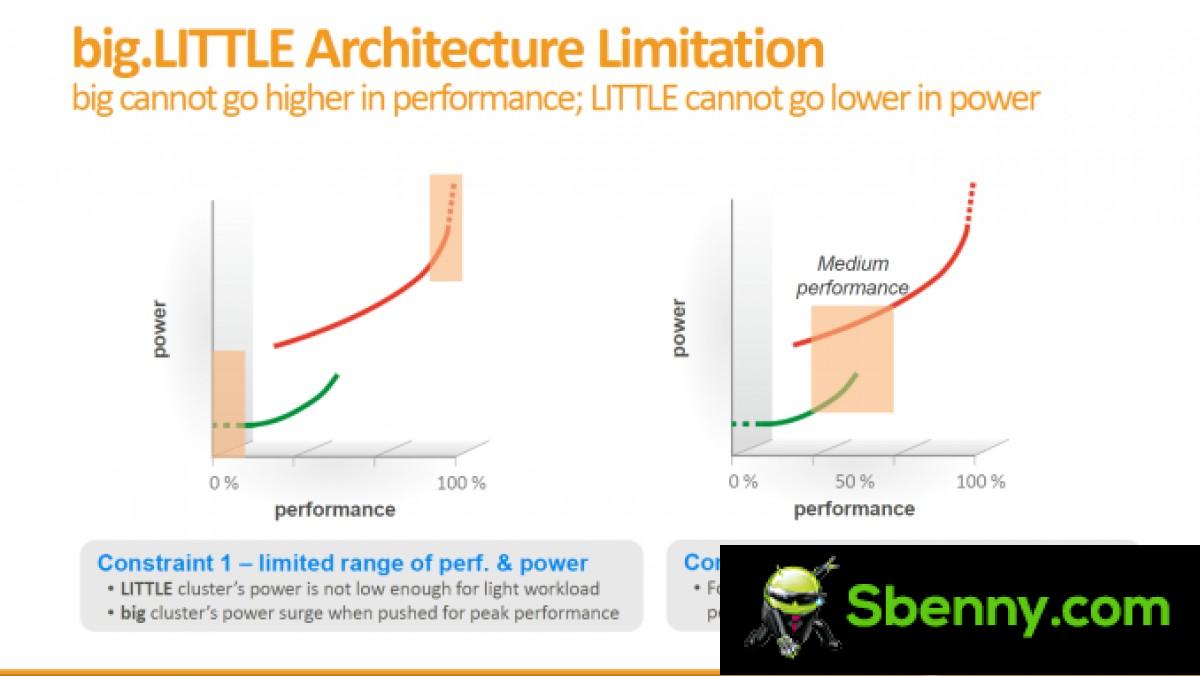
To reiterate our initial point, CPU performance and power draw do not scale linearly. The tiny cores draw energy, but push them too hard and you’re just wasting electricity. Big cores are fast, but they can’t slow down – you’re wasting electricity again.
Here’s MediaTek’s justification for why the two-cluster design is flawed. There is a performance gap between small and large cores, and the two clusters need to be kept relatively close together. Here is an illustration:
With three clusters, however, you can straighten out the speed/horsepower draw curve by stretching it even in the low end and top end.
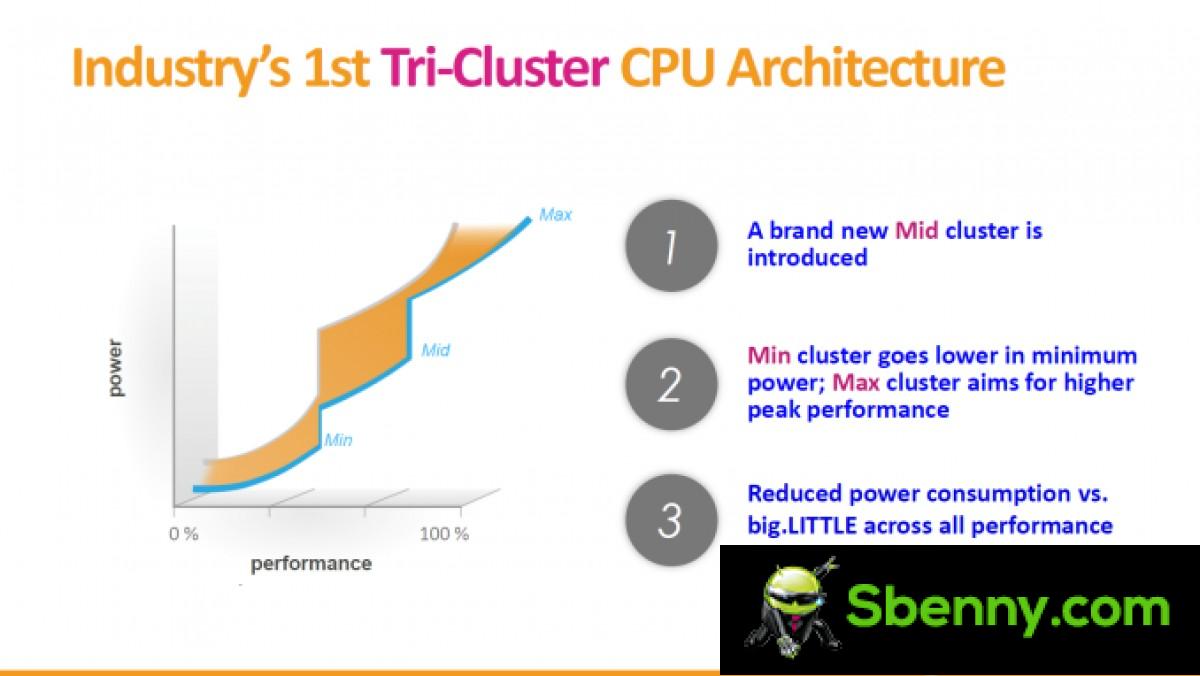
As you may have noticed, it’s really the central cluster that is the innovation here. Optimizes small cores for low power draw and large cores for speed, resulting space between them being filled by medium cores.
According to MediaTek’s estimates, the Helio X20 was 30% more energy efficient than a similar chipset with only two clusters.
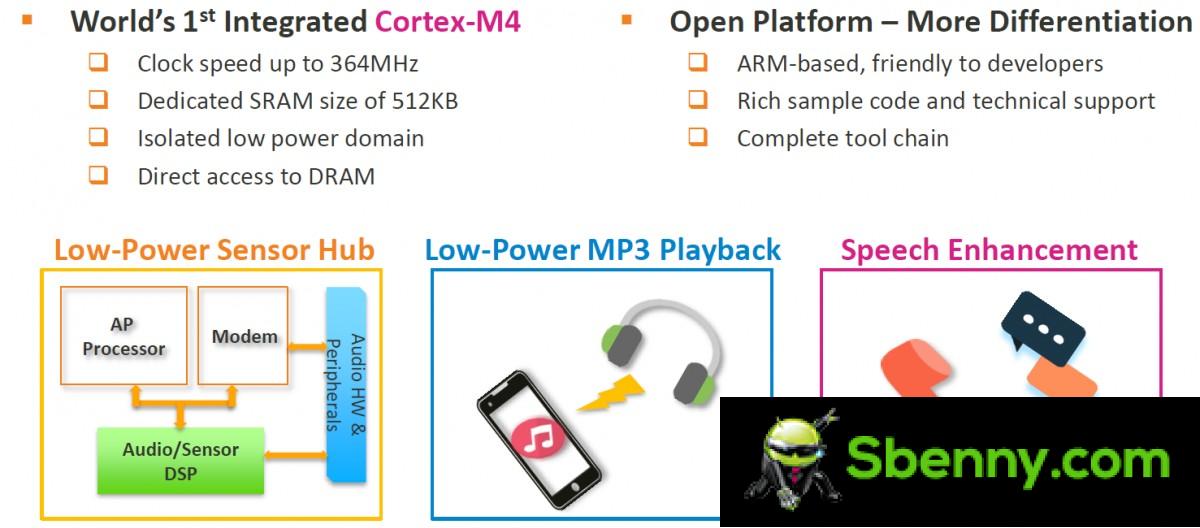
The X20 also had other clever features, such as the “world’s first integrated Cortex-M4”. You don’t hear much about the M-series, these tiny, low-power chips are used in everything from washing machines to smart bands.
And MP3 players. The X20 could offload activity to the Cortex-M4, things like playing MP3s or performing audio compression for voice calls. Even a Cortex-A53 is too powerful for such uses. Again, using a core that is too large for the task at hand is inefficient.
The Helio X20 was manufactured in a 20nm process at TSMC’s foundries. Besides the 10-core CPU, it also had a Mali-T880 MP4 GPU and a Cat. 4 LTE modem. This chip was announced in mid-2015 but we had to wait until MWC 2016 to get our hands on the first 10-core CPU smartphone.
Who can forget the Zopo Speed 8? Wait, what, Zopo? Zopo wasn’t as famous as the similarly named Oppo and didn’t last long on the market, but this phone is worth remembering.
The Speed 8 paired the Helio X20 chipset with 4GB of RAM and 32GB of storage, ran Android 6.0 Marshmallow, and was all powered by a 3,600mAh battery with USB-C charging. On the front was a 5.5-inch 1080p display, on the back a 21MP camera.



Helio X20 chipset with
Looking back on it now, it was a pretty cool design. The phone was pre-ordered in March 2016 for $280, so it was great value too.
So how fast was that? Alas, the reality was disappointing. The Cortex-A72 is a nice core, but it’s never been the fastest. Not at these clock speeds: The 2.5GHz target for the A72 cores you saw above proved too ambitious, and MediaTek had to clock down to 2.3GHz.
The Helio X20 was soundly beaten by Apple’s big cores inside the iPhone 6s with its Apple A9 chip (two Twister cores at a modest 1.85GHz). Also the HTC 10 and the LG G5, both with a Snapdragon 820. This one had two Kryo cores at 2.15GHz and two more at 1.59GHz.
GeekBench 3 (single-core)
Higher is better
-
Apple iPhone 6s Plus
2527 -
HTC 10
2368 -
LG G5
2328 -
Xiaomi Mi 5
2305 -
Samsung Galaxy S7 edge
2151 -
Meizu Pro 6
1905 -
HUAWEI P9
1819 -
Zopo Speed 8
1625 -
Meizu Pro 5
1545 -
Samsung Galaxy S6 edge+
1490 -
Huawei Nexus 6P
1363
But that’s just the single-core test, it’s no surprise that a few big cores can win over many smaller cores. The Helio X20 will shine in the multi-core test, right? Well, check it out yourself.
This ranking was overtaken by the Samsung Galaxy S7 edge with its Exynos 8890. This had four large Samsung-designed Mongoose cores at 2.3 GHz and four ARM-designed Cortex-A53 cores at 1.6 GHz.
GeekBench 3 (multicore)
Higher is better
-
Samsung Galaxy S7 edge
6600 -
HUAWEI P9
6558 -
Meizu Pro 6
6427 -
Meizu Pro 5
5578 -
LG G5
5362 -
Xiaomi Mi 5
5358 -
HTC 10
5257 -
Samsung Galaxy S6 edge+
5158 -
Meizu MX5
5110 -
Huawei Nexus 6P
4539 -
Apple iPhone 6s Plus
4413 -
Zopo Speed 8
4128 -
Meizu MX4 Pro
3386
Just a hair behind is the Huawei P9 with a Kirin 955: four Cortex-A72s at 2.5GHz and four A53 cores at 1.8GHz. See? The A72 is a pretty good core. But why is Kirin faster?
For starters, the Kirin 955 has four A72 cores, not just two like the Helio X20. And as we’ve already mentioned, the Helio’s cores could only clock up to 2.3GHz, which hurt its single-core scores.
Take another look at those benchmarks above: The Meizu Pro 6 (in blue) features the improved Helio X25 chipset, a refined version of the X20. If anything, that was what the X20 was supposed to be because it actually ran its two Cortex-A72 cores at 2.5GHz (plus four A53s at 2.0GHz and another four at a higher 1.55GHz).


Meizu Pro 6
While the GPU was quite weak compared to other chipsets (not enough cores), the CPU came close to the results we’ve come to expect from a 10-core design.
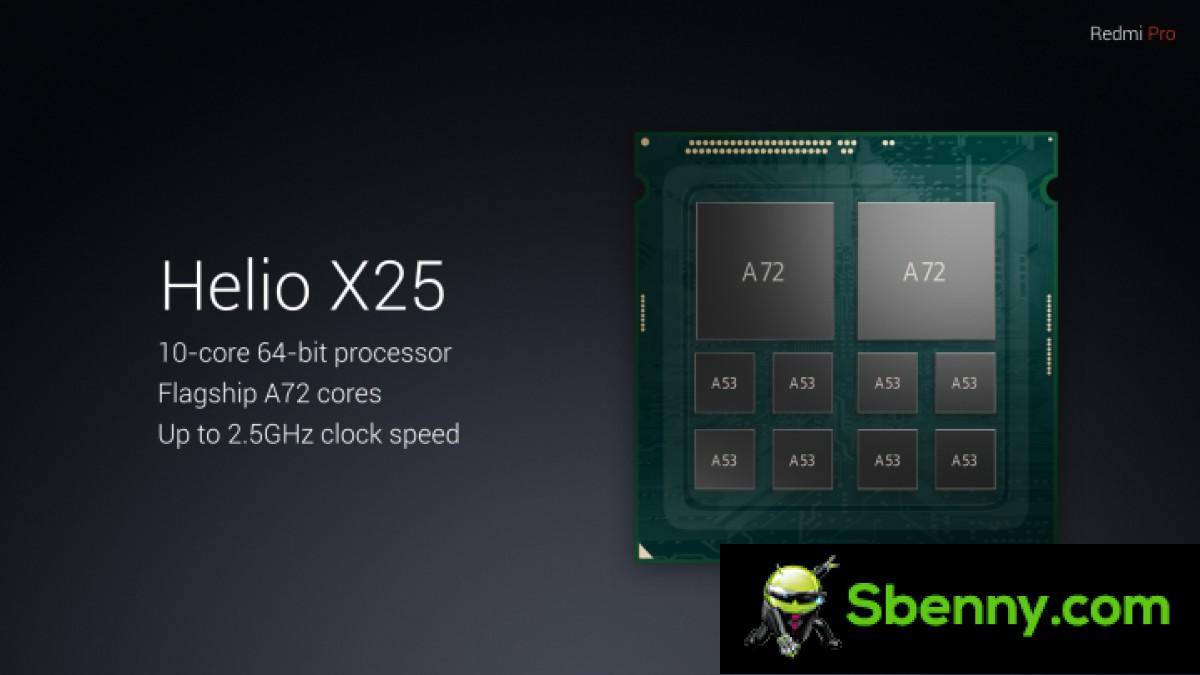
While the Helio X25 was supposed to be exclusive to the Meizu Pro 6 (it was apparently jointly developed by MediaTek and Meizu), a few other brands got a taste as well. The Xiaomi Redmi Pro used the same chip, as did the LeEco Le 2 Pro.


Xiaomi Redmi Pro • LeEco Le 2 Pro
Then came another refinement of the same hardware, the Helio X27. It boosted the two Cortex-A72 cores even higher to 2.6GHz. Also, the Mali-T880 GPU was overclocked, but with only four cores it was still slow compared to higher-end chips.
The X27 was used in another LeEco phone, the Le Pro 3 AI Edition (the guys from LeEco were real poets), and a year later it also appeared in the Land Rover Explore.


LeEco Le Pro 3 AI Edition • Land Rover Explore
So far we’ve only seen refinements on the original 10-core design, MediaTek would unveil a true sequel in 2016: the Helio X30. It was a great start, the upgrade to a 10nm TSMC node, while the X20 series used the old 20nm node.
And changed the three CPU clusters. The big cores were now four and switched to the newer Cortex-A73 which runs at a respectable 2.8GHz. The center cluster stuck with four Cortex-A53 cores (now at 2.2GHz), while the The small cluster made the interesting choice of using a pair of Cortex-A35 (yes, A35) cores at 2.0GHz.
The Helio X30 was only used on two phones: the Meizu Pro 7 (only in the “high” edition, the standard version used a Helio P25) and the Meizu Pro 7 Plus. Maybe there wasn’t much CPU demand at 10 cores, but in any case this time Meizu got its exclusivity.

Remember the Meizu Pro 7 Plus? It had a display on the back
Unfortunately, when we reviewed the Meizu Pro 7 Plus, we were unable to run the CPU-only Geekbench test. But here’s how the phone performed on AnTuTu 6 and Basemark OS 2. As you can see, Snapdragons still led the way. Even the Galaxy S7 edge with its older Exynos 8890 was still fighting.
AnTuTu 6
Higher is better
-
One Plus 5
180331 -
Xiaomi Mi 6
177326 -
nokia 8
175872 -
Samsung Galaxy S8
174435 -
One Plus 3T
165097 -
Sony Xperia XZ Premium
144223 -
LG G6
143639 -
Sony Xperia XZ
133574 -
Samsung Galaxy S7 edge (E8890)
129229 -
Huawei Mate9 Pro
128719 -
Meizu Pro 7 Plus
128498 -
Huawei P10 Plus
126252 -
Meizu Pro 6 Plus
113397 -
Meizu Pro 6
99195 -
Huawei P9 Plus
97392 -
Meizu Pro 5
67531
Basemark 2.0 operating system
Higher is better
-
One Plus 5
3601 -
Xiaomi Mi 6
3547 -
nokia 8
3503 -
Samsung Galaxy S8
3376 -
Sony Xperia XZ Premium
3174 -
Huawei P10 Plus
2940 -
One Plus 3T
2678 -
Huawei Mate9 Pro
2496 -
Sony Xperia XZ
2386 -
Meizu Pro 7 Plus
2380 -
LG G6
2126 -
Huawei P9 Plus
2099 -
Samsung Galaxy S7 edge (E8890)
2050 -
Meizu Pro 6
1919 -
Meizu Pro 5
1837
After the X30, MediaTek gave up on the idea of 10-core CPUs. But not on the three-cluster design, which has also been adopted by other chipset designers. These days a Dimensity 9000-series chip features a single fast Cortex-X core, three Cortex-A7xx cores in the middle, and four A5x cores at the bottom.
It’s a sound idea, but it lacked execution on the Helio X series and lagged behind contemporary Snapdragon, Exynos, and Kirin chips. These days Kirin is out of the picture, Exynos has exited the high-end market (although it may return next year), and MediaTek is effectively giving Qualcomm a hard time.


Start a new Thread