
The more tech-savvy probably know that Android is based on the Linux kernel. But it’s nothing like a typical Linux you may have seen on PCs or smartphones.
Nokia and Intel have spent a lot of time and money trying to launch a Linux-based smartphone operating system. The Nokia N9 saw the two companies join forces to create MeeGo, the union of Nokia’s Maemo and Intel’s Moblin. However, it was caught between Symbian and Windows Phone and never quite lived up to its potential.
There have been follow-ups like Samsung’s Tizen, a successor to MeeGo that has powered some phones in the past, some smartwatches until recently, and is still used as a platform for smart TVs. There was also Firefox OS, which borrowed Android’s Linux core to speed up the more difficult parts of OS development. But unless you’ve dug into the insides, you may never have known about the Linux lineage of Tizen or Firefox OS.
Canonical, the company behind one of the most popular Linux distributions, has been looking to bring its free and open source software principles to the smartphone arena with Ubuntu Touch.
Version 1.0 was released in 2013 and was based on Ubuntu 13.10. It worked on phones like the Galaxy Nexus and Nexus 4. A later version was ported to the Samsung Galaxy S4 Google Edition. But these were just tech demos aimed primarily at developers.
Canonical itself wanted to build the first Ubuntu Touch phone and in 2013 turned to IndieGoGo for help with funding an initial batch of 30,000-40,000 units. The goal was set at an ambitious $32 million.
At the heart of that campaign was a phone called the Ubuntu Edge. It was not intended for retail sale, it would only be available to backers. This was supposed to be a technology demonstrator that paved the way for other Ubuntu phones.

Ubuntu Edge, Canonical’s Linux-based phone
The phone had quite powerful hardware. An unnamed “multi-core CPU” was linked to 4GB of RAM and 128GB of storage (remember, this was in 2013) plus a 4.5-inch HD display. For comparison, a Galaxy S4 from the same year only had 2GB of RAM and up to 64GB of storage.
But that’s not all, using its MHL connector, the Edge could connect to an external monitor via HDMI and turn into a desktop PC. Your phone connector could run USB On-The-Go at the same time, so you can plug in a keyboard and mouse as well. Unfortunately, these mobile-to-desktop transformations never seem to find an audience. Microsoft’s Continuum was similar, except based on the much more popular Windows, and failed.

Ubuntu was both a mobile and desktop operating system
Even Ubuntu Edge couldn’t escape the shadow of Android, and the phone was able to dual-boot Ubuntu and Android. This was a good way to give backers peace of mind: even if the whole Ubuntu OS thing didn’t work out, they’d still have a high-quality Android phone.
The campaign got off to a strong start with a $600 “One Day Only” tier slightly exceeding our goal of 5,000 supporters. This was a great deal as the phone was initially set to cost $830.
The campaign got off to a good start and reached $3.5 million just 24 hours after it started, then grew to $8.5 million in 17 days (it was supposed to last a month). Interestingly, Bloomberg spent $80,000 on 100 Edge phones, becoming the project’s first major corporate backer.
Either way, it quickly became clear that the campaign will never reach its funding goal, so Canonical dropped the Edge’s price to $695 for the campaign’s final two weeks. Then it dropped even lower, $625, but by then it was too late.
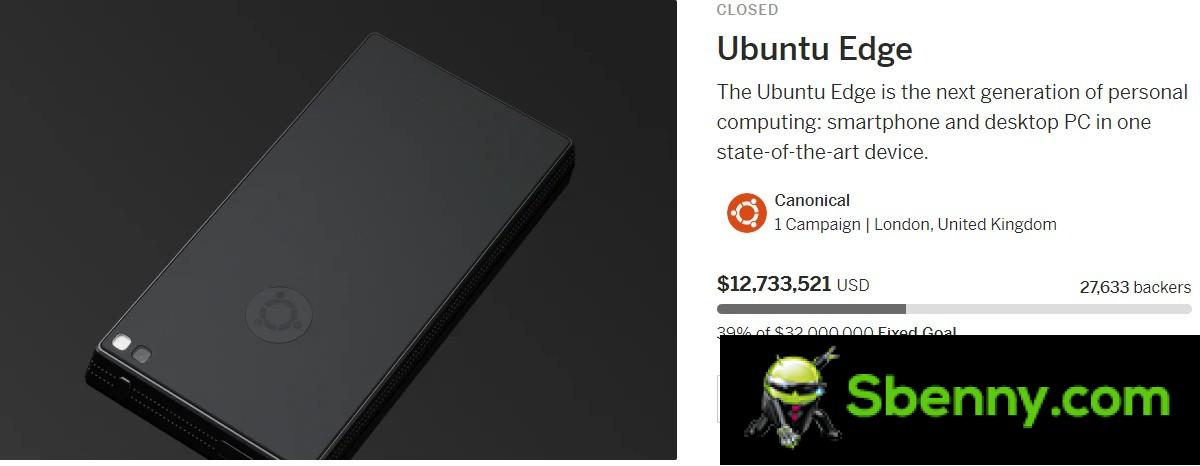
The deadline came in with $12,733,521 raised, 39% of the goal. And with that, dreams of a full-fledged Linux smartphone had withered once more. But all was not lost and several smartphone manufacturers stepped forward.
In late 2014 Spanish phone maker BQ was the first to launch a phone with Ubuntu Touch out of the box. Well, that or Android 4.4 KitKat – the BQ Aquaris E4.5 was offered in stock Google Experience and Ubuntu Edition versions.
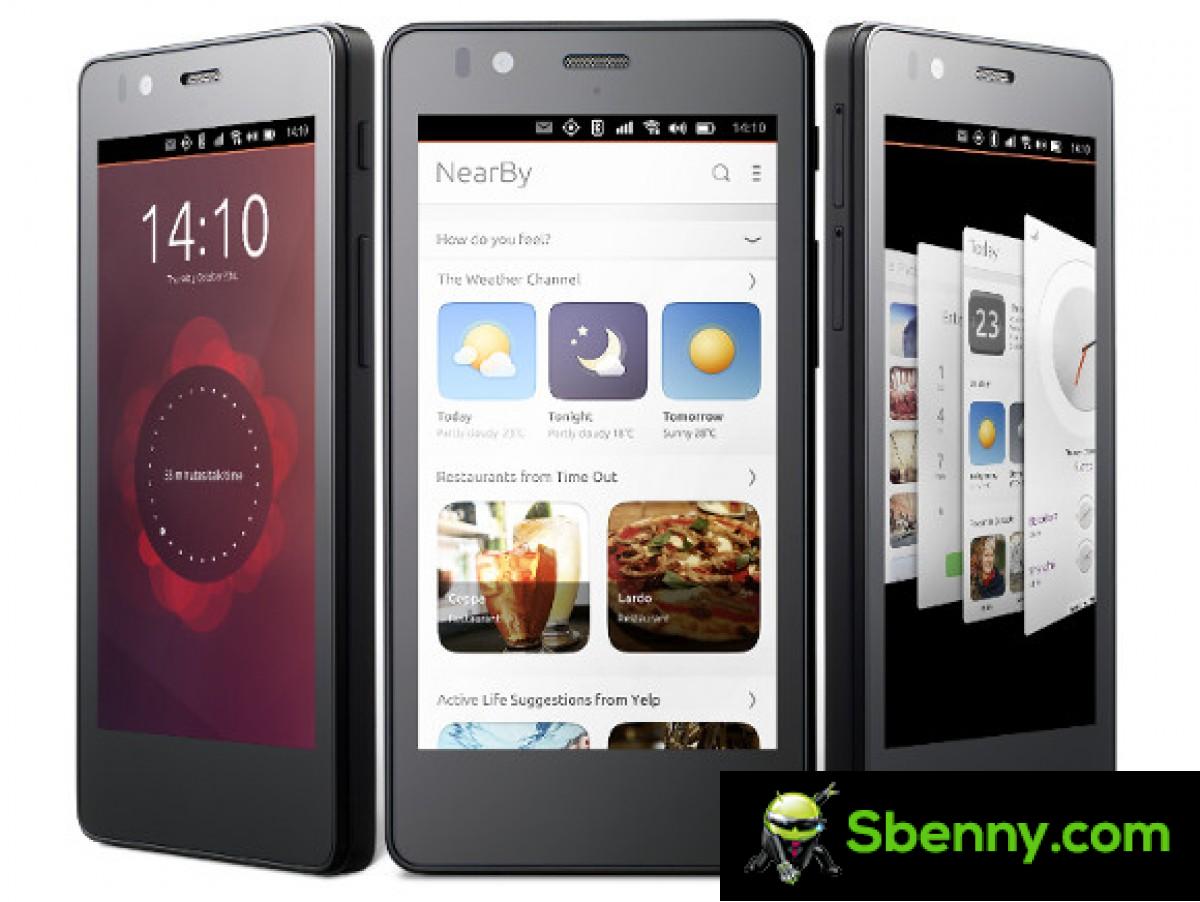
The BQ Aquaris E4.5 was the first phone with Ubuntu Touch pre-installed
The Aquaris E4.5 had a 4.5-inch qHD display and was powered by a MediaTek chipset with a quad Cortex-A7 CPU and 1GB of RAM, as well as 8GB of storage. It went on sale in February 2015 at a price of 170 euros, it was offered in Spain, Portugal, the United Kingdom and Sweden.
The more advanced BQ Aquaris E5 HD Ubuntu Edition was introduced in mid-2015 with a 5″ 720p display, the same MediaTek chipset and a slightly higher price tag of €200.
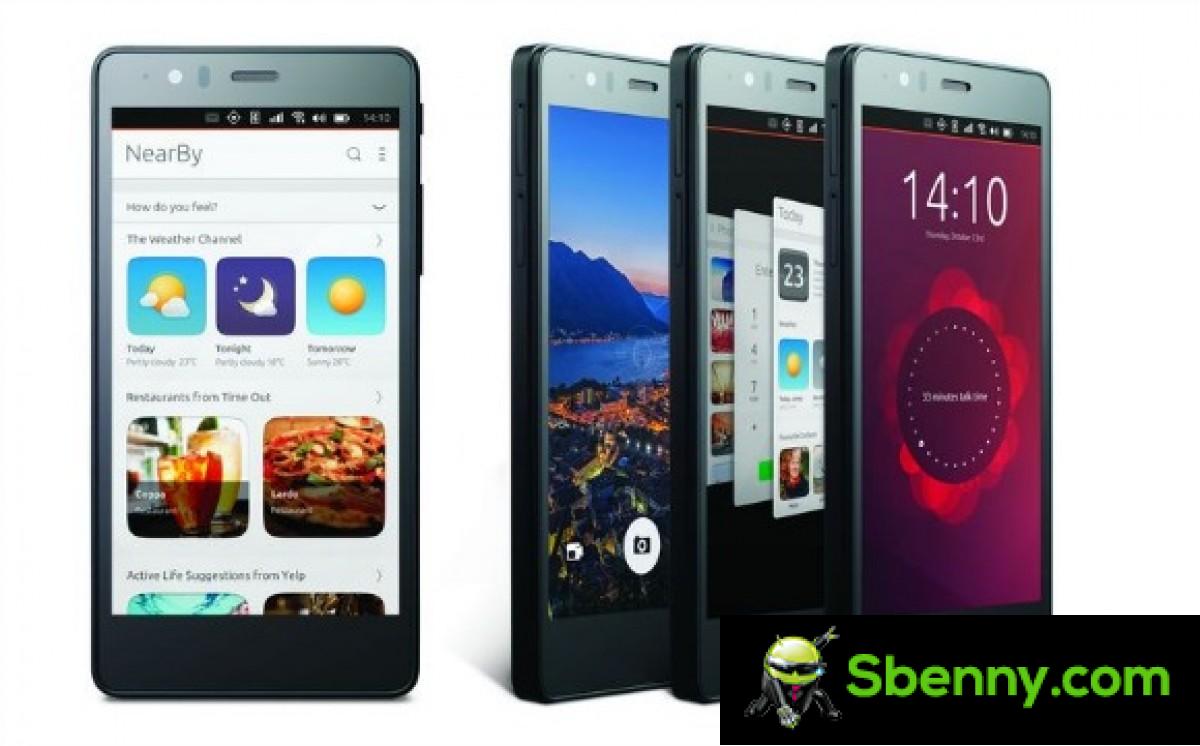
BQ Aquaris E5 HD Ubuntu Edition
In 2016 BQ also released the first Ubuntu Touch Tablet, the Aquaris M10. Canonical’s aspirations for Ubuntu Touch included smartphones, tablets, smart TVs, and eventually laptops and desktops as well. This would have created a unified Ubuntu experience across all platforms.
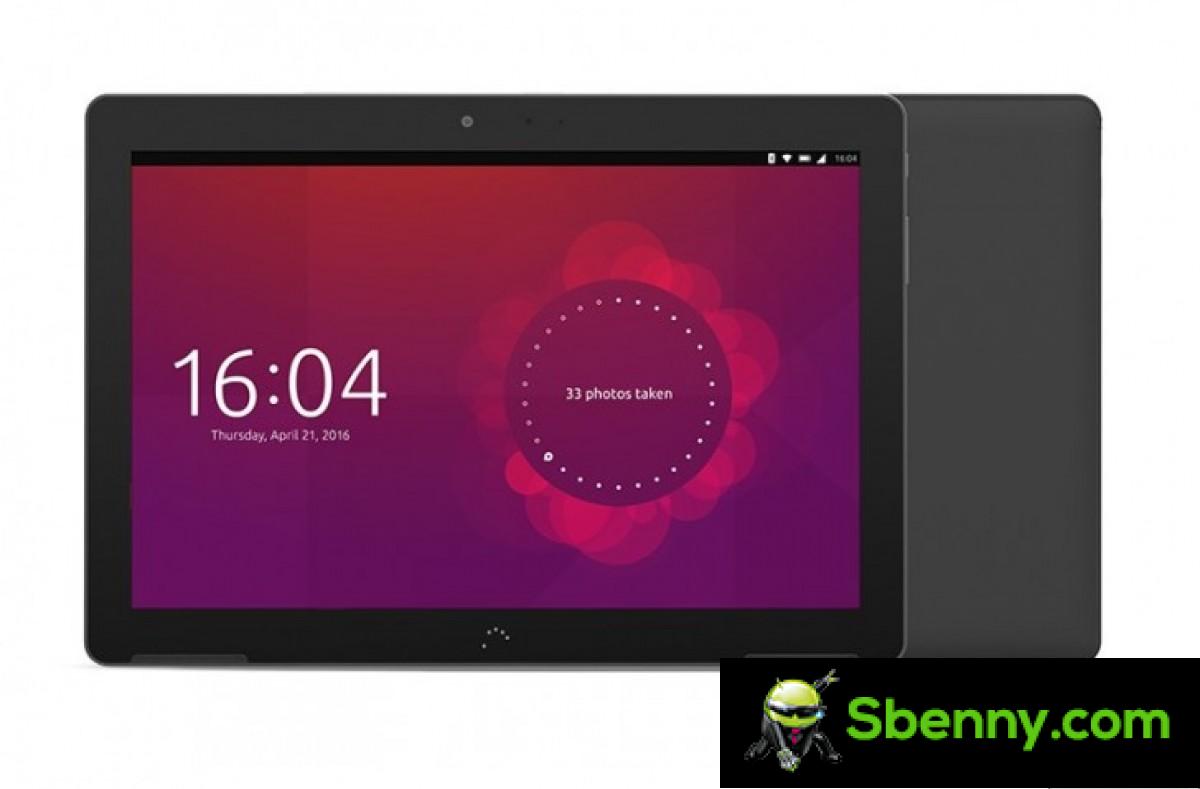
The BQ Aquaris M10, the first Ubuntu Touch tablet
Anyway, this 10.1-inch tablet had a 1,920 x 1,200px screen and also used a MediaTek chipset (A53 quad with 1.5GHz CPU, Mali-T720MP2 GPU) with 2GB RAM, 16GB storage space and a 7,280mAh battery. And as you can see from the “Ubuntu Edition” in the name, it also had an Android version. Pre-orders started in March 2016 at €290. There was also a cheaper €250 version with a lower resolution screen of 1,280 x 800px.
BQ wasn’t Canonical’s only partner – the ever-adventurous Meizu joined in and unveiled the Meizu MX4 Ubuntu Edition ahead of MWC 2015. This version of the phone was launched in China in May of that year at a price of 1,800 CNY (about $290 at the moment). A month later it arrived in Europe for €300.
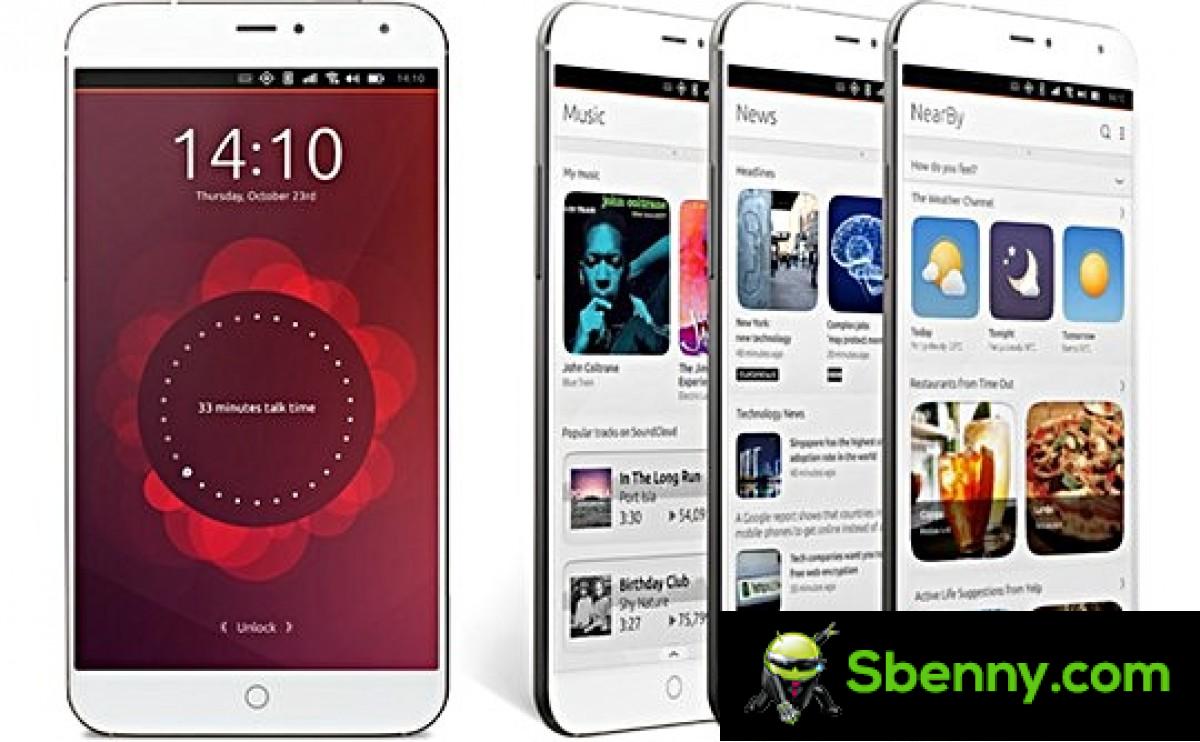
Meizu MX4 Ubuntu Edition
The sequel arrived in early 2016 with the Meizu Pro 5 Ubuntu Edition. Like the Android version, this was a sleek and powerful device with a large 5.7″ 1080p AMOLED display, an Exynos 7420 chipset (from the Galaxy S6), a 21MP camera, and an aluminum body that measured just 7.5 mm thick. The Pro 5 Ubuntu Edition launched at $370.
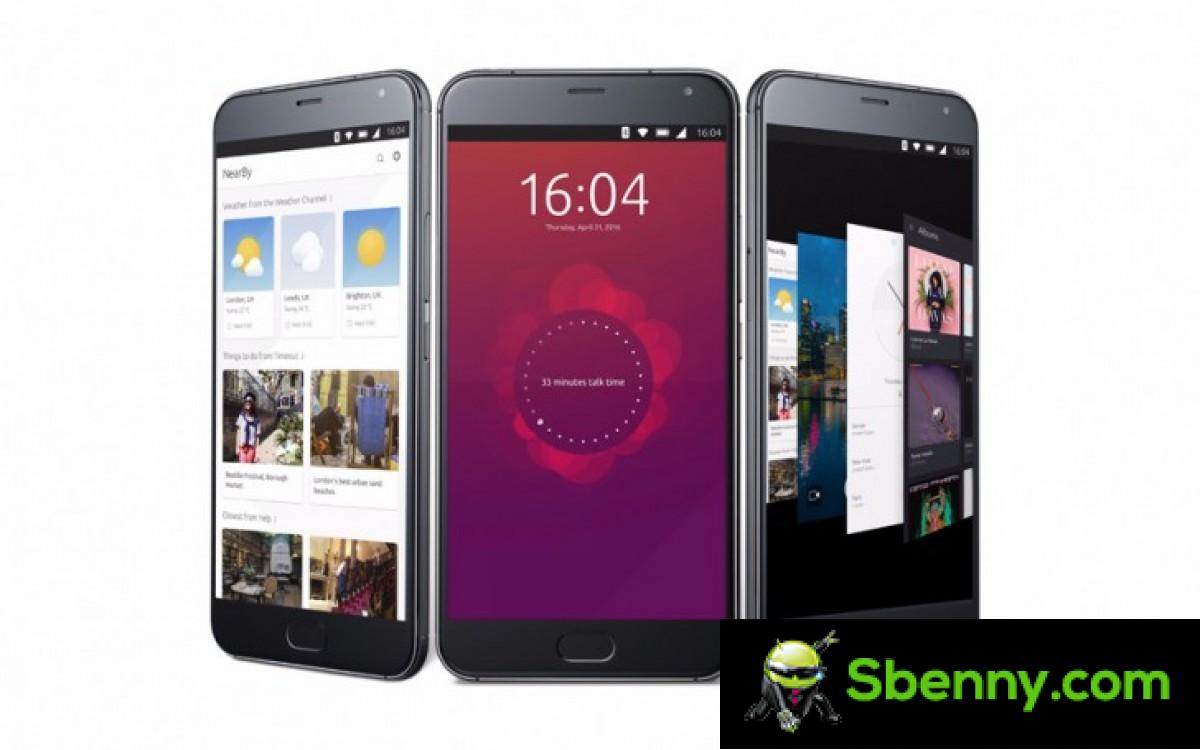
Meizu Pro 5 Ubuntu Edition
Check out our hands-on with Ubuntu Edition for a look at the state of Ubuntu Touch. One of the main UI elements were so-called Scopes, similar to the scrollable home screens on Android, but each was focused on a particular activity, such as Photos, Music, News, etc.
Other companies have joined, but none of the big players have shown any interest. Purism’s Librem 5 and Pine64’s PinePhone had plans to support Ubuntu Touch, but those have barely moved the needle.
As recently as 2021, an Ubuntu-compatible phone made headlines, though not in a good way: The F(x)Tec Pro1-X team ran out of Snapdragon 835 chips and had to switch to the 662.
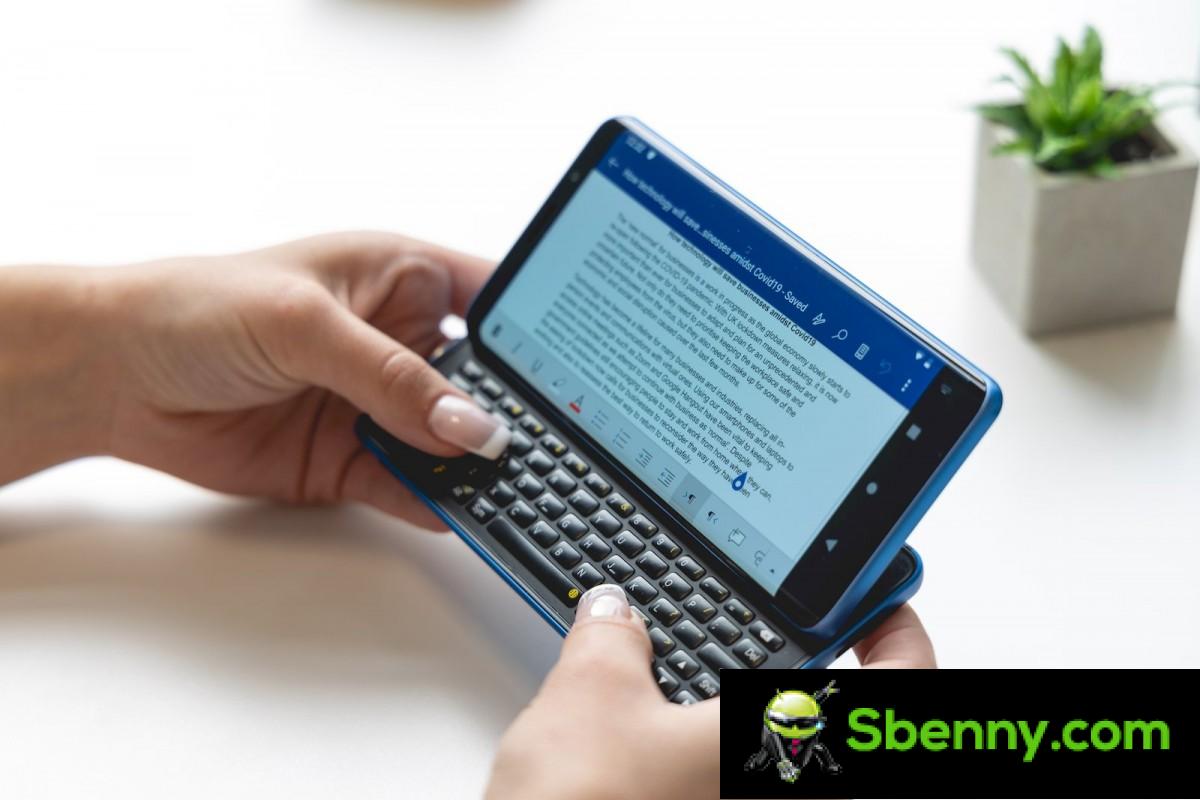
The F(x)Tec Pro1-X had a slide-out QWERTY keyboard and could run Ubuntu
If you have an old Android phone in a drawer, you can try Ubuntu Touch – here is the list of supported devices. This list includes Nexus and Pixel phones, OnePlus and Xiaomi, Poco and Nord, some Galaxy and several tablets as well.
The project is not dead, by the way, just a couple of months ago the UBports Foundation released a new version of Ubuntu Touch based on Ubuntu 20.04 LTS.
After the initial success of Windows Mobile, Microsoft has tried to recapture the mobile market twice: once with Kin, then again with Windows Phone. Nokia predicted the end of Symbian’s dominance, but couldn’t see the future clearly enough to pick a successful replacement. Even BlackBerry has failed to return to its glory days as its innovative BlackBerry OS 10 was met with disinterest. Mozilla also failed with Firefox OS (although KaiOS lives on). Samsung has quietly eliminated Tizen from the mobile phone market as well.
And we can add Canonical’s Ubuntu Touch to this list. Android quickly became the default “good enough” operating system and sucked all the oxygen out of the smartphone market – besides Apple, which is doing its thing with iOS, every company that wants to make smartphones eventually settles for Android. Any other platform simply can’t get the critical mass of users, hardware vendors, and app developers needed to stick around for more than a year or two.


Start a new Thread