
Samsung has the best implementation of a smartphone stylus – not that there’s much competition – but it comes at a price. Previously, it was only available on Galaxy Note phones, which were the most expensive Samsung phones at the time. These days it’s available with the Galaxy S Ultra and Z Fold models, along with the premium Galaxy Tab S models, neither of which are cheap (some Galaxy Book laptops also support it).
There was one exception in early 2020: the Samsung Galaxy Note10 Lite. It was unveiled on the same day as the S10 Lite we covered last time around, and it shared some similarities (beyond price), though it also had some crucial differences.

We’ll start with the display. It was a 6.7-inch panel with 1,080 x 2,400px resolution, the same basic dimensions as the S10 Lite display. However, this panel featured the extra digitizer layer that allowed the S Pen stylus to do its thing.

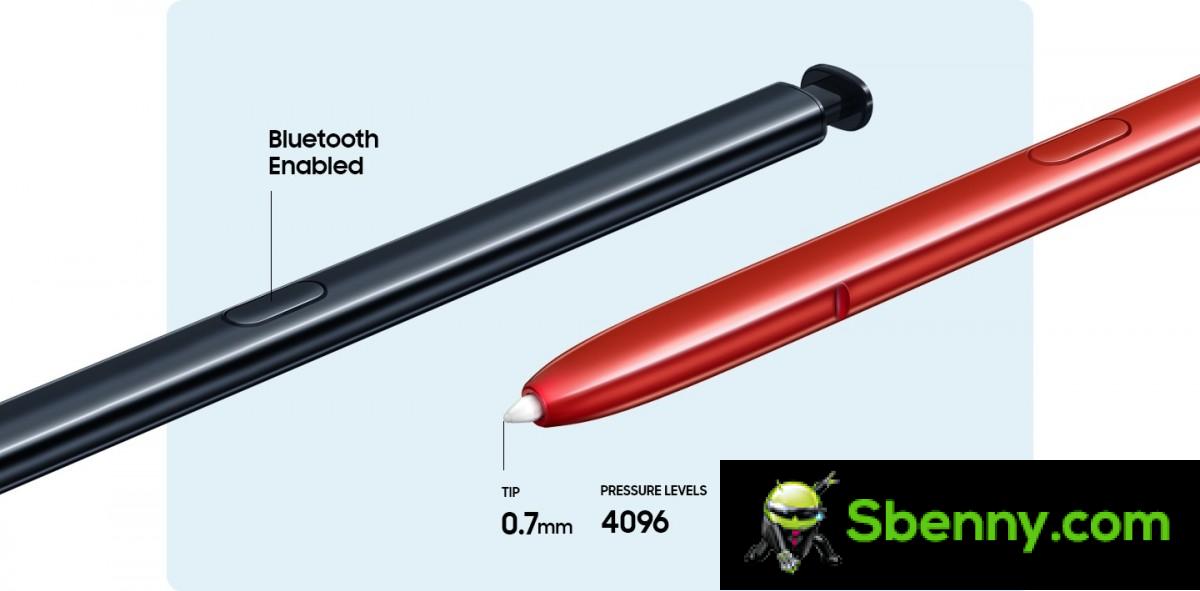
Samsung has even used the fantastic new Bluetooth-enabled S Pen, as opposed to the purely passive styluses of the older Notes. This made it possible to use the S Pen as a remote control, for example to take a photo from a distance or control the music player. It wasn’t as advanced as the one used in the Note10+ and Note10 as it was missing some gestures. However, it was way ahead of the typical capacitive stylus you might get with some other phones.


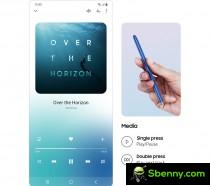
The Bluetooth-enabled S Pen used to be a remote you always had at hand
The S Pen features fast stylus tracking (faster than finger tracking) and could detect how hard you’re pressing (4,096 levels) so you can alter the style of virtual pen or brush you were using.
True to its name, the phone was always ready for note-taking: just pop out the S Pen and start writing on the lock screen. Handwriting recognition could automatically turn your notes into digital text that you can easily copy and share.

Compared to the premium Note10 duo six months earlier, the Galaxy Note10 Lite was larger than the vanilla model (6.7″ versus 6.3″ display) and slightly smaller than the Plus model (which had a 6.8″ display). Unlike both, the display was flat, so you could draw from edge to edge.
A Galaxy Note10 Lite versus Note9 might be a more fitting comparison. The older flagship had dropped in price by the time the Lite hit the scene and the two cost about the same. And both featured the same Exynos 9810 chipset, although in some regions the older Note9 was available with the Snapdragon 855 instead. The Note10 Lite was an Exynos-only model.
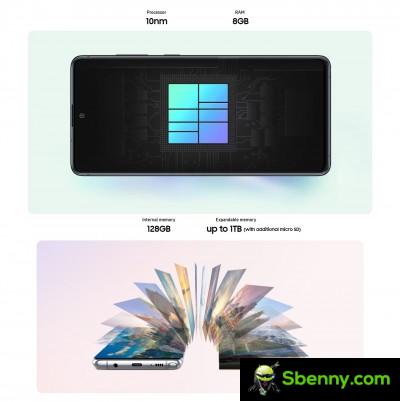
The older Exynos 9810 paired with up to 8GB RAM and 128GB storage (expandable)
As you may recall from last time around, the Galaxy S10 Lite was the opposite, it was a Snapdragon-only phone, which was an interesting change for regions used to getting Exynos.

The S10 Lite also offers an interesting point of comparison. Both it and the Note10 Lite had the same screen size – 6.7”, 1,080 x 2,400 px – and the same battery capacity of 4,500mAh. However, in our tests the S-phone achieved an endurance rating of 110 hours compared to the Note’s 92 hours. Okay, the display panels aren’t exactly the same, which may have contributed, but the 10nm Exynos chip was definitely showing its age compared to the 7nm Snapdragon 855.

The Note also missed out on the faster 45W charging available on the S10 Lite and Note10+. However, it had a larger battery than the other Notes, for example the larger Plus had 4,300mAh in its tank. However, with a newer Exynos 9825 it lasted 107 hours in our endurance test (the 9825 was a 7nm part, scaled down from the 8nm 9820 used in some Galaxy S10 models).
The Galaxy Note10 Lite featured a 12MP triple camera on the back, including a 52mm 2x telephoto lens, which the S10 Lite lacked. It even used the same 1/2.55″ sensor (1.4 µm pixels) as the premium Note10 models, complete with Dual Pixel AF and OIS, albeit without the dual aperture feature. However, the older chipset wasn’t quite as capable in terms of video capture.
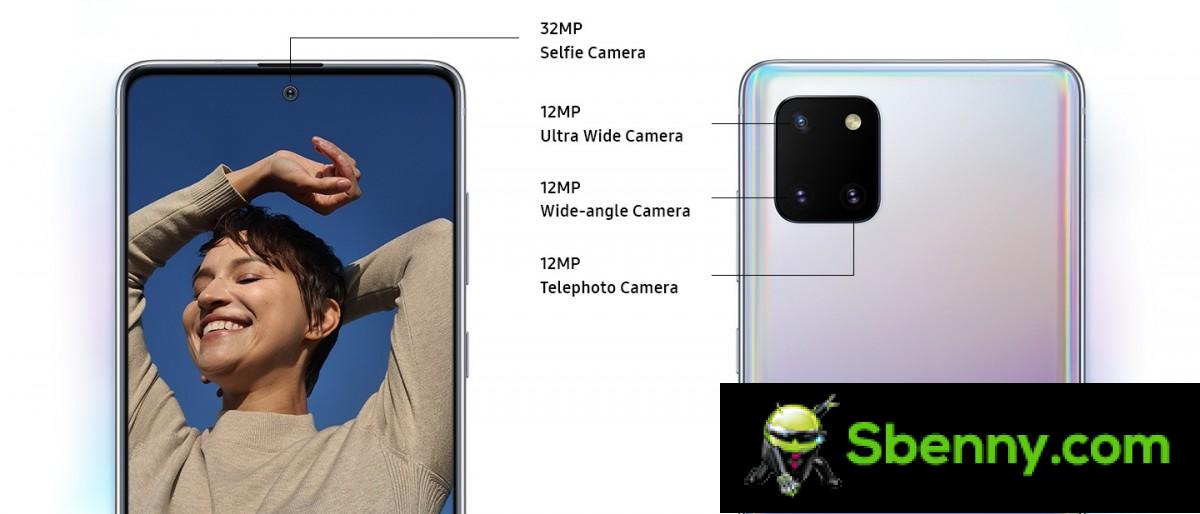
A few other notable things are the microSD slot and 3.5mm headphone jack – the Note10 Lite had them, though the premium Note10 duo became the first in the family to lose them.
There were a few things that made the Note10 Lite, well, a Lite model. That includes a plastic back panel (the front was Gorilla Glass 3 and the frame was metal, however), no IP ratings for dust or water resistance, no USB 3 ports, and no stereo speakers.
The S Pen survived the Galaxy Note series, although the S Ultra model is so different from vanilla plus phones that it might as well be called a Note. The stylus is also featured on Samsung’s premium tablets (and even some of its laptops), and has been adapted to work on foldable displays as well.



The Samsung Galaxy Note10 Lite came in some fun colors
The only segment it hasn’t been in, at least not since the Galaxy Note10 Lite, is more affordable phones. More affordable than the flagships, however, the Note10 Lite wasn’t all that cheap. It depends, actually in Europe it cost only €50 less than the small Note10, in India it cost half the Note10.
Are there any fans of the stylus around here? Would you like to see, say, a Galaxy A phone with an S Pen?


Start a new Thread