
Behind the scenes, Google is working on the next generation of Pixel phones and hasn’t provided any official details on the upcoming devices so far. But Google usually does a poor job of keeping things secret. The phones won’t be revealed until later this year (probably in October), although many details have already been leaked.
There will be two flagship models: the smaller Vanilla and the larger Pro. As with previous generations, the Pro will have a superior display and camera. Interestingly, the vanilla phone will be smaller than its predecessor. Let’s look at those first.
View
The Pixel 8 display will finally be bumped up to a 120Hz refresh rate after several generations of running at 90Hz. That doesn’t mean Google is finally adopting an LTPO panel for the Vanilla flagship, but the leaked info suggests there will be new refresh modes, allowing the phone to choose between 10, 30 and 60Hz for power savings.
The new display will be slightly smaller than before at 6.17″, down from 6.3″. Resolution will remain at FHD+ (20:9), On the plus side, Google has apparently gone with a brighter panel this year: a typical brightness of 1,400 nits, up from 1,000 nits.
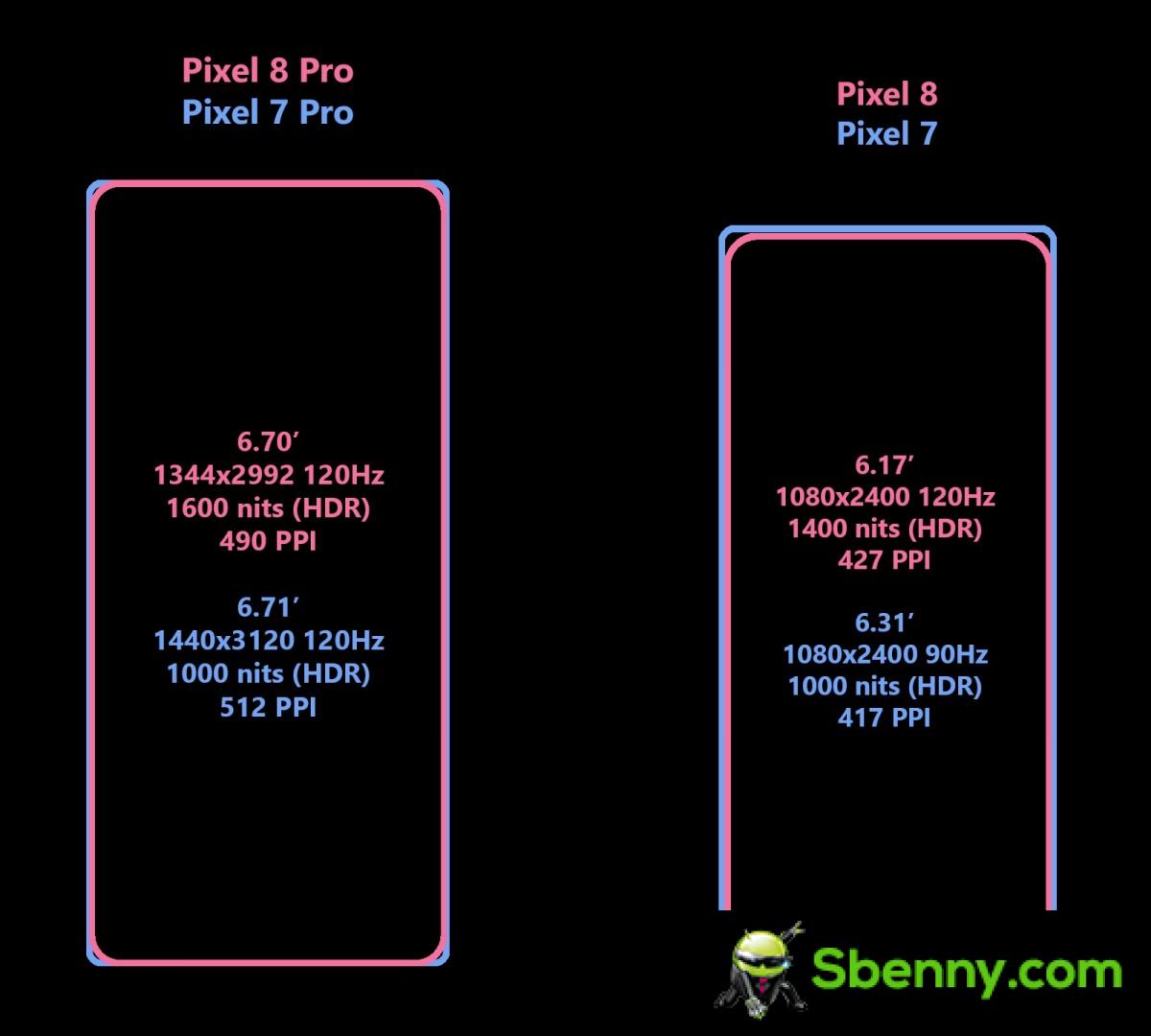
New display configurations for the Pixel 8 series
Changes on the Pixel 8 Pro’s larger display will have less of an impact. It will be essentially the same size as the 2022 model, however, its resolution will be reduced slightly, which will reduce the pixel density from 512ppi to 490ppi (which is still higher than the Vanilla Pixel, even taking into account its smaller diagonal). The minimum refresh rate will drop to 5Hz from the 7 Pro’s minimum of 10Hz. This panel should also be brighter.
Project
Google sticks to the “visor” design for this generation. As you may have noticed in the previous section, the new generation will round the corners of the display more than the 7 series.
More importantly, the Pixel 8 will measure 150.5 x 70.8 x 8.9mm (based on CAD designs). This is significantly smaller than the Pixel 7’s 155.6 x 73.2 x 8.7mm measurements, making it closer in size to the Galaxy S23 (146.3 x 70.9 x 7.6mm) and smaller of the Pixel 7a (152 x 72.9 x 9 mm).



Google Pixel 8 (speculative renders)
The Google Pixel 8 Pro will measure 162.6 x 76.5 x 8.7mm, effectively the same as the 7 Pro (162.9 x 76.6 x 8.9mm).


Google Pixel 8 Pro (speculative renders)
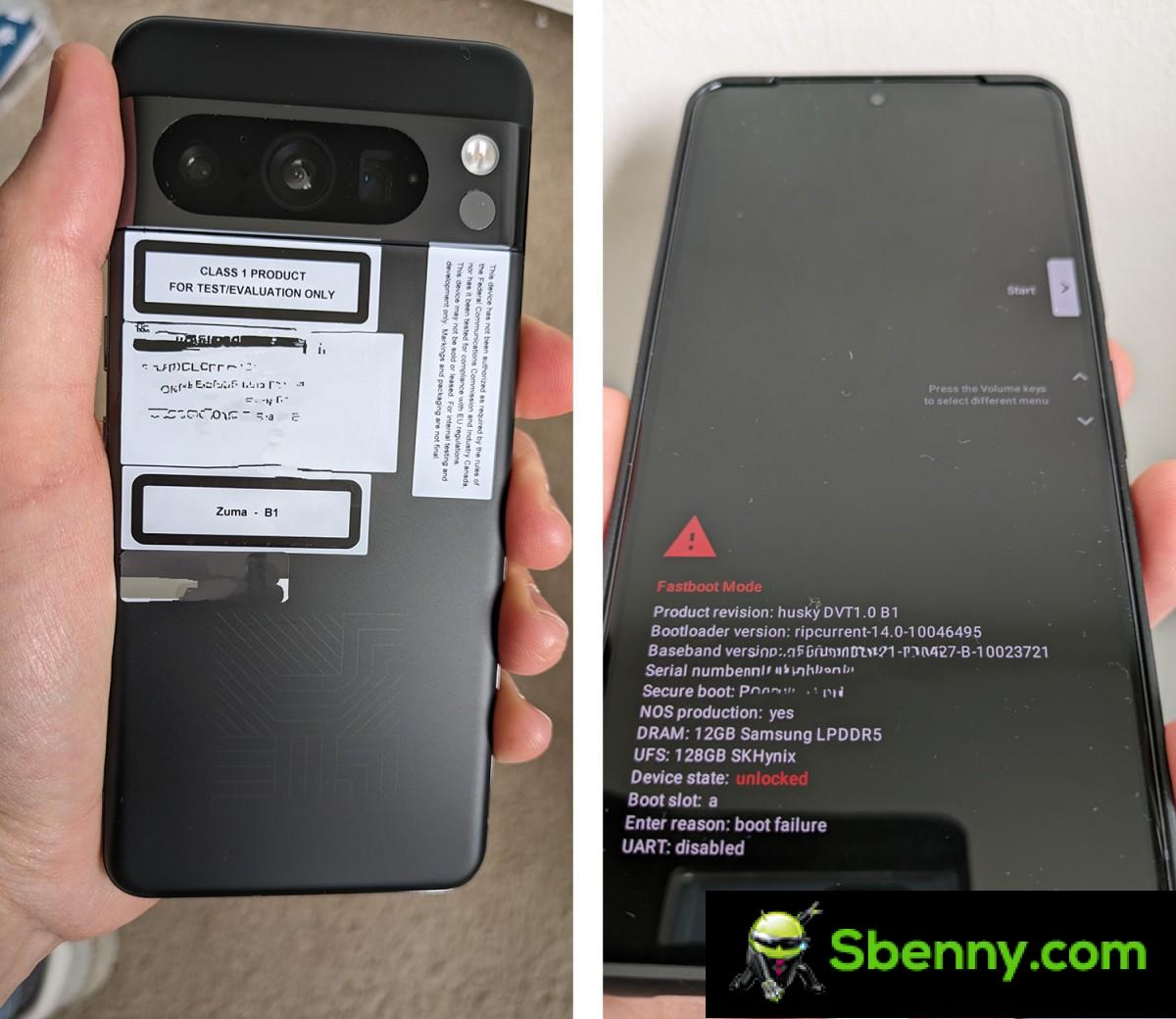
Speaking of which, hands-on photos of an early Pixel 8 Pro prototype confirm the design seen in the renders above.
Cameras
Both models are getting a new sensor for their 50MP main cameras: the ISOCELL GN2 replaces the GN1 found in the 7 series. This sensor is larger (1/1.12” vs. 1/1.31”) and has native pixels larger ones (1.4µm vs. 1.2µm). Binning up to 12.5 MP (4 to 1) gives it an effective pixel size of 2.8 µm.

The sensor can also go the other way, outputting 100MP images, as each pixel has two photodiodes instead of one. The GN1 was the same, the main difference here being that the GN2 has an improved AF method called Dual Pixel Pro. The two photodiodes on the GN1 split each pixel vertically, the GN2 instead has a diagonal split so it can detect phase differences both vertically and horizontally.
The Pixel 8 Pro is also getting an updated ultra wide with the Sony IMX787 sensor – 64MP 1/1.37” with 0.8µm pixels and 4 to 1 binning support. For comparison, the 7 Pro has a tiny 12MP 1/1.37” sensor. 2.9″ with 1.25µm pixels.

The rear camera setup for the two Pixel 8 phones
As for the vanilla model, that stays true to its predecessor’s 12MP IMX386. The only upgrade here will be a wider lens (0.55x vs. 0.67x), but that will put more strain on the lower-resolution sensor. And no, the Pixel 8 won’t have a dedicated zoom camera.
The one on the Pixel 8 Pro will stay the same with a 48MP GM5 sensor and a 5x periscope lens. A new 8×8 ToF depth sensor will assist with autofocus. Interestingly, there will be an additional sensor on the Pro, an infrared thermometer (just below the LED flash). In this period and age being able to measure body temperature is a useful feature.
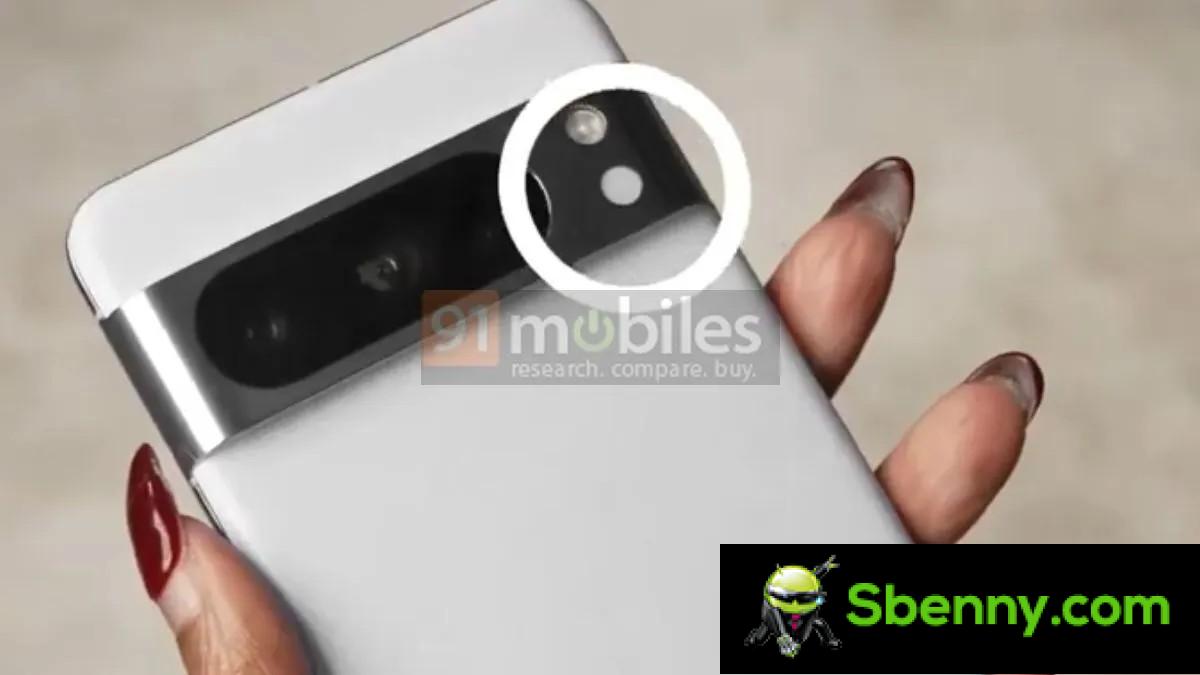
Pixel 8 Pro will have a thermometer to measure body temperature
Finally, there won’t be any new selfie cameras, they’ll just use last year’s 11MP Samsung 3J1 sensor.
chipset
Pixel flagships introduce new Tensor chipsets, which are later reused for the a-series. The Pixel 8 duo will carry the third generation custom chip, again from Samsung’s foundries and will be labeled as “4nm” (node 4LPP).
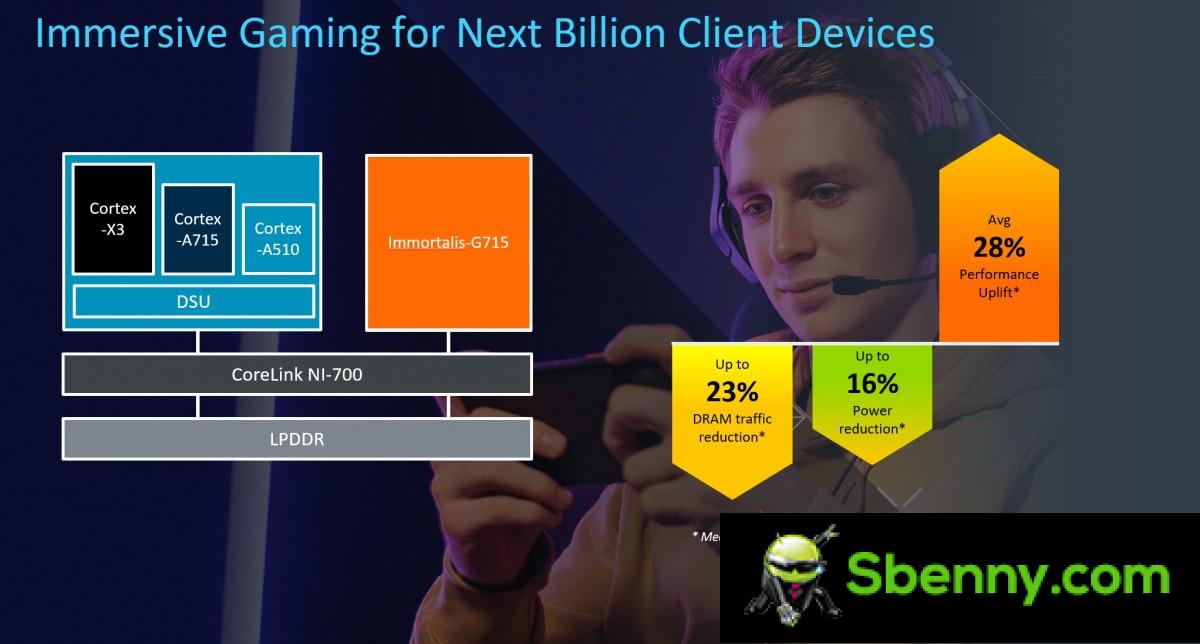
More importantly, it will jump two generations ahead of the G2 in terms of hardware. The Tensor G3 will feature a single Cortex-X3 at 3.0 GHz, 4 A715 at 2.45 GHz, and 4 A510 at 2.15 GHz. For comparison, the G2 had two main cores, Cortex-X1 (2.85 GHz), two A78 cores (2.35 GHz), and four A55 cores (1.80 GHz).
We should see a big leap in performance and especially energy efficiency. That said, there are already A720 cores available and Cortex-X4 is lurking around the corner, so the G3 will quickly fall behind the competition, but not as much as the G2 was.

As for the GPU, the G3 will upgrade to a 10-core 890 MHz Immortalis-G715. This GPU has hardware support for ray tracing and is also a couple of generations newer than the G2 chip’s Mali-G710 MC10. You can also expect a faster NPU for Google’s AI magic.
One potential upgrade to the diminutive Pixel 8 is extra RAM: 12GB, according to rumors (previous generations had 8GB). This will bring it on par with the Pro model. The new Tensor G3 chipset is also expected to support faster UFS 4.0 storage.
Battery and charging
At the moment not much is known about the batteries. We think it’s a safe bet that the Pixel 8 Pro’s battery will stay at the same capacity (5,000mAh), but given the Pixel 8’s smaller size, its capacity will likely decrease (from 4,355mAh).
The Pixel 8 has appeared on WPC’s site, which lists it as only supporting 12W wireless charging. The Pixel 7 duo isn’t exactly fast, but it can do 20/23W wirelessly, so that’s a surprise. We assume the main point here is that the 8 series will not support the new Qi2 standard.
Price
Again, no information has been leaked so far, but don’t expect any surprises: The Pixel 6 and Pixel 7 had a base price of $600, the Pixel 6 Pro and Pixel 7 Pro were $900 at launch. The 8 Series should follow the same pricing strategy, especially considering that the vanilla model still lacks most of the Pro features (which justifies the $300 gap in price).


Start a new Thread