
Samsun’s Galaxy S24 series is here, and it marks the biggest announcement of the year so far. Samsung intentionally pushed the announcement of the series two weeks earlier than that of the S23s, and they will ship almost a month earlier than their predecessors. This gives Samsung ample time to establish a dominant position in the market and give Apple’s iPhone 15 series a proper fight.
The Galaxy S series has become a bit pedestrian in recent years, but that’s par for the course when you have a mature market. However, there are some noteworthy aspects of the Galaxy S24 series – this is our opinion.
This is the most sensible thing the Plus model has had since the S20 Ultra arrived
Without a doubt, this is the most significant sense that the Galaxy S Plus model has had since Samsung added an Ultra to the range. This was the last time we got a 1440p display on the Plus.
Now, the Galaxy S24+ restores the higher resolution of 1440x3120px and is an LTPO panel for the first time in the model’s history. This means it can gradually adjust the refresh rate between 1Hz and 120Hz.
The Plus also got a 200mAh boost (to 4,900mAh), essentially matching the Galaxy S24 Ultra. And while we’re at it, the Galaxy S24+ has 12GB of RAM, just like the Ultra.

But the vanilla S24 doesn’t look attractive at all
Yes, the Plus is finally a useful option in its own right, but it’s now approaching the Ultra in price. Well, closer, not close per se: a 12/512 GB Galaxy S24 Ultra still costs 300 euros more than an equivalent S24+. Many people may find the price difference worth it just for the better camera setup.
We’re not sure how many people would buy the Galaxy S24. It adds 0.1 inches to the display, which for the first time is an LTPO panel, adds another 100 mAh to the battery and that’s about it. We can’t imagine many S23 owners would upgrade, and it’s clear that not many people want a smaller phone these days. Yes, we know there are small fans of the phones, but the sales figures don’t lie.
We could easily imagine a world where one of the non-Ultra phones disappears (or perhaps is replaced by a smaller Ultra).

The Galaxy S24 Ultra is a measured upgrade
The Galaxy S24 Ultra is a very measured upgrade over the S23 Ultra. Gone are the days when Samsung made great strides with its annual updates.
The Galaxy S24 Ultra is a significantly better phone with a higher-quality chassis, thinner (and symmetrical) bezels, a new chipset, and a new camera. It’s all about refinement at this point.
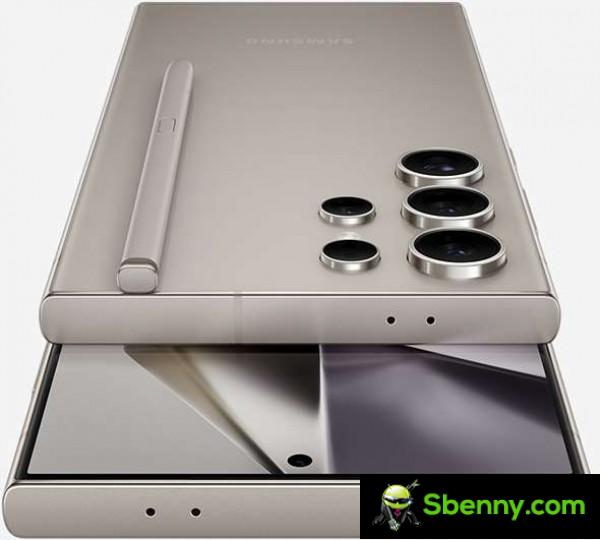
The move to a titanium alloy frame is making a difference
While Apple’s switch from a stainless steel chassis was about overdue weight reduction, Samsung’s switch from aluminum (armored or not) to titanium brings structural and thermal benefits. Titanium alloy dissipates heat faster than aluminum and is more durable.
We imagine that even the slightly stiff feel will appeal to many people: the Galaxy S24 Ultra’s bezel is now matte and will look subjectively better than the glossy bezel it replaces.
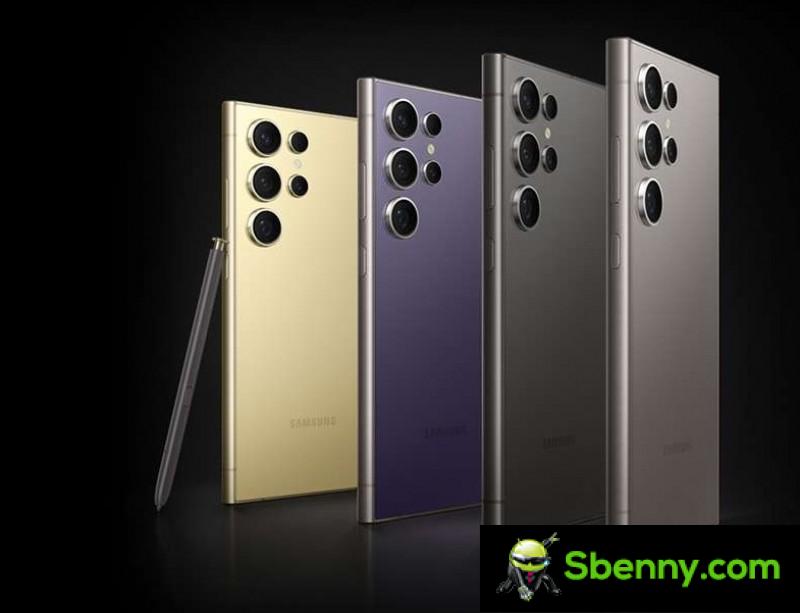
The screen upgrade is not to be overlooked!
Samsung has given the Galaxy S24 Ultra a flat display and slimmed down the bezels around it. The panel reaches up to 2,600 nits and is also less reflective thanks to the Corning Gorilla Glass Armor top plate. These improvements combine into a much better overall experience.

A 3x + 5x camera setup makes more sense than 3x + 10x
Samsung’s Galaxy S21 Ultra, S22 Ultra, and S23 Ultra were almost outliers thanks to their 10x optical zoom camera. Almost no other phone had a lens larger than 200mm, and you can see why: it’s a cool feature but it’s not something most photographers use. 5x (or around 110-120mm) offers plenty of zoom and has the advantage of being easier to adapt. The Galaxy S24 Ultra’s new 5x camera has a much larger sensor than the Galaxy S23 Ultra’s 10x camera, and it also has a brighter lens. This means that even if you digitally zoom at 10x, it will likely match the old telephoto in good light and surpass it in low light.
It’s a great compromise: you get a more conventional telephoto lens that isn’t even worse than its predecessor at longer distances.
Having two zoom cameras on your phone is a must for a flagship these days and the combination of a 3x and a 5x seems like the best choice (although a 3x and a 6x might be even better…).

Is AI as great as Samsung makes it seem?
Samsung has touted the Galaxy S24 series as the “smartest AI phones ever” and we can see why. Samsung gave AI a big chunk of runtime during the presentation, because it seeps into the entire user experience, from the UI to the camera.
But is Galaxy AI all this? We’ll have to test the Galaxy S24 devices thoroughly to give you a definitive answer but at first glance it looks very promising. Circle to Search feels like a feature that should have been here for years, and we can’t believe it’s only now arriving on our phones. And Samsung’s Live Translate and Interpreter seem like extremely useful tools for people who travel the world.
We also want to see Samsung’s ProVisual Engine and photo and video tuning in action, but early tests show it’s more than just a gimmick.


Circle to search and translate live
Exynos is back and it’s not bad
The narrative that Samsung’s Exynos is vastly inferior to Qualcomm’s Snapdragon has been going strong for years and is once again at the forefront today. That’s because Samsung will ship the Galaxy S24 and S24+ with an Exynos 2400 in markets other than the US, South Korea and China. And because some people on X and YouTube have very strong anti-Exynos feelings, phone buyers feel deceived and even defrauded by Samsung for selling them a clearly inferior product.
But looking at the facts, things are obviously not that bad. The new Exynos 2400 has a nearly identical CPU design to the Snapdragon 8 Gen 3, is built on a similar 4nm process, and may have a superior GPU.
CPU-wise, the Exynos 2400 has one Cortex-X4 at 3.21 GHz, five Cortex-A720s (2x at 2.9 GHz, 3x at 2.6 GHz), and four Cortex-A520s at 2 GHz ( two more than the Snapdragon 8 Gen 3). The Xclipse 940 GPU has a 1GHz faster clock speed than the 770MHz Adreno 750 in the Snapdragon 8 Gen 3.

Ultimately it could fall on the 4nm nodes and decide which is more efficient. We’ll have to wait for the direct battery comparison between an Exynos 2400-powered Galaxy S24/S24+ and a Snapdragon 8 Gen 3 to see if there really is any kind of significant difference between the two.


Start a new Thread