
iQOO introduced the Z6 Pro in April, making it the first smartphone in the Z series to carry the Pro moniker. We had the chance to spend some time with the iQOO Z6 Pro, and here are our first-hand impressions.
The iQOO Z6 Pro comes in a retail box with a similar design to the more premium retail packages in the iQOO 9 series, but with a smaller footprint. It includes a SIM eject tool, protective case, some documents, a USB-C cable, and, surprisingly, an 80W power adapter (the phone doesn’t go that fast).

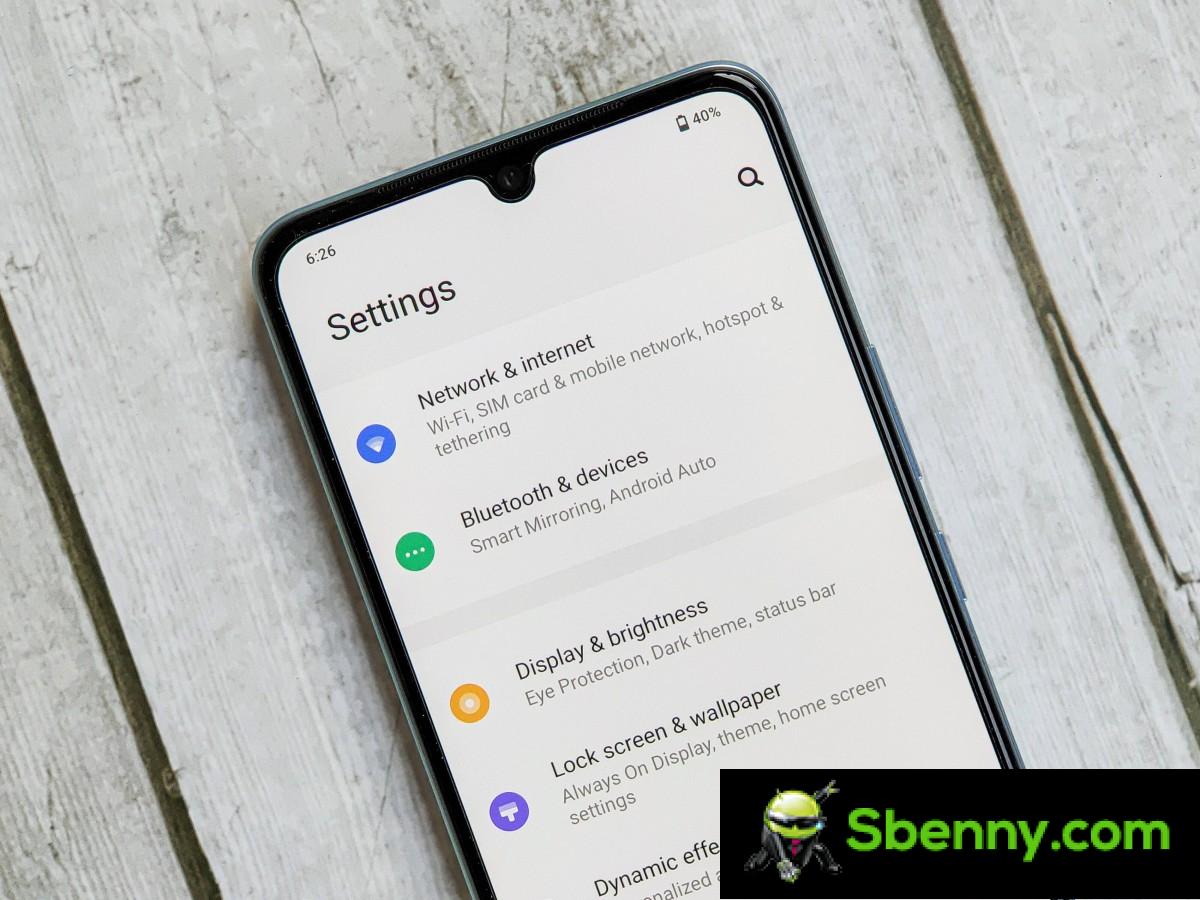
The iQOO Z6 Pro sports a 6.44 “AMOLED FullHD + screen with a refresh rate of 90 Hz and a peak brightness of 1,300 nits. It is protected by Panda Glass and has a fingerprint scanner underneath, which is pretty fast and accurate.
The display has a notch for the 16MP selfie shooter, which looks dated in 2022 at this price point. Last year’s Z5 also had a centered hole, giving the smartphone a more modern look. It came with an LCD with a lower peak brightness (650 nits), but had a 120Hz refresh rate. It’s also worth mentioning that the Z5 featured stereo speakers that the Z6 Pro doesn’t.
That said, the iQOO Z6 Pro has Widevine L1 certification, which allows 1080p video streaming on OTT apps. It also supports HDR10, HDR10 + and HLG codecs, but does not play HDR videos on YouTube. iQOO told us that it is working to fix this and that an OTA update will be released soon.
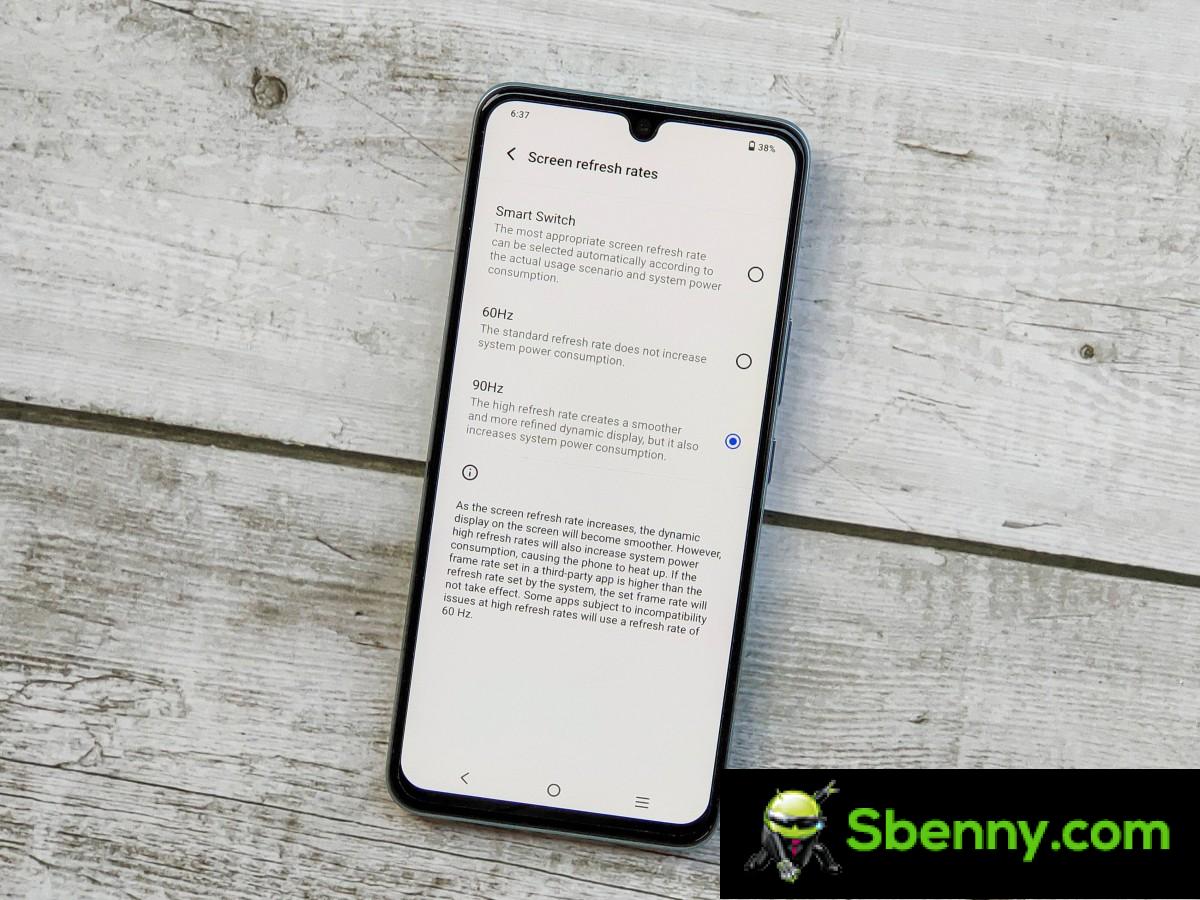
Regarding the implementation of the screen refresh rate, there are three options in Settings > Display and brightness > Screen refresh rates menu – 60Hz, 90Hz and Smart Switch.

The first option should keep the screen refresh rate locked at 60Hz, while the other two work the same with most apps. They increase the refresh rate to 90Hz when you interact with the screen and bring it back to 60Hz after a few seconds of inactivity. The only difference we found was in the YouTube app, which always stays at 60Hz in Smart Switch mode but updates to 90Hz when 90Hz mode is enabled.
Some apps, including Google Chrome, Google Photos, Quora, and GSMArena, always stay at 60Hz in Smart Switch mode. So if you want the smoothest scrolling experience possible, 90Hz mode is your best bet. But keep in mind that none of these refresh rate options allow for HRR gaming.
Moving on to the other side of the iQOO Z6 Pro, we have a camera island covered with a plastic plate that takes up more than half the width of the smartphone. It has an LED flash and two large circles, with three cameras. The former houses the 64MP main camera, while the other houses the 8MP ultrawide and 2MP macro units. Unlike the Z5’s main camera, which can record 4K video at 60fps, the Z6 Pro’s main shooter can only record in 4K at up to 30fps.
The large camera island makes the phone wobble on flat surfaces, and the supplied case doesn’t really solve that.

The rear panel of the iQOO Z6 Pro has a matte finish and is pleasant to the touch on our Legion Sky version. It features the iQOO logo at the bottom and hardly attracted fingerprint smudges during our use.

The overall build of the iQOO Z6 Pro is decent, with the power button and volume rocker quite clickable. Smartphone haptics are fine, but nothing to write home about.


Buttons and ports of the iQOO Z6 Pro
The Z6 Pro has the Snapdragon 778G SoC under the hood, the same chip that powered last year’s Z5. Our unit came with 12GB of RAM and 256GB of storage, but there are two other memory configurations: 6GB / 128GB and 8GB / 128GB.
None of these have a microSD card slot for memory expansion, but they do come with the extended RAM function, which allows for virtual RAM expansion up to 2GB on the 6GB RAM model and 4GB on the 8 variants. GB and 12 GB of RAM. In our experience, enabling this feature hardly makes any real world difference other than reducing available storage space.
On the software front, we have Android 12 with FuntouchOS 12 on top, which isn’t much different than what you get on other iQOO smartphones with this version of FuntouchOS. This also means that iQOO Z6 Pro comes pre-installed with several third-party apps, but luckily most of them can be uninstalled.

The actual performance of the iQOO Z6 Pro hasn’t been as smooth as the iQOO Z5 we tested last year with the same chip and memory configuration. Its benchmark scores were also lower than the Z5. The smartphone stuttered at times during regular use, but performed better when it came to gaming. We hope future OTAs bring some improvements to the Z6 Pro.
Keeping the phone up and running is a 4,700mAh battery with 66W charging support, advertised to go from 1% to 50% in 18 minutes. In our tests, the iQOO Z6 Pro went from flat to 50% in 25 minutes, to 59% in 30 minutes, and to 100% in an hour with the supplied 80W adapter. The battery lasted a day of moderate use – including an hour of playtime – when connected to Wi-Fi and the screen refresh rate set to 90Hz.

The base model of the iQOO Z6 Pro with 6GB of RAM and 128GB of storage is priced at INR23,999 ($ 310 / € 290) in India, while the 8GB / 128GB and 12GB variants GB / 256 GB are priced at INR24,999 ($ 320 / € 300) and INR28,999 ($ 375 / € 350), respectively.
If this all sounds familiar, it’s because the vivo T1 Pro announced last month in India is a version of the iQOO Z6 Pro, with the same price tag. The only difference is that the T1 Pro is not available in a 12GB / 256GB configuration.

At the time of this writing, last year’s iQOO Z5 is priced at INR23,990 ($ 308 / € 288) for the base 8GB / 128GB variant, while the 12GB / 256GB model , launched at INR29,990 ($ 385 / € 360) and currently priced at INR32,990 ($ 425 / € 400), is sold out. Offers a higher refresh rate screen, 3.5mm headphone jack, stereo speakers, and larger battery (5,000mAh vs 4,700mAh) but lacks an AMOLED screen with in-display fingerprint reader and is slower to charge (66 W vs 44 W).
Other Snapdragon 778G powered smartphones from BBK group in India include last year’s Realme GT Master Edition and Realme 9 5G Speed Edition unveiled a few months ago, the latter being the most affordable, starting at INR19,999 ($ 260 / € 240). You can go this way to see how the iQOO Z6 Pro compares to Realme GT Master Edition and Realme 9 5G Speed Edition in terms of specs.


Start a new Thread