
Design, build quality, handling
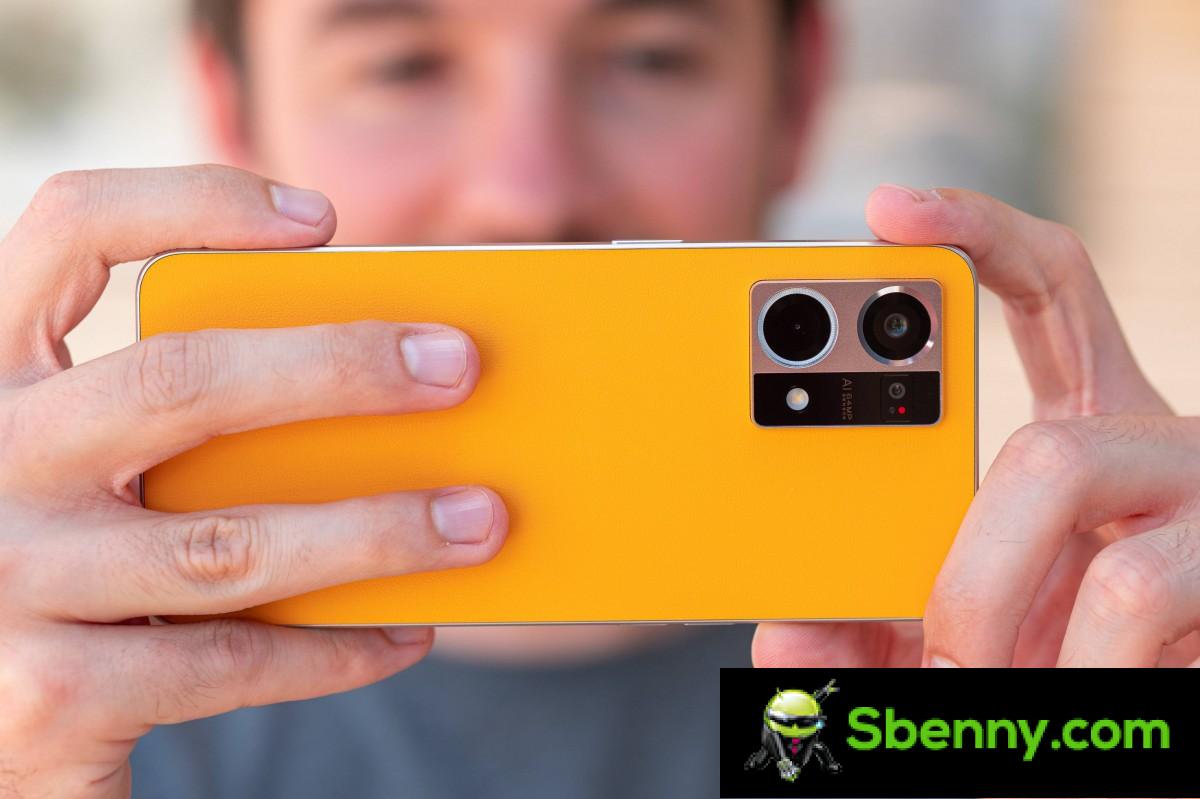
The Reno7 we have for review took us a couple of years back, reminding us of the Find X2 Pro. In this Sunset Orange colorway, the Reno sports a faux leather back accompanied by a gold-looking bezel, and while the shapes and hues are off, the Find reference is there.

Oppo calls it “fiberglass leather” and they did a laboratory test for the friction resistance of denim for 200,000 … rub against jeans? Sure, a weird metric, but either way, the back panel is comfortable to hold and doesn’t detect fingerprints.
We haven’t seen the Cosmic Black version in person, but it looks like it has that glitter effect when exposed to bright light – we like that too.
Sunset or Cosmic, the Reno7 is IPX4 rated. The X means it doesn’t have a rating for dust resistance, so maybe don’t keep it on the table while you’re kneading the pizza dough, but the 4 means it should be good in case of water splashes.

The camera island has a rather distinct design, the two-tone color appearance accentuates the actually usable cameras. It’s a pretty significant bump too, but it’s not too prone to wobble, at least not while using the keyboard.
A unique feature of the Reno7, which is something of a byproduct of the camera setup, is the ring light around the microscope camera. Not only will it illuminate the subject during close-up shooting, but it can be used for notifications and as a status light while charging.

The Reno7’s chassis might give us Find vibes, but it’s actually objectively very different. For one, it’s plastic, but it matters little to handling – it doesn’t feel cheap. More importantly, it’s flat, so it offers a large gripping surface and you can easily lift the phone off a table, however slim the Reno as a whole may be.

And it’s pretty thin, yes – Oppo quotes 7.54mm for the Sunset version and 7.49mm for the Cosmic one. Measuring 159.9×73.2mm, the Reno7 has a reasonably compact footprint and isn’t too heavy at 175g. The size, shape and materials make it very pleasant to handle, a result that not all midrangers can claim.
Oppo maintains the left-right separation even in its control position: the volume buttons (two discrete, as opposed to a rocker) are on the left, while the power button is on the right. All three have pleasantly positive click feedback.
Also on the left is the card slot, and the Reno7 has the best implementations – you can have two nano SIMs and a microSD card all at the same time.


Power button on the right • Volume selector and card slot on the left • Tray for three cards
Another welcome sight is the 3.5mm jack on the bottom. Keeping him company are the usual bits: microphone, USB-C port and speaker.
At the opposite end of the phone, there is also another microphone.


3.5mm jack and the usual stuff on the bottom • Secondary microphone on top
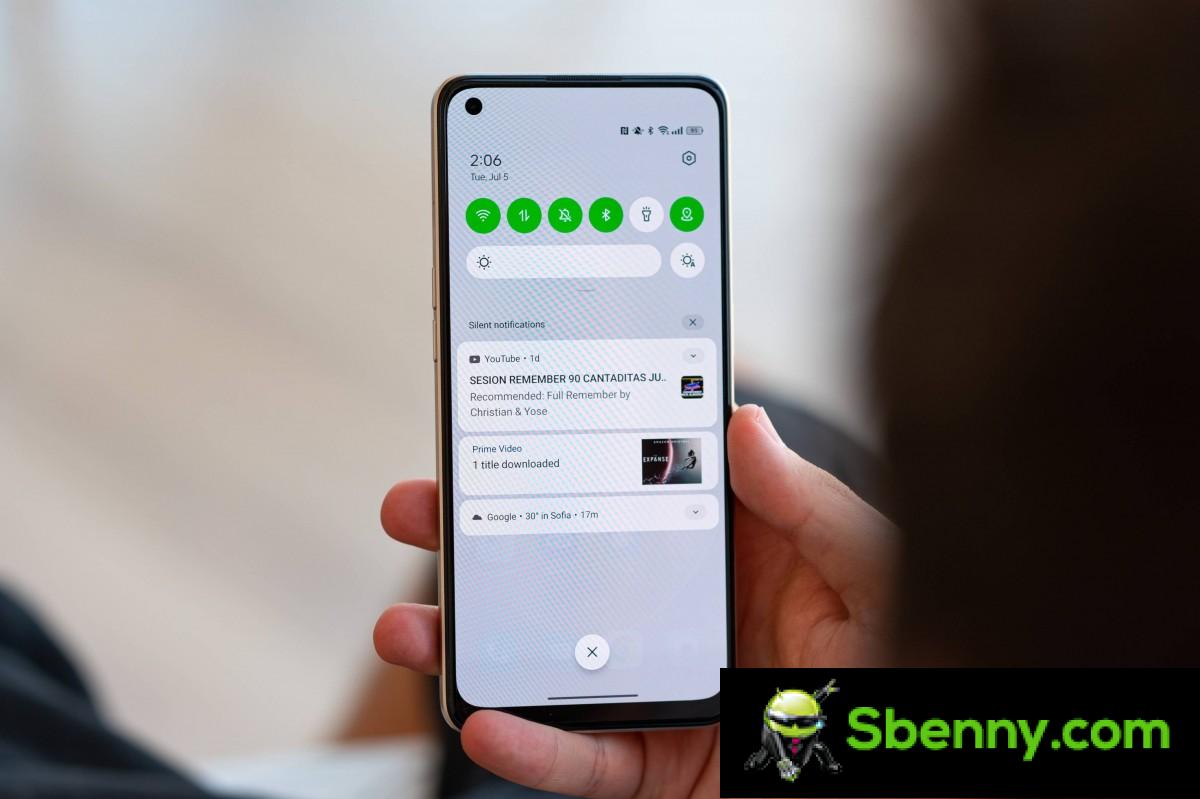
The front of the Reno7 sees the 6.43-inch OLED display surrounded by a “mid-range” black bezel if this distinction is allowed. It’s not minimal, per se, and the chin is thicker than the rest, but it’s by no means a creepy amount of bezel.

A cutout in the upper left corner of the display is where the selfie camera peeks out, while the headset sits behind a grille above the display. The panel itself is protected by Gorilla Glass 5, which should be sturdy enough on its own, but Oppo has also applied a plastic screen protector for added peace of mind.

The Reno7 is equipped with an under-display fingerprint sensor which is located relatively low on the phone. The thicker chin and reasonable overall size make its less-than-ideal position less of a problem, and after a brief learning phase, using it becomes second nature.

Overall, the Reno7 is both easy to see and easy to use. The Sunset Orange coloring, with its synthetic leather back, performs well and protects against fingerprints, looking good in the process. Size and weight are also on the low end of the spectrum, which we see as an advantage in a world of oversized phones.


Start a new Thread