
The Galaxy S23 FE is an update to the rather popular Galaxy S21 FE, improving its design, performance and camera quality. It is available in two different variants, depending on the market. The North American model is based on the Snapdragon 8 Gen 1 chip, while the global model uses the Exynos 2200.
Having different chipsets, even if equal in performance, will lead to inevitable differences in battery life, camera performance, and system stability. And since we received the two models: SM-S711U1 representing Snapdragon and SM-S711B representing Exynos, this VS item was simply inevitable.
Summary:
View the comparison
The two Galaxy S23 FE models feature identical display panels: 6.4-inch Dynamic AMOLED 2X screens with 1,080 x 2,340 pixels, 120 Hz refresh rate and support for HDR10+ streaming. Samsung advertises them for up to 1,450 nits of peak brightness.
And, as you’d expect, both screens have nearly identical brightness capabilities – 985nits for the Snapdragon versus 1,007 for the Exynos variant in automatic mode e 485nits for the Snapdragon versus 478nits for the Exynos model with manual control.
Both screens offer accurate color calibration.
The refresh rate supports two modes in both models: up to 60 Hz and up to 120 Hz. If you choose the latter option, the screen will revert to 60 Hz for static content and video playback.
Battery life
Both Galaxy S23 FE Snapdragon and S23 FE Exynos are powered by 4,500 mAh batteries.
And we found the first difference between the two in the battery life department. The Snapdragon model turned out to be the best. It measured an active usage time of 9:45 hours compared to 8:28 for the Exynos version.
The two models were neck and neck when it came to web browsing and social media apps, but the Snapdragon version was about 20 percent ahead in every other scenario.
Charging speed
The Galaxy S23 FE supports fast charging up to 25W in both its versions. The S23 FE ships, as usual, without a charger. You can use any 25W PD+PPS charger, as it will reach the maximum charging power supported by your phone.
Wireless charging is available on both.
It goes without saying that both phones charge equally quickly. The 25W power adapter charges 30% of the Galaxy S23 FE’s battery in 15 minutes, while another 15 minutes will take you to 58%. A full charge takes 84 minutes.
Performance
The main difference between the two Galaxy S23 FE models is the chipset, which may or may not lead to differences in performance and stability.
Both the Snapdragon 8 Gen 1 and the Exynos 2200 are 4nm chips; both were the heart of the Galaxy S22 series. Both chips feature similarly configured octa-core processors: a single powerful Cortex-X2 core, three 2.5 GHz Cortex-A710 units to balance performance and efficiency, and four 1.8 GHz Cortex-A510 cores for ‘energy efficiency. The Prime core is clocked at 2.8 GHz inside the Exynos chip and a frequency of 3.0 GHz inside the Snapdragon solution.
The Exynos 2200 has this Xclipse 920 GPU, which is the result of a collaboration between Samsung and AMD and is based on the excellent RDNA2 architecture, as seen on computer GPU solutions. The Snapdragon model has the Adreno 730 GPU.
The Galaxy S23 FE has 8GB of LPDDR5 RAM and is available in two storage versions: 128GB (our models) and 256GB.
Performance is similar on both smartphones, with the exception of the GPU: the Snapdragon model has a constant increase of 5%-6% compared to the Exynos version.
Stability turned out to be average in both versions. The Snapdragon one offers 66% CPU and 46% GPU stability. The Exynos model achieved 58% CPU and 50% GPU stability.
Camera comparison
The Snapdragon-based Galaxy S23 FE and the Exynos-based Galaxy S23 FE have identical cameras, although different ISPs may account for slight differences in photo and video quality. On the back there are three cameras: a 50 MP OIS primary, a 10 MP 3x OIS telephoto and an 8 MP ultrawide. The front camera is 10 MP.
The quality of photos and videos differs slightly in these versions, but it’s nothing major.
There is a substantial difference between the photos from all cameras and that is the better noise reduction in favor of the images taken with the Snapdragon version.
The main cameras save detailed photos with vibrant colors and a wide dynamic range. They’re also a little sharper on the Snapdragon model, which doesn’t necessarily mean more detailed.
The sharpness advantage is even more evident in ultrawide photos, where those from the Snapdragon model appear rather sharper, while those from the Exynos version – are more organic, albeit softer.
Photos from telephoto cameras are solid. The ones from the Snapdragon version are great and once again noise-free, while the ones from the Exynos version have gentler noise reduction and look a little better, less washed out and more detailed. The difference is minimal, though.
The difference in processing also affects selfies: the Snapdragon model saves sharper selfies with more prominent facial features, while the Exynos one is slightly more pleasant with a more balanced sharpness.



S23 FE Snapdragon: Main • UW • Tele 3x • Selfie




S23 FE Exynos: Main • UW • Tele 3x • Selfie




S23 FE Snapdragon: Main • UW • Tele 3x • Selfie



S23 FE Exynos: Main • UW • Tele 3x • Selfie
At night, both phones produce some nice shots. Just as with daytime photos, the Snapdragon-based model does better at noise reduction and presents images with a cleaner look.
Photos from the main camera and ultrawide camera are almost identical, but the Snapdragon phone is ahead with telephoto photos.


S23 FE Snapdragon: Main • UW • Tele 3x



S23 FE Exynos: Main • UW • Tele 3x
Finally, let’s talk about video capture. Both Galaxy S23 FE models can record videos at up to 4K30 with all cameras; 4k60 is present on the main camera and selfies, while 8K24 is also available for the main camera. Optional video stabilization (EIS) is available for all cameras.
Videos from the primary, ultrawide, and selfie cameras are better when coming from the Exynos version of the Galaxy S23 FE: they’re slightly more detailed and not washed out, likely due to gentler noise reduction or simply more balanced processing.
As for the telephoto lens – it’s the opposite – the Snapdragon one has more detailed and sharper footage, while the Exynos model saves a noise-free but faded clip.




Screengrab S23 FE Snapdragon 4K: Main • UW • Tele 3x • Selfie



S23 FE Exynos 4K Screenshot: Main • UW • Tele 3x • Selfie
Low-light videos are generally better when captured on the Exynos-powered Galaxy S23 FE. They are noise-free and with more visible and organic details.



S23 FE Snapdragon 4K Screenshot: Main • UW • Tele 3x



S23 FE Exynos 4K Screenshot: Main • UW • Tele 3x
Verdict
The Samsung Galaxy S23 FE is quite strange. First of all it is equipped like an expected Galaxy S22 FE. So, in some markets, it is priced like the Galaxy S23. Finally, there is chipset fragmentation which we have discussed in detail in this article. It seems like a difficult step at first, right?
Still, it’s a solid smartphone, which will be worthy of a recommendation once the price stabilizes. And we believe this will happen very soon.
While there is no chance that both versions will be available in one market, it is still useful to know what differences there are.
We found the Snapdragon-based Galaxy S23 FE to have longer battery life, better photo quality, and a slightly faster GPU.
On the other hand, the Exynos-based Galaxy S23 FE has a more stable GPU with new Vulkan 1.3 support. Its video quality also seems more mature. Oh, and it launches Android 14 with One UI 6 right out of the box.
The differences between the two models, however, are minimal and no matter which one you choose, you won’t be missing anything and both are worth considering. Even if we had the choice, we would prefer the Snapdragon version for its better battery life.
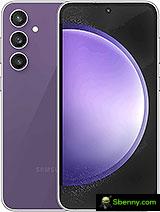
- Same display/speaker design and performance.
- Longer battery life.
- Slightly faster GPU with Vulkan 1.1.
- Cleaner and slightly sharper photos.
The Snapdragon Galaxy S23 FE has:

- Same display/speaker design and performance.
- Improved GPU performance stability and Vulkan 1.3 support.
- Slightly better video quality.
- Android 14 with One UI 6 out of the box.


Start a new Thread