
The day you marked on your calendars has arrived: it’s Black Friday (for real this time). We’ve already shared our picks for the best smartphone deals in the US, so check them out if you missed it. Now we move to Europe. We focused on Amazon Germany and Amazon UK and tried to list both for each phone (not always possible so there are some gaps). There are some offers from other shops as well.
Some phones are cheaper in Germany, some in the UK. Unfortunately, it’s not that easy to ship a phone from one place to another anymore. However, Amazon Germany delivers to the rest of the EU.
Since we have chosen a few phones, we have tried to organize them into categories. The links below will help you jump straight to the category you need. There are flagships, mid-rangers, as well as some more specialized categories like gaming phones and battery life champions.
Cheap 5G phones
5G networks in Europe are pretty well established at this point, so here are some cheap options to enter the era of high bandwidth and low latency. The Samsung Galaxy A23 5G has a Snapdragon 695 chipset and a relatively large 6.6-inch LCD (120Hz FHD+), as well as a large 5,000mAh battery for endurance during long streaming sessions.

The OnePlus Nord CE 2 Lite 5G is a direct competitor with a 6.59″ LCD (120Hz FHD+) and the same Snapdragon 695. It’s cheaper than the A23, but it loses the OIS function on the main cam and doesn’t have the ultra- wide (the A23 has a 5MP UW camera).

The Redmi Note 10 5G on the other hand has a 6.5″ LCD (90Hz FHD+) and a Dimensity 700. However, it still has a large 5,000mAh battery. The Nord is probably the better choice unless you are a fan of MIUI.

Flagships
Flagships get the biggest discounts in absolute terms, so this may be the most interesting category. Instead of saving €50-100, you can save several hundred euros.
The Sony Xperia 1 IV is adorable, its price isn’t that much. But with a steep Black Friday discount, this multimedia-focused flagship could be within your grasp. It features a 6.5-inch 4K-class OLED display (120Hz, 10-bit), plus 12MP triple camera with continuous zoom lens (3.5x-5.2x).

Another camera flagship is the OnePlus 10 Pro with second generation Hasselblad technology. This is distinguished by its 150° super wide-angle lens, as well as a 48MP main camera and an 8MP (3.3x) periscope. Plus, a 5,000mAh battery with 80W wired and 50W wireless charging.

Next, more awesome cameras. The Honor Magic4 Pro lacks the camera maker’s famous logo on the back, but it does have a 50MP main camera, a 50MP ultra-wide angle and a 64MP periscope (3.5x), all three impressive in our review. The charging stand is one of the best out there – whether you use the 100W wired or 100W wireless option, you’ll be done in under half an hour.

Flagship killers
The Realme GT2 Pro is a Snapdragon 8 Gen 1 powered phone. This is distinguished by a QHD+ 120Hz LTPO2 display and a 50MP 150° ultra-wide-angle camera. This phone really lives up to the “flagship killer” name as it undercuts the price of the OnePlus 10 Pro while offering most of the same features (well, except periscope and wireless charging).

Some may not care for Hasselblad cameras, so something like the OnePlus 10T might be a better choice. It’s cheaper than the 10 Pro and it’s quicker to boot, thanks to the Snapdragon 8+ Gen 1 chipset. The charging system is faster too, going up to 150W (without wireless, though). Also note that you’ll be missing out on the 10 Pro’s QHD+ LTPO2 display.

The Motorola Edge 30 Pro uses the original 8 Gen 1 chipset but pairs it with a 6.7″ 144Hz OLED display. It’s not as camera-focused as the Edge 30 Ultra, though it does at least have a 50MP ultra-wide-angle camera (unlike the 10T above, which only has an 8MP UW camera.) Wired charging is slower at 68W, on the plus side there’s support for 15W wireless charging. Amazon is rolling out a free car charger and protective case.

Older flagships
The Google Pixel 7 Pro is better than the Pixel 6 Pro, hands down, but it’s new and costs more. It’s not that the Tensor G2 is much faster or that the cameras are much different. If money is no object, the newer model is better, otherwise this one is worth a look. Especially with Google’s longer than average software support (3 OS updates, 5 years of patches).

The OnePlus 9 Pro is in the same boat: The OnePlus 10 Pro is better, but its iterative improvements may not be worth the extra cost in your eyes. This is in the same price range as the flagship killers above; however, it’s a real (albeit old) flagship.

Premium all-rounder
Like its Pro sibling, the OnePlus 9 has aged in the “last year’s model” category. Still, with a Snapdragon 888 and a 6.55-inch 120Hz AMOLED display, plus a pair of Hasselblad cameras (48MP main, 50MP ultra wide), it’s still worth a look. Unlike the previous models in the vanilla series, this one too has wireless charging.

The Motorola Edge 30 Fusion packs the slightly faster Snapdragon 888+ chipset and has a faster 6.55-inch 144Hz display. However, it lacks OnePlus’s camera prowess and a few other tidbits, making it harder to justify the extra cost.

The Honor 70 goes the other way: it focuses on the cameras (with a 54MP main and a 50MP ultra wide angle) rather than on the chipset, which is a Snapdragon 778G+. It’s not as fast as the 888, but it helps improve battery life (100 hour endurance rating).

Mid-range all-rounder
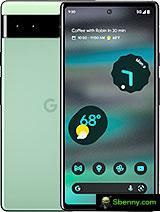
We know the Pixel a series has some dedicated fans, and the Pixel 6a is arguably the best yet: It has the same Tensor chip as the Pixel 6 Pro, and while the dual 12MP cameras aren’t too exciting in terms of hardware, Google excellent processing keeps them competitive.
The Nothing Phone (1) has the eye-catching Glyph system and has bragging rights as the only Snapdragon 778G phone with wireless charging (the chipset is actually 778G+). If you subscribe to the Nothing aesthetic, you can also pick up the TWS Nothing earphones (1) for €80 (Amazon Germany has the phone and earphones bundled, but it’s no cheaper than buying them separately).

The Redmi Note 11 Pro is distinguished by a 108 MP main camera (which also handles zoom in). The 8MP ultra-wide module and the limit on 1080p video recording are less impressive. On the plus side, the 6.67-inch 120Hz AMOLED display is quite good, even if it only has a Helio G96 chipset to drive it (i.e. don’t expect 120fps gaming).

The OnePlus Nord 2T has a Dimension 1300 with a much more powerful GPU, but it is connected to a smaller 6.43″ 90Hz AMOLED. In addition, the main camera has larger pixels (50 MP, 1.0 µm) and has OIS, which the Redmi lacks is quite expensive in Germany, however.

OnePlus Nord CE 2 5G is not as good as the 2T. It has the same 6.43-inch 90Hz AMOLED display but uses the older Dimension 900 chip and the main camera drops to a base 64MP sensor (no OIS). We only include it as a budget option for Germany.

The Poco X4 GT is more expensive than the Redmi Note 11 Pro but packs the Dimensity 8100, which offers plenty of performance in this price range. And it’s connected to a 6.6-inch 144Hz LCD for a much smoother experience. The camera section is less impressive, so it could serve as a mid-range gaming phone, less of a camera phone.

The Poco X4 Pro 5G is cheaper than the Redmi but has a similar display (6.67″ 120Hz AMOLED) and a similar camera setup with a 108MP main and 8MP ultra-wide. However, the Snapdragon 695 limits still the video at 1080p.

Gaming phones
Amazon Germany has a limited edition Free Fire version of the Realme 9 Pro+. With a Dimensity 920 and a 6.4-inch 90Hz AMOLED, this is more of a mid-range gaming phone, but it’s an interesting choice for gaming fans.

Moving on to something more powerful, the Asus ROG Phone 6 packs a Snapdragon 8+ Gen 1 and a 6.78-inch 165Hz AMOLED display – now, this is a real gaming phone. And it’s got the hefty 6,000mAh battery to prove it, plus a second USB-C port on the side for convenient charging while you play.

Red Magic is also in the Black Friday bonanza. Its top Red Magic 7S Pro can be configured with a ridiculous 18GB of RAM and 512GB of storage. The price isn’t ridiculous, though; it costs like the ROG Phone. The 6.8″ 20Hz AMOLED display isn’t that impressive, but its performance is no joke. The 7S Pro uses the 8+ Gen 1 chip, of course, and boasts an active cooling fan for sustained performance.

You can save quite a bit of money by going with Red Magic 7 Pro which is only a few months older. It uses the original 8 Gen 1 chipset, which runs hotter, but the fan takes care of it. The memory configuration here is 16/256GB contained.

If you’re not freaking out with the 7S Pro, we’d recommend the vanilla Red Magic 7 over the 7 Pro. It’s a bit cheaper, but its 6.8″ AMOLED display runs at 165Hz (not 120Hz like on the Pro). Also, the lower priced is the 18/256GB model, so there’s an extra two GB of RAM. Why even list the Pro then? Well, we thought the under-display camera might have some appeal too. if tucking it into the top bezel like the vanilla phone does is also a great option.

Compact phones
Compact doesn’t mean quite what it used to be, but at 67mm wide, the Sony Xperia 5 IV certainly fits well in the hand. It’s powerful, too, with a Snapdragon 8 Gen 1 chip, plus a solid 6.1-inch 120Hz AMOLED display – FHD+ resolution only, though that’s sufficient at this size. Also, note that the 12MP triple camera differs from the 1 IV in that the telephoto lens is locked at 60mm.

Another small flagship is the Asus Zenfone 9. It measures 146.5 x 68.1 x 9.1 mm (169 g in weight) and with a 5.9″ 20:9 display, it is smaller than the most Android out there (flagship or otherwise.) It’s more powerful than most plus, with a Snapdragon 8+ Gen 1 chipset. ultra-wide (no telephoto, however) battery (30W charging) and makes efficient use of it as it clocked up a 108-hour endurance (down slightly from the Xperia, which managed 116 hours).

The Xiaomi 12 is much smaller than its Pro sibling, and while not tiny, it’s among the smallest premium phones you can find. It also uses 8 Gen 1 for power and has a 6.28-inch AMOLED display (120Hz, 12-bit!), but lacks a camera (it has 50MP main modules and 13MP ultra-wide modules ). Charging is much faster than the Sony, with 67W wired wireless support and 50MP.

The Motorola Edge 30 Neo is roughly the same size as the Xiaomi but is in a different price category. That means a Snapdragon 695 chipset and no wireless charging. On the plus side, we described the 6.28″ 120Hz AMOLED display as “flagship” in our review. Not bad for half the price.

Battery life champions
These are the marathon runners of the smartphone world. The Poco M4 Pro is a budget device, but it got a stamina of 126 hours. With a 33W fast charge, it takes an hour and 10 minutes to get back to 100% (according to our measurements, Poco says it takes 58 minutes).

The Realme 9 costs just a little more and is even more impressive: its endurance is an impressive 156 hours. Its charging system has the same 33W charging stand and the battery capacity is the same (5,000mAh), so a full charge takes about the same (one hour and 16 minutes).

The Sony Xperia 10 IV has increased the battery capacity to 5,000mAh and improved upon the already impressive Mark 3 with an endurance rating of 163 hours. Good thing too, because charging is best described as “slow” (2 hours and 30 minutes maximum).

The Realme GT Neo 3 can also last a long time and (unlike the others) is fast enough to recharge at 80W (0-100% in 32 minutes). Amazon Germany also has the 150W model, which lasts 102 hours despite its smaller 4,500mAh battery — a battery that takes just 16 minutes to fully charge.

PS. We have extensive coverage of Black Friday deals, including deals on tablets, headphones, wearables, laptops, peripherals, and more. Check out the full list here.


Start a new Thread