
The chipset that powers a phone is a significant factor in choosing your next phone. Of course, this is the result of last week’s survey and our readers are more technologically minded than the general population, but still very few people chose the “don’t care” option.
The results clearly show that having the latest and greatest silicon isn’t particularly important. For more than 40% of voters, an older but still capable chipset is a perfect option. Recently, it was the Snapdragon 8+ Gen 1 and the Dimensity 9200 that filled this role.
Although they are only half, there is still a group of those who focus on buying the latest flagship chipset: it would be the one with the latest innovations. Mobile technology is still moving at a rapid pace, and generative AI (for both images and text) has been in the spotlight recently with chip designers promising hardware to accelerate these use cases.
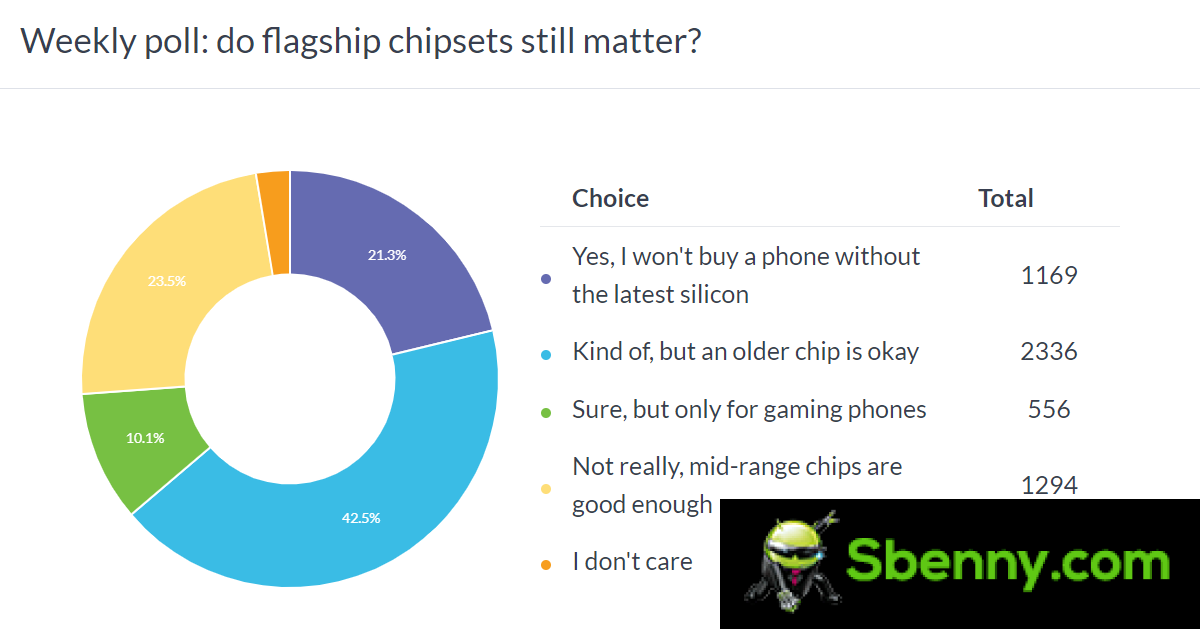
Apparently, however, more people would be fine with a mid-range chipset (a few percentage points more). And they’re right: Google’s new Magic Editor for the Pixel 8 series uses a cloud-based service, despite the Tensor chip being specifically geared towards artificial intelligence. If a server somewhere does the heavy lifting, why pay extra for a faster chip that will sit idle in your pocket?
Finally, there are those who see flagship chipsets as something just for gaming phones. In fact, mobile gaming represents one of the heaviest workloads a modern chip can encounter as AAA titles are launched by big studios. Like on desktop, faster hardware could be crucial for a good gaming experience.
Long story short, a cutting-edge flagship chip will be appreciated by today’s early adopters, but its life doesn’t end there: as it ages and becomes cheaper, it will be used in great value phones in a few months or even a few years later.


Start a new Thread