
Xiaomi’s Mi Band line, which is called the Smart Band outside of China, has amassed quite a following thanks to its super-aggressive pricing and solid feature set. We’re on generation 8 now and this brings the focus to style with a much larger pool of top-notch straps in all sorts of styles and not many updates under the hood.
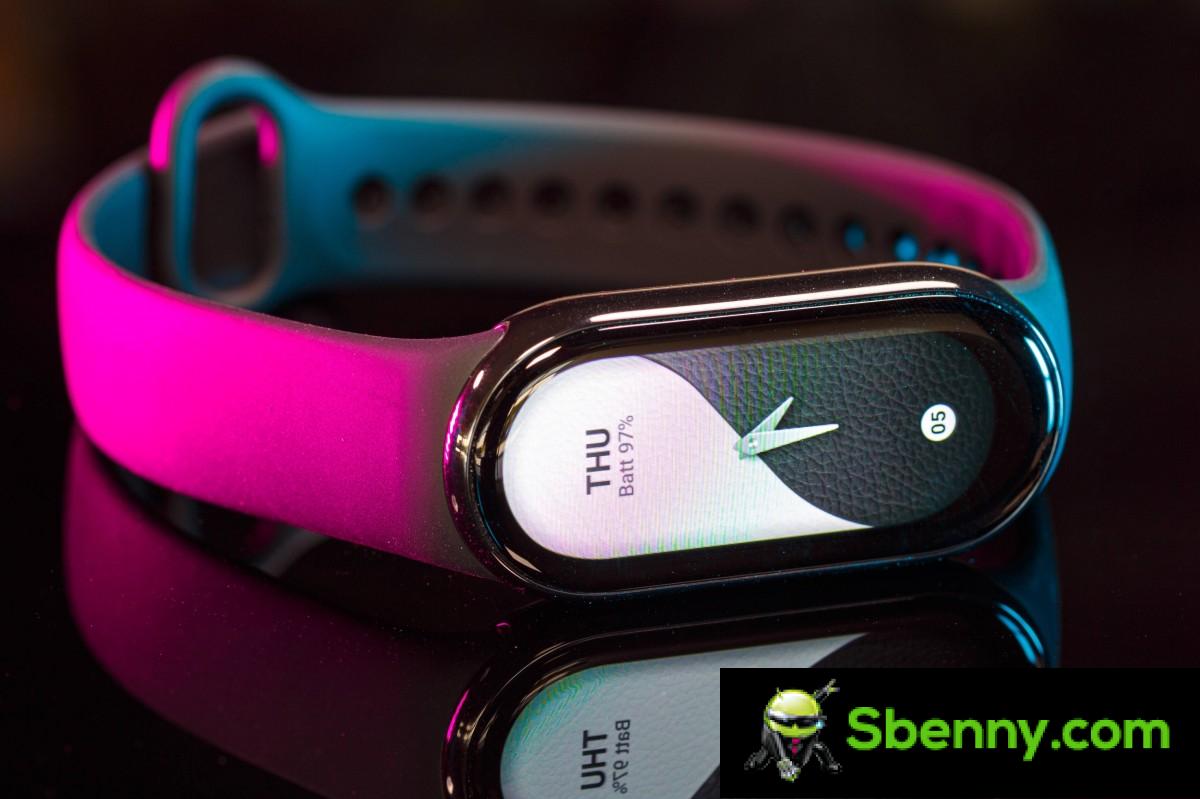
I’ve been using an older Mi Band 5 for a few years now and love its ease of use and lightweight design, making it easy to wear 24/7. It’s a killer low-profile alarm clock when you need to wake up earlier than the rest of the family and consistently offers up to two weeks of battery life per charge.
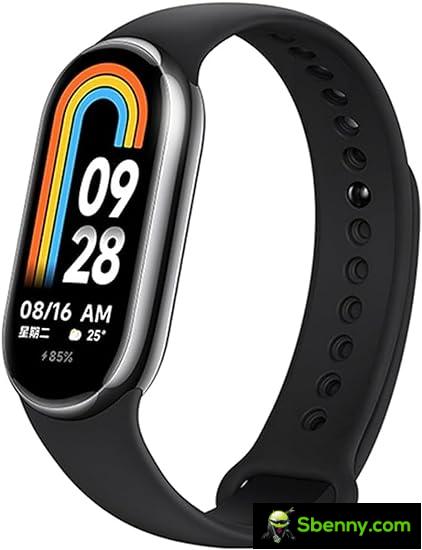
So how does the $64/€40 Smart Band 8 compare to its predecessors, and how does it position itself in the crowded fitness tracker market? We will try to answer these questions in the next lines.
Xiaomi Smart Band 8 specifications
- Screen: 1.62″ AMOLED touchscreen, 192 x 490 px resolution, 60 Hz refresh rate, 600 nit peak brightness, 2.5D glass
- Straps: Detachable silicone straps, width 22mm, adjustable length 130-220mm
- Characteristics: 5ATM Rating, Real-time Heart Rate Monitor, 24/7 Blood Oxygen Level Monitoring, Sleep Monitoring, Stress Monitoring, Sports Monitoring, VO2 Max, Pedometer, Meditation, Notifications, Inactivity Alert, drink reminder, phone search, weather forecast, music and camera control
- Sports Modes: Outdoor Running, Indoor Running, Outdoor Walking, Indoor Walking, Outdoor Cycling, Indoor Cycling, Strength Training, Football, Yoga and Cricket (140+ in Mi Fitness app)
- Sensors: PPG optical heart rate sensor, SpO2 sensor, 3-axis accelerometer, rotor vibration motor
- Connectivity: Bluetooth 5.1 LE, compatible with Android 6+ and iOS 12+
- Drums: 190mAh
- Colors: Black gold
- Dimensions: 48 x 22.5 x 11mm
- Weight: 24 grams with strap (14 grams without)
Project
The Smart Band 8 looks virtually unchanged from its predecessor, but there are two key differences: Band 8 features a metal build and a new style of band that connects directly to the tracker. This means that older bands of the Band 7 are not compatible with it. This is only a big deal for upgraders, for newcomers there are already dozens of third-party Band 8 straps on e-commerce platforms, and the pool of strap styles will only expand in the coming months.

The Strap 8 measures 48 x 22.5 x 11 mm and weighs just 14 grams without the silicone strap – just over the 13 grams of the Strap 7 and the 12 grams of the Strap 5. The new strap design features two quick release buttons on the bottom. and high and is really tidy. Hopefully the release buttons will hold up over time and won’t come loose. Our review unit comes with the black silicone strap, and Xiaomi also sent us the green calfskin option that features a belt buckle design as well as the pendant and running clip that let you attach the Band 8 on your shoes.


Xiaomi leather watch strap, pendant and running clip
The Band 8 feels light and discreet on the wrist and is comfortable to wear all day. Our only complaint about the design is the lack of a home/back button like on the Band 5 and previous generation Mi Bands. The Band 8’s larger screen is nice to look at, but navigating the UI solely via touch controls isn’t ideal, especially while exercising.
The Band 8 is waterproof up to 5 ATM, so you can take it swimming. The box contains the Band 8 and a new proprietary two-pin magnetic charger terminating in a USB-A cable. The charger is not compatible with older generation Mi Bands.
Characteristics
In terms of health monitoring, the Band 8 offers exactly the same core features as its predecessor with 24/7 heart rate monitoring, as well as continuous SpO2 monitoring, sleep monitoring and stress monitoring. There’s no GNSS sensor on the Band 8 yet, so you’ll have to rely on your paired smartphone’s GPS for detailed running or walking data. Our international unit also doesn’t have an NFC receiver, which is another big omission.

The Xiaomi Smart Band 8 offers tracking of a total of 151 training modes ranging from standard running and weight lifting to more niche activities such as kite flying, table football and board games. The good news is that all 151 activities are available directly on the band. The Mi Fitness app stores up to a month of health and workout data so you can track your progress. You can also sync your workout data with Strava and Apple Health on iOS phones.
The Band 8 comes with several running-specific features, including wrist-based running routes with options to set goals for distance, heart rate, and time. There’s also a smart buddy mode that shows your position relative to your set pace in real time. The Vitality Score is Xiaomi’s updated Personal Activity Intelligence (PAI) rating that takes into account how active your day has been based on your movements and exercise patterns, taking into account your age, heart rate and data of training over a seven-day period and evaluating a cumulative score.
The screen size and resolution on the Smart Band 8 matches that of the Band 7: a 1.62″ AMOLED panel with 192 x 490 pixels. One thing you’ll notice about the Band 8 is the updated 60Hz refresh rate which is noticeably smoother than older Mi Bands, which were locked to 30 Hz. The screen maxes out at 600 nits in auto mode compared to 500 nits on the Band 7, and you now get auto brightness, which is a long overdue feature. screen also supports a double tap to wake and an Always-On Display (AOD) feature.
There are a lot of great additional watch face options within the Mi Fitness app, but for some reason the iOS app doesn’t have access to the watch face store. Some of the new watch faces also come with minigames, another nice addition.
Band 8 also offers basic notifications with the ability to receive unanswered text messages. You can also reject calls and send pre-determined responses via SMS. The vibration motor here is powerful in its default state and can be programmed to hum even louder from the settings menu. Miscellaneous features include alarm, timer, weather widget, reminders, music controls, breathing exercises, and a camera shutter for your paired phone.
Strangely, Xiaomi decided to go back to Bluetooth 5.1 when the Smart Band 7 was already on the new version 5.2. It still supports Bluetooth Low Energy (BLE) and the only major downside we can think of is the lack of Low Energy Power Control (LEPC) which is only present on Bluetooth 5.2.
Software and performance
The software side of the Band 8 should be familiar to longtime Mi Band users. You can access the watch face by rotating your wrist or double-tapping the screen. From there you can swipe down for notifications or up for the app drawer. You also have your own widgets placed on the left and right sides that offer quick access to your most used apps. New this year is that you can now add widgets with two shortcuts on a single tab.
You can create your own widgets in the Widgets tab of the Mi Fitness app with access to all apps and their specific features and workout modes. You can pair any of the built-in apps while the workout widget also lets you add up to two shortcuts of your favorite activities right on the home screen.

If you’ve used an older Mi Band in the past, you’ve probably used the Zepp Life companion app on your phone, which is now replaced by Mi Fitness. You can transfer all your older data between the two apps.
Heart rate monitoring on the Band 8 is configurable for every 1, 10, or 30 minutes with shorter values obviously using up more battery life. You can also set high and low heart rate alerts with notifications that appear when you’ve gone above or below a predetermined value.
Blood oxygen level (SpO2) monitoring is configurable for all-day monitoring and also works during sleep sessions. In terms of accuracy, both the heart rate and SpO2 readings offer similar values to what you’d get on smartwatches and other health trackers. You get consistent results that are a great way to measure your overall well-being, but keep in mind that you’re not getting medical-grade readings.

Sleep monitoring showed correct bedtime and wake-up times. Band 8’s native sleep app shows your last night’s sleep session with a detailed breakdown of your REM (deep, light, rapid eye movement) sleep percentage. You also get averages of your heart rate and blood oxygen readings directly in the Sleep app on the band. If SpO2 monitoring is enabled, you also get a breathing score based on blood oxygen levels, plus helpful tips within the companion app on how to improve your breathing while you sleep.
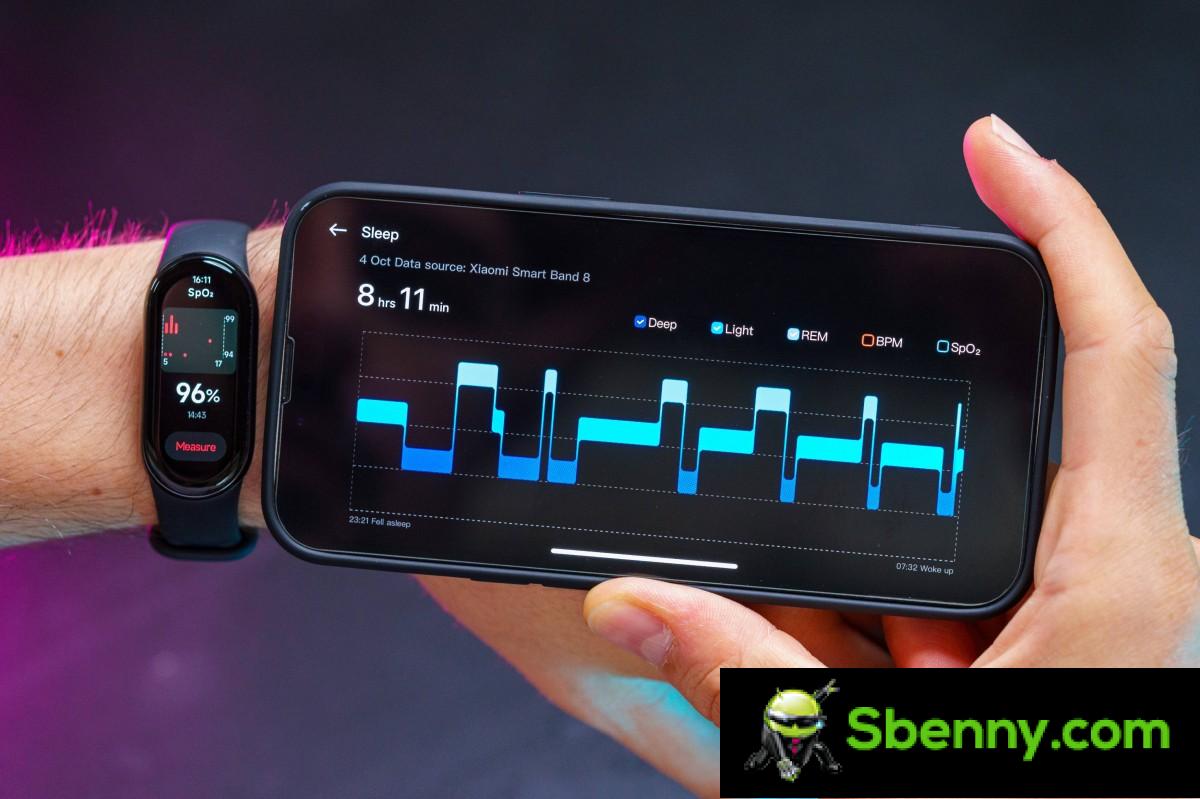
Band 8 was able to recognize instances where I woke up during the night to go get some water and then accurately record when I went back to bed. The only hiccup I encountered with sleep tracking was when the band recorded a nap session while stuffed in a pocket of my backpack.
Activity tracking is more accurate than I would get from my Band 5 with more accurate step counting. You can enable automatic workout recognition for some activities such as walking, running, and cycling. As for general training data, you get a heart rate graph, calories burned, a detailed analysis of training intensity and suggested recovery times.
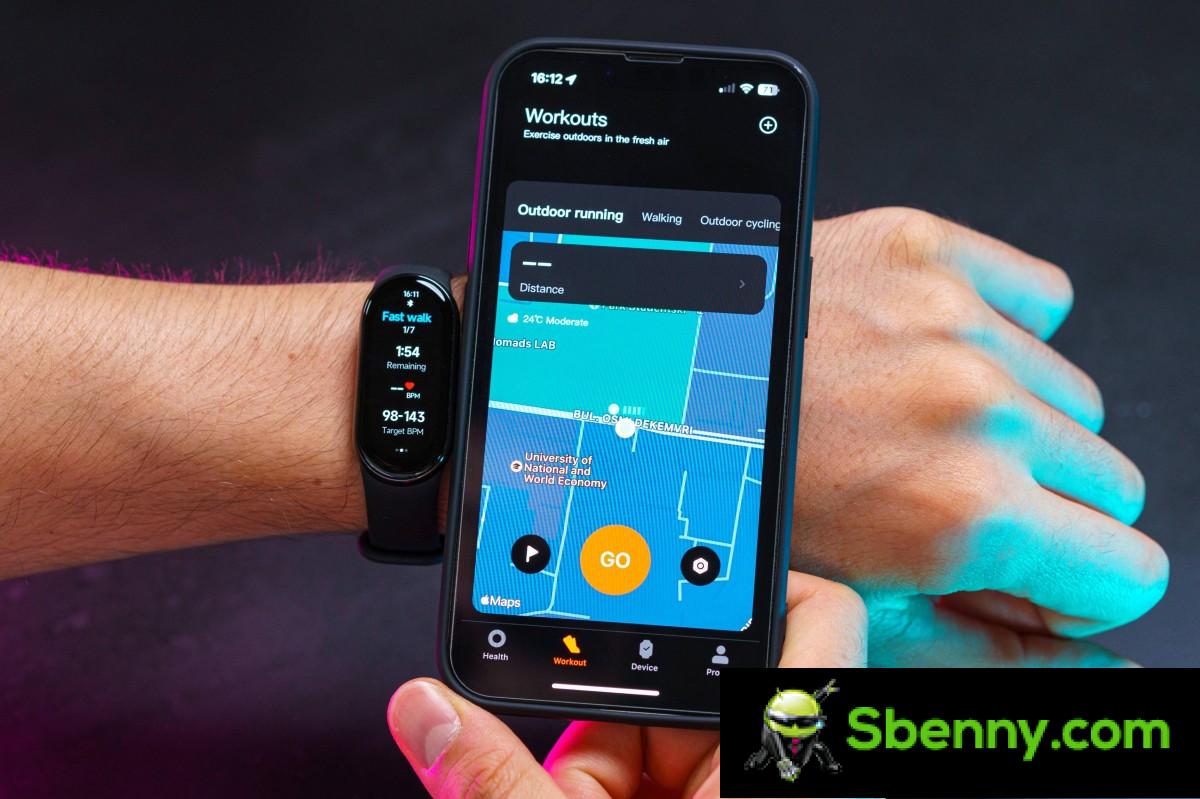
Running and walking can take advantage of your phone’s GPS receiver to map your route along with other vital data like distance travelled, pace and cadence – the number of steps you take per minute.
The optional running clip accessory we had for this review allows for some additional readings once you enable Pebble Mode from the Mi Fitness app and strap the Band 8 to your running shoes. Pebble mode evaluates your running form and gives you more specific and presumably more precise measurements of cadence, stride length, ground contact time, and impact force. These features are definitely valuable for avid runners and can help you adjust your running form in real time during training.

Connectivity between the Band 8 and my iPhone 13 was fine, although I experienced several drops that required me to go into the Mi Fitness app and manually sync the two devices again. Overall, the Mi Fitness app on iOS isn’t as polished as its Android counterpart with some features like the watch face store not accessible at the time of this review.
Battery life
Xiaomi says you can expect up to 16 days of use from the Band 8 and its 190 mAh cell, and 6 days with Always On Display (AOD) enabled. With this in mind, my unit lasted 7 and 6 hours with all health monitoring features active, with no notifications or AOD enabled. Battery saver mode can extend life to over 19 days by limiting you to a basic monochrome dial and step count.

Another hidden addition to the Band 8 is the new battery estimate feature which gives you a pretty accurate account of how long you’ll last until the next charge based on your usage and enabled features. This feature is accessible from the Band 8 settings.
The two-pin magnetic charger is the same as the Band 7 and Band 7 Pro, but older models like the Band 6 and 5 use a different one, so you won’t be able to reuse any of those chargers, which is a Sin. A full charge takes approximately 1 hour.
Verdict
Xiaomi Band 8 is undoubtedly the best smart wearable option in its price segment and offers impressive features like a large AMOLED display with a smooth 60Hz refresh rate, auto brightness, and a more premium design. Along with its extensive sports tracking and health tracking, you simply can’t go wrong picking up a Band 8.

It’s incredibly lightweight and is easy to wear 24/7 and still makes a great low profile alarm clock. The added watch band options now allow you to wear the Band 8 not only on your wrist but also as a pendant or as a running companion on your sneakers for more detailed measurements. Just like with previous Mi Bands, third-party watch band options are also set to be expanded.
The only complaints we have are the lack of built-in GPS and NFC on our International model and a Back/Home button to navigate the UI. However, at its price, the Band 8 is an excellent choice for a feature-packed wrist-based wearable that offers great battery life and all the basic health and activity tracking.


Start a new Thread