
The correct fertilizing tomatoes it is essential for growing healthy and lush plants and having a bountiful harvest. In organic, unlike traditional agriculture that uses chemical fertilizers, only organic fertilizers can be used. For this, a lot of attention must be paid to soil preparation and basic fertilization.
On fertile ground, with a good supply of organic matter, tomato plants are grown that are unlikely to get sick, which instead happens frequently on over-exploited and tired soils. With fertilization it is also important to integrate any deficiencies in nutritional elements.
In this article we therefore see the different possibilities we have for fertilize tomatoes in a biological way and we also reveal some little tricks.
The nutritional needs of the tomato

The tomato is a very demanding crop in nutritional terms and this for several reasons, namely: it has a long cultivation cycle, a wide and branched root system, it produces many fruits and a lot of vegetation. In terms of macro elements, the presence of nitrogen (N), phosphorus (P) and potassium (K).
Nitrogen is used for vegetative growth, especially in the early stages. The lack of this element causes yellowing of the leaves, stunted growth and premature senescence.
Phosphorus, on the other hand, is essential to stimulate abundant flowering and fruit setting.
Finally, potassium helps regulate photosynthesis and, above all, correct fruit ripening.
Other macro and microelements useful for tomato plants are: calcium, magnesium, iron, manganese, boron, zinc, molybdenum.
The supply of stable humus, or organic substance, must therefore be very rich in the soil, let’s see how to improve it with fertilization.
Fertilizing tomatoes with manure
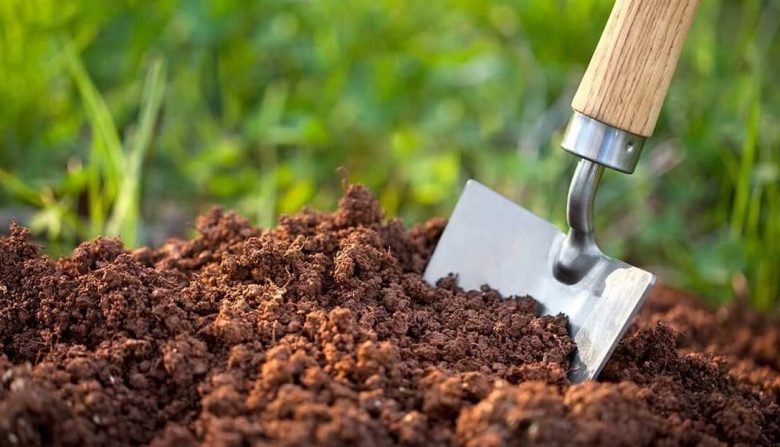
The organic fertilizer par excellence used in the cultivation of tomatoes is animal manurestrictly coming from non-industrial farms.
For the fertilization of tomatoes, the best manures are bovine, equine and sheep-goat ones. We are obviously talking about a basic fertilization of the soil. Fertilizing the “bottom” means amending the soil a large amount of organic substance, in this case the manure. Manure has a good basic endowment of macro and micro elements, which are slowly released to the plants. It also has a neutral pHwhich helps us to balance any structural deficiencies in the soil.
By doing the basic fertilization with manure correctly, we will guarantee the right supply of elements to the tomato plants throughout their crop cycle.
How to properly use manure for fertilizing tomatoes
The manure must be mature, i.e. seasoned for at least six months. It should be spread on the ground after a hoeing, at least 15-30 days before the scheduled time for transplanting tomatoes. The ideal quantity per m2 is 4-5 kg, to be buried with the spade at a depth of 15-20 cm. Obviously, all the steps necessary for the correct fertilization of the garden must be respected.
The Belmonte tomato
To understand how beneficial manure is for fertilizing tomatoes, we will tell you a trick revealed to us by a farmer who cultivated the famous pink Belmonte tomato. In practice, she cut furrows in the earth and poured at least 20 cm of mature manure into them. She then she, with a veil of earth, she covered the trunk and planted the tomato plant, which she develops directly in the manure. The result is a tomato weighing over 1 kg with a unique flavor in the world.
The alternatives to tomato manure
Unfortunately, getting good ripe manure to fertilize tomatoes isn’t always easy. There are though equally valid alternative fertilizerswith strengths and weaknesses.
For example, some use dry manure, which has high values in macroelements. Unfortunately it cannot be used in large quantities, so it is not as good a soil conditioner as other types of manure. The amending function, in addition to that of providing nutrients, can be provided to tomatoes with the home compostto be used like manure (2-3 kg per m2).
Excellent is also earthworm humus. However, this product has the drawback of being very expensive, if you want to use it in large quantities as a soil improver; it is therefore to be preferred on those lands that are not too poor from the start. Finally, let’s leave other types of more “amateur” and alternative fertilizations, such as i coffee grounds or the wood ashout of this discussion.
Fertilizers to supplement the shortcomings of tomatoes
Football
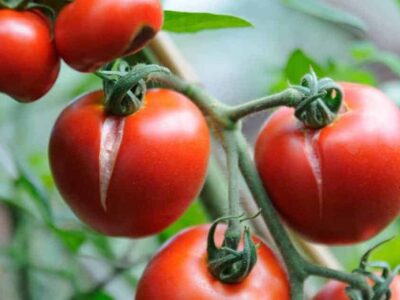
The tomato is a very sensitive crop to the lack of nutritional elements, above all that of calcium (Ca), a macro-element whose unavailability is the cause of the common problem of apical rot (or “black ass of the tomato”).
An excellent organic fertilizer to make up for calcium deficiencies is the lithotamnium (or algae powder). This product contains, in addition to calcium, also boron and magnesium, very useful microelements for plants (this product you can easily find it here).
Also in this case it is convenient to spread the lithotamnium powder during the preparation of the soil. For dosages, follow the instructions on the product label.
Iron
Another important element in tomato cultivation is iron (Fe). Its deficiency, in clayey soils and with high pH valuecan give rise to phenomena of iron chlorosis, that is an anomalous yellowing of the leaves. In organic, to supplement the iron deficiency, i iron chelates (found here).
Iron chelates are administered to plants together withirrigation waterso after the transplant.
How to fertilize tomatoes after transplanting
It is not always possible to carry out a good basic fertilization of the soil, so sometimes it is necessary to act post transplant. With the plants in the field, amending organic fertilizers on the soil is more complicated, as it cannot be digged. However, there are some alternatives such as pelleted manure and liquid fertilizers.
The pelleted manure
Use the pelleted manure it can be a valid solution for fertilizing tomatoes. It is an easily available product, and being dry and concentrated, it is available in practical bags.
To give it to the tomatoes just spread it along the row, in this way it will be amended to the soil and made available for the roots through the tamping, an operation that consists in bringing the earth back to the “foot” of the tomato plant. The results obtained are good.
Liquid fertilizers
To fertilize post-transplant tomato plants and throughout the cultivation cycle, a further alternative is that of liquid fertilizers. These are given through what is technically called fertigation.
The biological liquid fertilizers are of different nature and all of organic origin. Very interesting are the humic acids they fulvic acidswhich favor the correct absorption of nutritional elements already present in the soil (you can find them here).
Then there are generic liquid fertilizers, dedicated to vegetative growth or flowering.
When purchasing, make sure that the words “product allowed in organic farming”And always follow the dosages indicated on the label.




Start a new Thread