
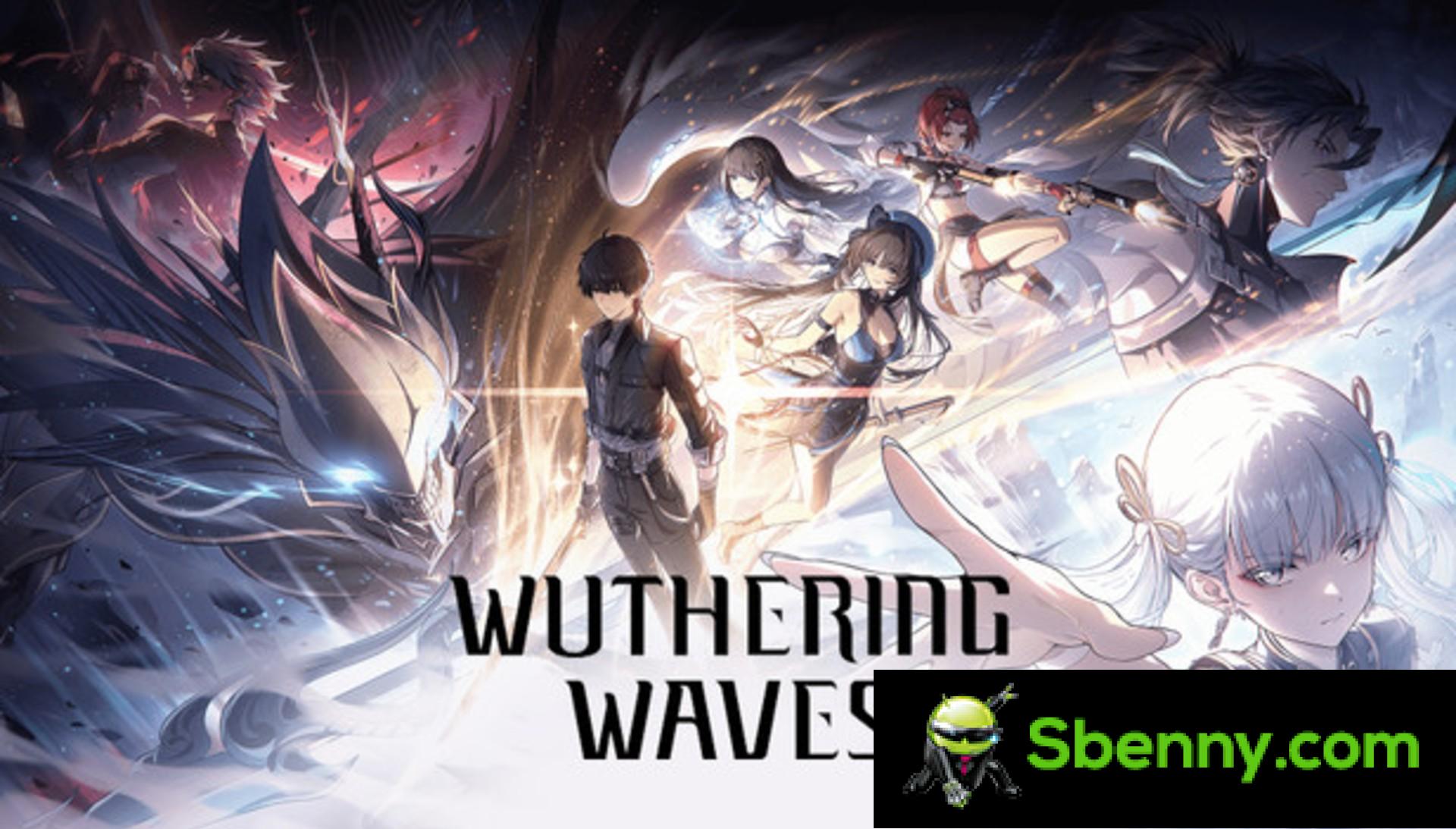
If you’ve been involved in the gacha scene for a while, or at least you’re familiar with the genre, you’ve probably heard of Wuthering Waves. For months it has been the favorite topic of debate, especially because half of the internet has been relentlessly comparing it with Genshin Impact and other HoYoverse titles. After several betas and a considerable hype campaign, the game is finally in our hands and we can now calmly talk about its open world, its combat system and what it offers at the exploration level.
This analysis focuses on the global launch, taking into account both the visible virtues from the first hours such as the technical and rhythm problems that the players have been pointing out. You’ll see references to combat, the Echo system, gacha, story, performance, and how it feels to move and live in the world of Tamaris. Make yourself comfortable, there is a lot to unpack.
Context, setting and premise of the world of Wuthering Waves
Wuthering Waves places us in Tamaris, a world trying to put itself back together after a cataclysm known as The Lamentan apocalyptic event that devastated much of civilization and brought with it strange and extremely dangerous creatures. After a rather cryptic initial cinematic, we wake up as the Rover, an amnesiac protagonist who finds himself fully involved in this post-apocalyptic scenario halfway between technological ruins and reborn cities.
One of the keys to the game universe are the Resonant: individuals capable of absorbing the echoes of monsters and using them as if they were part of their own arsenal. This resonant condition is what justifies both the combat mechanics and the progression system through Echoes. On a narrative level, the title combines that tone of a devastated world with an almost optimistic future, in which human factions have buried past grudges to rebuild cities, factories and military bases on the ruins of the ancient civilization.
The feeling, however, is that the post-apocalypse is perceived unevenly. Although there are desert areas and damaged landscapes In which we spend a good part of our time fighting creatures and collecting resources, many of the human settlements are in such a neat state that it is difficult to remember that just a century ago the world was on the brink of collapse. The contrast between desolation and almost intact cities is striking, but it does not always fit with the tone that the story aims to convey.
History, narrative rhythm and characters
From the beginning, the plot tries to build a dense universe, with organizations, specific terminology and its own mythology. The problem is that this ambition translates into a lot of exposure in the first hours: long dialogues, extensive scenes and a succession of conversations that often leave the gameplay in the background. This structure makes it difficult to get into the story, especially if what you initially want is to explore or fight.
Several players have pointed out that, after the tutorial section, it takes a few additional hours to feel that the narrative is minimally engaging. Just when it starts to get interesting, it is common to encounter walls of progress like “level X required to continue”which cut the pace and force you to farm side quests or world activities before continuing with the main campaign.
As for the characters, the main and relevant secondary characters receive very careful treatment. Their designs are colorful, with a lot of detail in clothing, accessories and animations, which makes many of these Resonants look memorable and easily recognizable. The same does not happen with generic NPCs, whose level of finish is much weaker and where problems with unloaded textures, very obvious popping or poor antialiasing are frequently noted, especially in cinematics.
The artistic direction is committed to a stylized anime aesthetic, with a range of colors that mixes white, black and a third distinctive color for each character. This creates a certain visual coherence in the cast, but also causes many designs are too similar to each other. If it weren’t for the hairstyles or a specific piece of clothing, there would be characters that would be difficult to distinguish with the naked eye in the middle of the action.
In the dubbing section, the game offers voices in English, Japanese, Korean and Mandarin. The community tends to highlight the japanese dubbingpartly due to the presence of actors known from series such as JoJo’s Bizarre Adventure, Kimetsu no Yaiba or Tensei Shitara Slime Datta Ken. The English version, on the other hand, is perceived as very irregular: there are correct interpretations, but also quite a few lines that sound flat or unnatural, something that has already been seen in other gachas upon its release and that, over time, tends to be polished or at least stops attracting so much attention.
World design: biomes, verticality and stage construction
The world of Tamaris is made up of several regions with their own identity, such as the Huanglong area and Jinzhou city. The map is large, with forests, deserts, mountainous areas and futuristic urban environments that are combined with cyberpunk touches and more naturist areas. This cocktail of styles is sometimes reminiscent of games like Scarlet Nexus or even certain areas of The Surge.
The great virtue of the map design is its verticality and density of details. It’s not limited to flat stretches of land: there are suspended bridges, cliffs, tall buildings, caves and structures on various levels that invite you to continually climb, jump and glide. Added to this is the presence of secret areas, small nooks and heights that you can only reach by making the most of your mobility tools.
Despite this, some players have the feeling that the world, on a thematic level, lacks an identity as marked as other titles of the genre. During long gaming sessions it is easy to spend too much time on desert or grassland areas with few artificial reference points, to the point of forgetting that the setting is supposedly devastated by a global disaster. When you finally reach cities or military bases, their almost impeccable appearance clashes with the idea of a world still being rebuilt.
Exploration, parkour and hooks
If there’s one thing Wuthering Waves does very well, it’s making moving around the map fun in itself. The game has a very agile parkour system which allows you to run on walls, hang on to ledges, glide for long distances and use hooks to propel yourself to certain points on the stage. The sensation is partly reminiscent of Warframe movement, although here the pace is somewhat slower and more controlled.
This advanced mobility makes the simple act of getting from one point to another quite enjoyable. Many times you end up deviating from your original objective because you have seen a suggestive ledge, a strange echo in the distance or a chest on a rooftop that requires a little “improvised climbing route”. The game itself reinforces this dynamic with an upgrade tree focused on movement skills, allowing you to move faster and more efficiently the further you progress.
Not everything is perfect: the hook system, in particular, can be frustrating. Points you can grab onto often have an indicator too precise and not very visibleso if you don’t know that anchor exists or you’re not looking at exactly the right angle, you miss it. Additionally, the range of use varies from target to target and you can chain grabs up to absurd distances, making the system feel somewhat inconsistent.
Beyond pure movement, the world is full of small challenges: environmental puzzles, platform challenges, mini-games and events scattered around the map that never reach a high level of difficulty, but do serve to keep you busy continually. In many cases, the reward is astrites (the premium currency for the gacha), upgrade materials, or new Echoes, creating a rather addictive loop between exploration and progression.
The combat: perfect dodges, parrys and well-measured chaos
The real gem of Wuthering Waves is its combat system. We talk about a real-time ARPG which relies heavily on precise dodging, counterattacks, and chain skill management. No mindless button mashing – if you want to get the most out of the system, you need to learn enemy patterns, nail perfect dodges, and time your switching between characters and Echoes to keep the pressure constant.
Each character has their own fighting style based on their weapon, their element and their role within the team. The general feeling is that the Resonants are sufficiently differentiated: some focus on fast and aggressive combosothers in charged blows, others in support or mass control. The game also allows you to cancel animations in the middle of attacks, which opens the door to chaining skills in a quite spectacular way.
One of the points most valued by the community is that enemies, even world bosses, do not feel like simple life sponges. Although they may be several levels above the player, it is possible to defeat them if you master the dodge, parry, and character rotation system. There are testimonies of players who have managed to knock down bosses twenty higher levels only with his healer after seeing the rest of the team fall, without the combat becoming endless torture.
The combat structure revolves around several resources: basic attacks, resonance abilities, Forte Circuit (a kind of powerful ability that recharges with the action), Resonance Release (the “ultimate” of each character) and the introduction and change abilities, which are activated by alternating between team members with a full resonance bar. The result is a very dynamic combat, where you are constantly alternating blows, dodges, character changes and activation of Echoes.
Echoes: the most original equipment system in the game
The Echo system is one of the great hallmarks of Wuthering Waves. Instead of equipping simple gadgets or accessories, here you absorb the echoes of monsters that you defeat and make them part of your characters’ kit. These Echoes function as both equipment and additional abilities, making customization much more striking.
Each character can carry up to five Echoes, organized in different slots. By equipping several of the same family (2 or 5 pieces) you get set bonuses that boost specific statistics or add special effects. Echoes have rarity levels and substats, so farming to achieve “perfect” combinations can take a long time, something that lovers of builds and optimization will surely welcome.
The beauty of the system is that the first equipped Eco grants a unique active skillwhich usually manifests itself in the form of a summoning of the monster itself in full combat. This can translate into devastating attacks, healing, crowd control, or other curious effects. Basically, you set up your own “zoo” of ghosts and bugs that you take out onto the battlefield when it matters most.
Obtaining Echoes is deeply linked to exploration and hunting enemies. Monsters of lower level or rarity do not always drop their Echo when defeated, while elite enemies and bosses have a higher chance of dropping high-quality specimens. The more different types of creatures you have registered, More increases the chance of getting better Echoeswhich pushes the player to constantly move around the map in search of new prey.
Character Progression: Levels, Weapons and Forte
At the level of progression, the game follows a scheme quite familiar to anyone who has played other action gachas. Each character rises level and has ascension phases that unlock new sections of experience, in exchange for specific materials that are obtained in combats, bosses, dungeons and weekly activities. It is not too far from what was seen in titles like Genshin Impact or Honkai: Star Rail.
Weapons also have their own upgrade and ascension system. You can level them up using resources and duplicates, and from time to time you will get five star weapons through gacha, normally associated symbiotically with a specific character. The structure is classic: standard weapons on permanent banner and featured weapons on limited banners.
The Forte acts as each character’s skill tree. It is organized quite clearly, with several lines that start from the basic kit actions (normal attack, resonance ability, Forte Circuit, Release, etc.) and add passive buffs or additional effects as you unlock nodes. It is not particularly complex, but it is enough to make a certain difference between a newly obtained character and a well-worked one.
Gacha system: pity, banners and bounty
In the field of monetization, Wuthering Waves uses a gacha system with quite generous pity compared to other big names in the genre. The limit of rolls to ensure a five-star character is around 80 hard pity pullswith a soft pity that begins to be noticeable around 66. This places it ahead of titles like Genshin Impact or Honkai: Star Rail, whose pity are usually around 90 maximum runs and soft pity around 75.
At launch, the game offers several types of banner: a permanent standard one, a featured character one, and a weapon-focused one. Added to them is the classic banner 50 spins guaranteed to get a five-star from the standard pool, and a special banner that unlocks afterwards, focused on the permanent five-star you choose. To this we must add extra rewards and some additional five stars that they have been giving away as compensation for the technical problems at the start.
At first you notice that the system is relatively friendly to the free to play player: in the first hours you receive a considerable amount of stars and resources that allow you to put together a decent team, try several characters and obtain, without too much pressure, at least a couple of powerful units. Over time, of course, the rate of obtaining premium currency reduces and you enter the typical loop of dailies, events and farming in the medium term.
Technical performance, optimization and release status
The launch of Wuthering Waves has been, to be honest, quite bumpy. In their first days they met bugs, crashes, endless loading screenstextures that took forever to appear and serious popping problems in both secondary characters and stage elements. Cutscenes sometimes showed the main characters perfectly rendered while the background looked like it hadn’t finished loading.
At a pure performance level, many PC users have reported noticeable frame drops even with decent computers. A 1660 Super with 32 GB of RAM and a Ryzen 9, for example, may suffer fluidity drops in loaded areas or during very intense combat, something that should not happen with that configuration. On mobile phones, especially on mid-range or older devices, the inconsistencies are even more evident.
The use of Unreal Engine 4 allows the game to look great when everything is going as it should, but it also contributes to some of these optimization problems. The good news is that the studio has been aggressive with the patches: during the first days there have been constant updates, some almost daily, which are polishing bugs and improving stability, accompanied by Generous resource and roll compensation to keep the community happy.
Sound, music and dubbing
The sound section is one of the points where Wuthering Waves shines with its own light. The soundtrack bets heavily on choral compositions and epic melodies that accompany almost all important activities: exploration of large areas, key missions, boss fights or dramatic story scenes. You don’t need to go far to appreciate it; The music in the main menu already makes clear the level of care that has been put into this aspect.
Each region and each relevant situation has quite distinct themes, which help reinforce the atmosphere: calmer pieces for exploration, intense cuts in large battles, and songs with vocal presence that highlight certain moments of the plot. This musical work provides a feeling of greatness and cohesion which often makes up for some shortcomings in the written narrative.
As for the sound effects, there is nothing particularly groundbreaking: the blows, steps, elemental impacts and others remain in the usual line of anime-style ARPGs, correct but without great fanfare. The real protagonism goes to the music, while the dubbing, as already mentioned, goes hand in hand with very solid interpretations in Japanese and others. more irregular in English. The title includes subtitles in several languages, including Spanish, which makes it easy to follow the story even if you don’t connect with the audio.
Game, farming and activity loops
Once you get past the initial stretch of tutorial and exposition, Wuthering Waves settles into a fairly clear gameplay loop: you explore, hunt Echoes, upgrade equipment and charactersyou clear daily activities and face repeatable bosses and challenges. There are world bosses with fixed difficulty level that you can visit whenever you want, and bosses tied to your world level that can be farmed by spending stamina to obtain key materials.
The variety of content helps that farming does not become boring so quickly: combat arenas, themed dungeons, temporary events that change certain combat rules or lend you characters to try them out, puzzles that unlock chests, time challenges and all that panoply of typical activities of the genre. Each improvement cycle usually involves testing new combinations of Echoes and Resonantswhich maintains the feeling of progress and experimentation.
It’s true that the interface and menus can be overwhelming at first. There are many tabs, submenus, and overlapping systems, so leveling up a weapon or Echo can involve navigating through several layers of UI. With some practice, everything becomes more intuitive, but the first contacts can be quite chaotic, especially if you are not used to the density of modern gachas.
In terms of building playable identity, some players feel that, in terms of tone and overall artistic direction, Wuthering Waves has not yet defined such a seal like other competitors. Compared to certain HoYoverse games, which have very recognizable visual styles, here the mix of light cyberpunk, futurism and nature is well executed, but could still grow to leave a more distinctive mark.
In the end, Wuthering Waves remains an open world ARPG with spectacular combat, a very original Echo system and movement so fun that you want to park the entire map over and over again, but surrounded by a somewhat clumsy narrative, irregular NPC designs and a technical debut full of setbacks. If you are attracted to the idea of a gacha with a focus on action and exploration, and you are able to forgive long dialogues and occasional bugs, you will find here a very enjoyable title with a lot of room for future improvement. Share the information so that other users know about this analysis.


Start a new Thread