
The “holy alliance” of United for Hungary, made up of six parties from across the political spectrum, was not enough, nor was the “wind of change” that seemed to blow across the country, nor the auspices coming from half of Europe. Viktor Orbán will remain Prime Minister of Hungary for the next four years, having secured his fourth consecutive presidential term, his fifth in total.
The proven alliance of Orbán’s party, Fidesz, with the Popular Christian Democratic Party (Kdnp) collected 53% of the votes, which translates into 135 out of 199 seats in the Budapest National Assembly. A solid and even larger majority than the last legislature and an indisputable affirmation in the numbers, beyond the problems of pluralism and distortion of the media landscape in the country that make any electoral competition unbalanced a priori.
The victory takes on even clearer contours because it comes against an opponent never so compact and combative, a coalition made up of six Hungarian parties with different political positions: the left of the Socialist Party (MSZP) and the Democratic Coalition (Dk), the ecologists of LMP and Dialogue for Hungary (Párbeszéd), the far right of Jobbik and the liberals of Momentum presented a joint candidate, the mayor of the city of Hódmezővásárhely, Péter Márki-Zay.
The multicolored opposition held up only in the capital, where its exponents triumphed in 16 of the 18 electoral districts, but in the rest of the country the domination of Fidesz / Kdnp was almost absolute. The 35% of the overall votes collected by the United for Hungary (Egységben Magyarországért) is much lower than the sum of the preferences obtained by the various members of the coalition in the last round, close to 47%. Part of 2018’s preferences, probably Jobbik’s, were stolen by a new political formation, MiHazánk (Our Homeland), which gained support during the pandemic by insisting on anti-vaccination positions.
“This is not just our victory. The whole world recognizes that conservatives in politics are the future, not the past, ”Orbán said in his victory speech to his constituents. According to initial analyzes, the outcome of the vote does not seem to have influenced the move by the government to “couple” a controversial to the parliamentary and presidential elections referendum on legislation that would prohibit showing minors any content that portrays or promotes homosexuality and sex change. The majority of citizens who expressed their opinion supported the government’s position, but the consultation did not reach the necessary threshold of 50% and is therefore null and void.
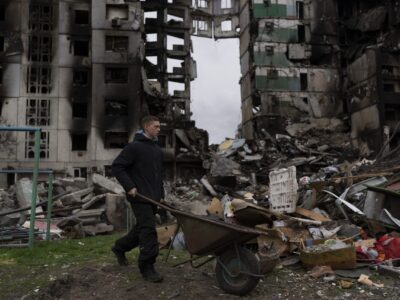
On the other hand, the war in Ukraine weighed: Orbán would have benefited from a reconciliation of the electorate towards the government in office which usually occurs in crisis situations. His line towards Russia evidently convinced his compatriots: the Hungarian Prime Minister did indeed condemn the invasion, but he also reiterated his neutrality by avoiding the sending of weapons to Ukraine and opposed the hypothesis of blocking the import of Russian gas.
For this positioning, Orbán had been openly criticized by Ukrainian President Volodymyr Zelensky, who in the last connection with the European Council had even invited him to visit a memorial on the Budapest Shoah in order to understand the tragic nature of the ongoing invasion. It was Zelensky himself who was mentioned in Orbán’s celebratory speech among the defeated “opponents”, together with the Hungarian-American magnate George Soros, to the “international media mainstream“And the” Brussels bureaucrats “, target habitual of the Prime Minister’s narrative.
The clash of the Hungarian government with the European institutions is in fact destined to continue. Hungary remains subject to the Article 7 procedure, which could lead to a suspension of its voting rights in the European Council. But if this hypothesis seems difficult to concretize, because it would require the unanimous vote of the other 26 countries, the other fronts between Budapest and Brussels are more heated.
The European Commission keeps Hungary’s 7.2 billion euros frozen in the Next GenerationEu plan, delaying the approval of the Hungarian PNRR. And soon it could proceed with the activation of the mechanism that binds the EU disbursement to respect for the rule of law, thus freezing other EU funds destined for the country. After the EU Court of Justice rejected the appeal lodged by the Orbán government (together with the Polish one) on the instrument, the European executive is evaluating the measure, even if for reasons of political expediency it has avoided implementing it earlier. of the elections.
In this long confrontation, Orbán risks losing precious allies: with the outbreak of the war, the axis between Poland and Hungary has cracked, countries determined to fight back to the Commission and the European Parliament on issues such as the administration of justice and civil rights, invoking the right to national choices autonomously from the EU.
But the Warsaw government is among the so-called “hawks” towards Russia: it would like the EU to have maximum sanctions for Moscow and maximum support, including military support, in Kiev. Polish Prime Minister Mateusz Morawiecki even went to the Ukrainian capital, with his Slovenian and Czech counterparts. Poland does not like Hungary at all, but neither does the Czech Republic, and the two countries have just expressed their disappointment by boycotting a meeting of Central European Defense Ministers, which was later canceled by Hungary.
One more problem for the new Prime Minister in pectore of Budapest, the longest-lived in power of the European Union, but certainly not the most appreciated outside the national borders.




Start a new Thread