
introduction
If you are looking to buy a flagship compact smartphone in 2023, this dilemma has probably arisen at least once: “iPhone 14 Pro or Galaxy S23”. While these two smartphones are not in the same price range, they are compared so often that we have decided to compare them and give you the complete breakdown, which one is the better of the two.
You can compare the full specsheets or check out our editor’s rating further down.
Size comparison
The iPhone 14 Pro and Galaxy S23 are quite similar in terms of bulk and thickness, something understandable given that both phones feature 6.1-inch OLED screens.
The iPhone is significantly heavier than the Galaxy – weighing 38 grams more – and that’s thanks to the premium build. While the Galaxy S23 features Gorilla Glass Victus 2 panels and an aluminum frame, the iPhone 14 Pro uses Corning-made Ceramic Shield panels and a thick stainless steel frame. The heavier panels and frame, combined with the larger camera housing, helped add weight.
Both the Galaxy S23 and iPhone 14 Pro have an IP68 rating for dust and water resistance. However, the iPhone is rated to survive in much deeper water, up to 6 meters deep versus 1.5 meters for the Galaxy.
You can also compare the dimensions of the two phones in the 3D view using the tool below.

If you want a more compact phone, you’ll probably also want it to feel lighter, and therefore the Galaxy S23 will make more sense. On the other hand, a more premium and stronger build may require a few more grams of weight, and some people may like the iPhone for the extra solid feel of its design.
View comparison
Both the iPhone 14 Pro and the Galaxy S23 feature similarly sized 6.1-inch OLED displays with largely identical properties. The iPhone has a slightly higher resolution and therefore denser pixels, but this is barely noticeable as far as real-life usage is concerned.
The color accuracy of both screens is great as long as you choose the right color mode.
Maximum manual brightness is similar on both phones at around 800 nits, while the iPhone can be brighter in direct sunlight with up to 1,791 nits of maximum brightness. However, the Galaxy S23’s maximum 1,200 nits don’t make it less capable outdoors.
The Appie iPhone 14 Pro even surpasses the HDR video standard of the S23 with Dolby Vision, while the Galaxy “settles” for HDR10+. In combination with the slightly lower brightness values, we can consider the iPhone as technically the winner here. But the vast majority of users will have a similar viewing experience on both phones despite the raw numbers and HDR formats.
Battery life
The Apple iPhone 14 Pro comes with a 3,200mAh battery, while the Samsung Galaxy S23 is powered by a 3,900mAh cell. And this difference was also seen in battery life tests.
The Galaxy S23 offers more call time and better standby endurance, while the iPhone 14 Pro can last longer when browsing the web.
Charging speed
Both the iPhone 14 Pro and the Galaxy S23 come without a charger in the box. We tested both phones with their respective “default” option: Apple’s 20W adapter for the iPhone and Samsung’s 25W charger for the Galaxy S23.
Both the iPhone and OEM Galaxy chargers will give you about 30% charge in 15 minutes and about 60% charge in 30 minutes.
There is a rather big difference for full charge though. The Galaxy S23 reaches 100% in 76 minutes, while the iPhone took 101 minutes to reach full charge.
Keep in mind that the iPhone 14 Pro reaches 85% charge in just 60 minutes, meaning that the last 15% takes another 31 minutes to complete while the charging speed drops dramatically. It was the same with all iPhones, something Apple does to extend the life of iPhone batteries.
Speaker test
Both devices feature a pair of stereo speakers each and are pretty close in overall quality and volume. You are unlikely to find any significant difference as the two handsets offer a great listening experience and honestly, these are some of the best speakers you can find on a phone.
However, we find the sound from the Galaxy S23’s speakers to be slightly richer, but you can only hear it in a closed studio like ours.
Performance
The performance part is probably the most important piece of the puzzle, yet it’s the incredibly difficult one to measure since the Galaxy and iPhone run on completely different hardware and software platforms.
There are two things you need to know: Both the Galaxy S23 and iPhone 14 Pro contain the most advanced chipsets available on the market from Qualcomm and Apple, which means you’ll get the fastest possible performance for each operating system.
However, let’s explore these two platforms.
The Snapdragon 8 Gen 2 for Galaxy has an unusual 1+2+2+3 CPU configuration (1×3.36GHz Cortex-X3 & 2×2.8GHz Cortex-A715 & 2×2.8GHz Cortex-A710 & 3×2.0GHz Cortex- A510) with an Adreno 740 GPU that takes care of the GPU intensive tasks.
The A16 Bionic chipset has a more conventional 2+4 CPU configuration consisting of 2 x 3.46GHz Everest cores + 4 x 2.02GHz Sawtooth cores. A custom Apple GPU with 5 cores is used for graphics rendering.

SAMSUNG
Galaxy S23
AnTuTu
1,231,075
Geekbench 6
2,028 single-core
Geekbench 6
5,327 multicores
In the end, the two devices are good enough to run pretty much everything you find on their respective app stores without problems. It will be quite difficult to determine which one is better in standard day-to-day use. We think you won’t feel the difference.
Both manufacturers promise a similar number of major software updates in the future and have a good track record of delivering on their promises in this regard.
Camera comparison
Comparing cameras is quite complicated as it all depends on your preferences. Both phones take great photos and record excellent videos. Sharpness, detail, dynamic range, contrast, noise – everything seems to be under control, which is what you’d expect from a modern flagship phone. But Samsung and Apple have different approaches to photography.
Usually, Samsung’s version is more appealing to mainstream users due to its lively appearance. Colors are more saturated, images have higher contrast at times, and images aren’t overly sharp and seem more balanced.




0.6 x 1x • 3x • 50MP
More samples and a detailed analysis can be found in our Galaxy S23 review.
Apple’s rendering has been improved over the last generation and offers more accurate colors, something that could make iPhone photos look a bit bland. Apple images offer overly elaborate and sharp foliage, which leads to this artificial look when zoomed to 100%.


0.6 x 1x • 3x • 48MP
More samples and a detailed analysis can be found in our iPhone 14 Pro review.
One thing that Apple can do on the iPhone 14 Pro but Samsung can’t on the S23 is 2x lossless zoom.
Finally, Apple’s approach to low-light photo processing produces more natural-looking yet well-exposed photos with a slightly more eye-catching look than the S23. The difference isn’t that big, but Apple’s Night Mode simply does it a little better.
Video recording is also one area where the iPhone 14 Pro shines. Overall, the video quality is better, although the Galaxy S23 makes good value for money when it comes to stabilization.
Here’s a taste of how the iPhone 14 Pro’s main camera compares in terms of image quality to that of the Galaxy S23 in our image comparison tool.
And here’s how the video quality of the iPhone 14 Pro’s main camera compares to that of the Galaxy S23 in our video comparison tool.
Verdict
It all boils down to Apple iOS versus Google Android and One UI in particular. If you are completely determined about each other, then the choice should be easy for you. Some Apple users will never switch to Android and vice versa.
If not, it’s good to know that Apple has the better display when it comes to streaming; Face ID is quite affordable, a mature software ecosystem that’s compatible with dozens of other devices, and arguably the best video recording capability on a smartphone right now. Oh, and the 2x lossless zoom, which gives it an edge over the Galaxy S23.
The Galaxy S23 is a lighter smartphone, costing 400 euros less, has a much smaller screen and a much less restrictive software suite, with wireless DeX support. He’s one of the more powerful compact droids and an easy choice to make right off the bat.

- The slightly sharper and brighter screen with Dolby Vision.
- Better CPU performance.
- The most versatile camera with better photo and video quality in low light conditions.
- The promise of at least 5 years of iOS updates (against 4 for the Galaxy).
Get the iPhone 14 Pro for:
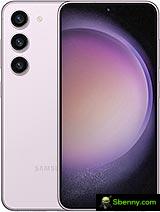
- The lightest body.
- The cheapest price.
- Better call duration.
- The best quality photos in daylight.
- The most customizable Android operating system (as opposed to the “walled garden” of iOS).


Start a new Thread