
Although ARM and Qualcomm have released some fantastic mobile GPUs, we hope Nvidia will start making smartphone chipsets again or at least license GPU designs. AMD put its toes back, why shouldn’t Nvidia? For now we can only remember Nvidia-based phones. The GPU maker isn’t the only one to drop out of the race either, Texas Instruments was also very popular at one point.
And then there’s Intel. Still the dominant supplier of CPUs for laptops, desktops and servers, Intel’s time as a mobile chipset maker has left no such legacy. It started well, though, and strangely it started with ARM.

Intel licensed the ARMv5 instruction set and relied on it to build Xscale. The first chips were the PXA210 and PXA250, respectively at 200 MHz and 400 MHz, aimed at PDAs, Personal Digital Assistants (from a modern perspective we would call them “smartphones without the phone part”).
Intel was aiming for high-end PDAs, and in 2002 that meant pocket-sized devices that could decode videos and MP3s and have features like wireless connectivity. Here are some interesting facts about these chips:
- the PXA210 cost $ 17, the PXA250 cost $ 39.20 (in 2002 dollars)
- the PXA250 consumed 256mW at 200MHz and 411mW at 300Mhz
- the PXA250 measured 17x17mm and was available in a 256-pin spherical grid array, the PXA210 was reduced to 225 pins (using a 16-bit rather than 32-bit data bus)
The PXA250 has powered the likes of the Samsung i700. This had cellular connectivity (2G with GPRS data), a 240 x 320px resistive touch display, a single VGA camera, and an MMC card slot. It worked with Windows PocketPC 2003 Phone Edition (which has very little to do with the later Windows Phone).
The Samsung i300 is interesting. It’s clearly not a PDA, this one ran the Windows Mobile 2003 SE smartphone. It was a big thing, measuring 20mm thick and had a large (for the time) amount of storage: a 3GB microdrive.
The Samsung i750 was also similar to a phone, however, unlike the i300 it had a touchscreen. A tiny 2.6 “resistive touchscreen, but nonetheless. While the slider design lets you hide the keyboard, the front was adorned with a surprising number of hardware buttons. The i750 was even thicker at 22mm, but it didn’t have a microdrive.Instead it used one of those new microSD cards for additional storage.
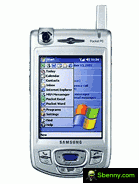
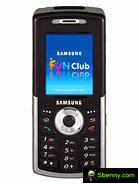
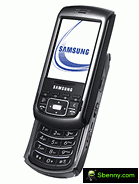
Samsung i700 • Samsung i300 • Samsung i750
Motorola had some curious designs from that era. The Motorola A1200 was quite typical with a clear flip cover that protected the resistive touch display (and prevented accidental touches). This display was somewhat smaller than that of the i750 at 2.4 “.
The Motorola Q8 followed the BlackBerry demographic group with a QWERTY hardware under the display (2.4 “horizontal). There were also flip phones like the A910 – not as sharp as a Razr, that’s interesting is that it avoided the Microsoft hegemony and ran a Linux-based operating system instead The E680 was another example of a Linux phone.
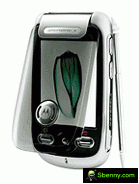
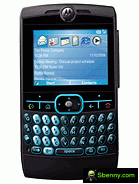
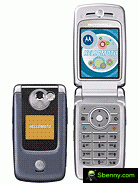
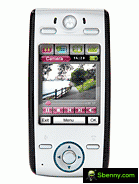
Motorola A1200 • Motorola Q8 • Motorola A910 • Motorola E680
O2 XDA devices also belong to this list. The O2 XDA II, for example, had a “huge” 3.5 “display (still 240 x 320 pixels, though). There was also the i-mate PDA2, a fairly standard device. For an odd design , check out the tiny laptop that was the Qtek 9000.
By the way, do you feel like you have something in common? In addition to the XScale chipsets we mean. That’s right, they were all made by HTC in the days of ODM.


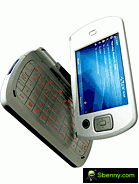
O2 XDA II • i-mate PDA2 • Qtek 9000
BlackBerry also used XScale chips – they were present on some of the more popular models like BB Pearl 8100, Pearl Flip 8220, Curve 8300 and others.
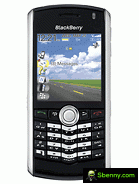

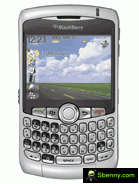
BlackBerry Pearl 8100 • BlackBerry Pearl Flip 8220 • BlackBerry Curve 8300
Palm also used XScale chips, which primarily ran the company’s PalmOS, although there were Windows Mobile devices such as the Treo 500v.
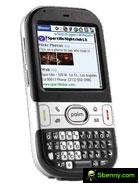
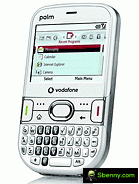
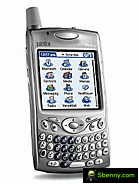

Palm Centro • Palm Treo 500v • Palm Treo 650 • Palm Treo 680
In 2006, just four years after launch, XScale was sold to Marvell, ending Intel’s ARM adventure.
Okay, now let’s talk about the phones you were thinking about when you started reading: those Android phones that were powered by Intel Atom chips.
Motorola was one of the first to adopt RAZR i in 2012. It ran on an Atom Z2460 with two x86 CPU cores (2 GHz, 32 bit) and a PowerVR 544MP2 GPU.
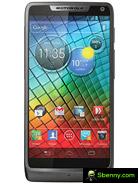
Motorola RAZR i XT890
This was a fairly typical setup – Intel CPUs were designed for larger actively cooled devices, so shrinking it down to a smartphone form factor proved challenging. The company could only house 2 CPU cores, but they were fast – they had some of the best single-core performance you could get back then.
But since there were only two of them, multi-core performance was inferior to quad-core ARM designs (the first of which also appeared in 2012). Atoms supported Hyperthreading, meaning each CPU could run two hardware threads simultaneously, but it wasn’t as good as actually having twice as many cores.
Two years later Asus used the same generation of Atom chips in the very first Zenfones. These were still using the slightly improved Z2500 series chips from 2013 (still 32nm, though).

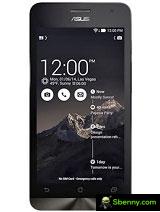
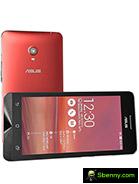
Asus Zenfone 4 (2014) • Asus Zenfone 5 A500CG (2014) • Asus Zenfone 6 A600CG (2014)
The next generation, the Atom Z3000 series, moved to quad-core CPUs, in part thanks to the move to a 22nm node. These have been used in the likes of the sleek Asus Zenfone 2 Deluxe and the Zenfone Zoom ZX550. As discussed in a previous article, the Zoom had a 28-84mm periscope telephoto lens with smooth zoom. This technology has been lost for a few years, but is making a comeback.
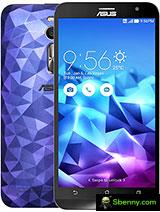
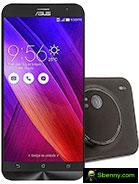
Asus Zenfone 2 Deluxe ZE551ML • Asus Zenfone Zoom ZX550
Intel chips were also present in Asus’ transforming PadFone series – these could be plugged into a tablet dock for when a larger screen was desired. There was also the confusingly named Fonepad 7, a tablet with phone capabilities (unlike the PadFone, this one couldn’t turn into anything). However, the Transformer Pad could turn into an Android laptop.
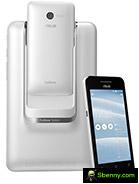

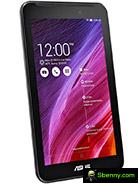

Asus PadFone mini (Intel) • PadFone mini 4G (Intel) • Fonepad 7 (2014) • Transformer Pad TF103C
Dell also had convertible tablets, such as the Venue 10 7000. The thick cylindrical part on one side could fit into a keyboard docking station. The smaller Venue 8 7000 was meant for standalone use, but it also had an unusual design with a sizeable front speaker. These were interesting follow-ups of the traditional Venue 7 and 8.
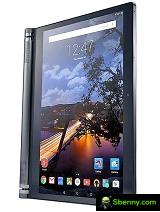

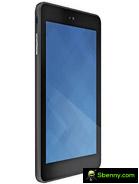
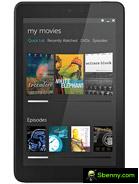
Dell 10 7000 Headquarters • Dell 8 7000 Headquarters • Dell 7 Headquarters • Dell 8 Headquarters
In 2015 Acer released the Predator 8 – as you can see from its design, this was a gaming tablet. It was powered by the Atom x7-Z8700, which featured four CPU cores (without Hyperthreading) and an Intel-developed GPU.
Much more casual were the likes of Lenonvo’s Yoga Tablet 2, designed for multimedia consumption at home with its built-in kickstand and powerful speakers.
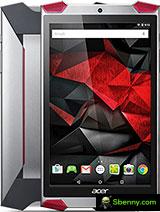
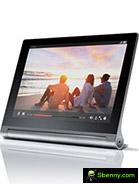
Acer Predator 8 • Lenovo Yoga 2 Tablet 10.1
The 2014 Nokia N1 looks fairly smooth on the surface and it is, but what made it unusual is that it was made by Microsoft shortly after the acquisition of Nokia’s Devices and Services division. It also works with Android, although that’s a little less strange considering that Microsoft released the first Android-based Nokia devices a few months earlier (the Nokia X series).
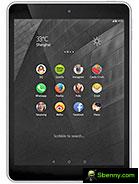
Nokia N1
The combination of an Intel CPU and Microsoft Windows is so common that it has a nickname, Wintel. So where are the Intel-based Windows tablets? Well, Microsoft was trying to break free from its reliance on Intel (and x86 CPUs in general) by developing Windows RT which ran on ARM. This has brought us lists like the Nokia Lumia 2520.
There were also some Atom-powered Windows tablets, since Allview didn’t accept the whole “Windows on ARM” thing. One was also a bit of a transformer – it ran Windows 10, which made a lot more sense than trying to get a laptop experience from Android 4.4 (we’re looking at you, Asus). Allview made a KitKat tablet (the Viva i10G), though thankfully it didn’t go the transformer route with it.
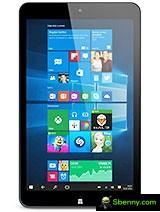

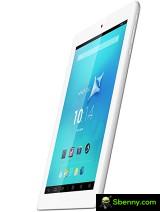
Allview Wi8G • Allview Wi10N PRO • Allview Viva i10G
There are many other Atom-powered tablets – from Xiaomi, Samsung, HP, Micromax and others.
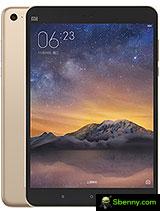
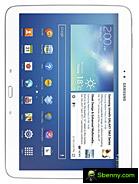
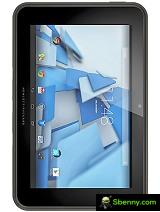

Xiaomi Mi Pad 2 • Samsung Galaxy Tab 3 10.1 P5210 • HP Pro Slate 10 EE G1 • Micromax Canvas Tab P690
Here’s a device we didn’t expect to pick an Intel chip: the Tag Heuer Connected Modular 45. Yes, a smartwatch. An expensive one, $ 1,200 / € 1,100 for the 41mm model at launch. It had a titanium case and ceramic bezel around the 1.39 “AMOLED display (covered with sapphire glass). And an Intel Atom Z3000 series chipset running Android Wear 2.1. Oh, by the way, that price we mentioned was just the starting point Slap enough diamonds on this pup and it could easily grow to 6 digits.
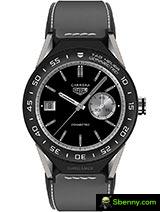
Tag Heuer Connected Modular 45
The last device we want to mention is this beauty: the Nokia 9000 Communicator. It didn’t technically use an Intel chip, but was instead powered by an AMD-made 486 running at 33 MHz. You can read more about this communication power in a previous Flashback post.
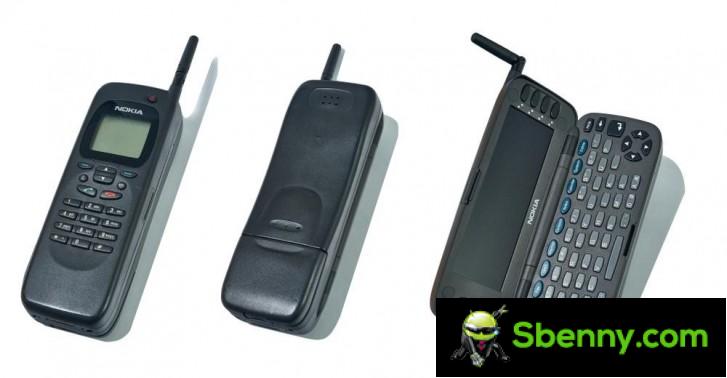
Nokia 9000 Communicator (image credit)
As you can see, things dried up around 2014/2015. Attempts at mainstream adoption had failed and only the extravagant designs were relegated to using Intel chips. The company eventually stopped making Atom chips for smartphones and tablets, and the manufacturers had moved on anyway.
Intel still had its modem division, until it sold it to Apple in 2019. Apple itself switched from Mac computers with the introduction of the Apple M.

Intel is completely out of the mobile game now, but has had bigger problems to worry about in recent years (its foundry progress had stalled, giving TSMC the lead). Android still supports x86, although you’re unlikely to see it in action. Windows 11 can run Android apps, even those aimed at ARM devices, but this is enabled by emulation: Intel Bridge technology, which was developed by (you guessed it) Intel.


Start a new Thread