
Apple introduced the original iPhone in January 2007, and a few months later took advantage of the new all-touch interface to add a new branch to the iPod family tree. Although the iPod touch was surpassed by the iPhone, it was still very successful: Apple celebrated 100 million units sold in 2013.
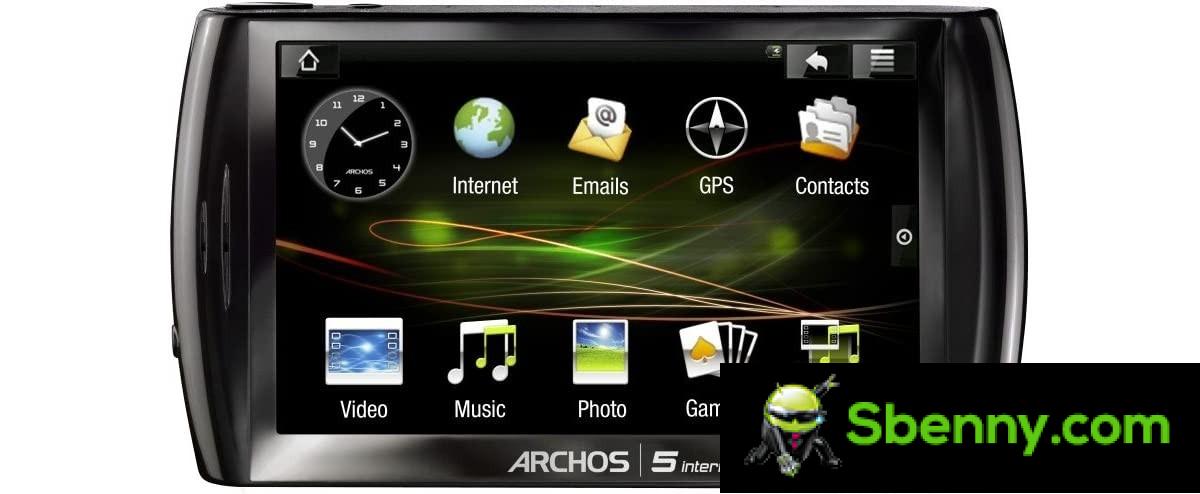
Naturally, Android makers wanted to have their own iPod touch. In 2009, the Archos 5 Internet Tablet entered the scene. It was advertised as “PMP”, Portable Media Player, and may have been the first of its kind to run Android (v1.6 Donut). It could play MP3, AAC, FLAC and various video formats and had a large 4.8-inch display for its time.
At IFA 2010 Samsung unveiled the Galaxy Player 50 and claimed it was the first of its kind, although that might require a few asterisks. Either way, the 8GB model was £150, £40 cheaper than an 8GB iPod touch at the time. There was also a 16GB model, but a cheaper way to get more storage was with microSD (up to 32GB cards were supported).

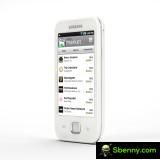

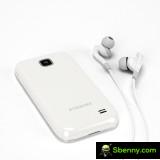
Galaxy 50 player
It ran on Android 2.1 Eclair and had full access to the Android Marketplace, so you could install apps and games. There was no 3G connectivity, of course, although it did have Wi-Fi for those apps that needed internet connectivity.
With a 3.2-inch WVGA display, this was also a video player with built-in DivX support. For example, the browser supported Flash, so you can surf the whole web at home or in a coffee shop.
A few months later, several more models appeared – Galaxy Player 3.6, 4.0, 4.0, 5.0. These were alternatively known as “Galaxy S WiFi” followed by the same numbers (indicating display size).

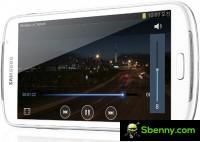
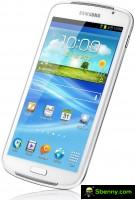
The Samsung Galaxy Player 5.8 was huge
The (almost) last attempt was the Galaxy Player 5.8 from 2012. With its 5.8″ 540 x 960 px display it is larger than a Galaxy Note II, although its hardware was more similar to the original Note (dual CPU -1.2 GHz Cortex-A9 core, 1GB of RAM).
Sony is the company that invented the tiny personal audio player with the first Walkman and they didn’t want to be outdone. The Sony Walkman Z100 arrived in January of 2012: The $250 player took design cues from the Xperia Arc series and featured a 4.3-inch WVGA LCD.
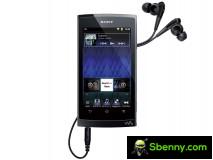


Sony Walkman Z-1000
There were 8, 16, 32 and 64GB versions (the latter was a Japanese exclusive) and ran Android 2.3 Gingerbread on a Tegra 2 with a 1GHz dual-core CPU and 512MB of RAM. It had a microHDMI port and a proprietary dock connector, it could also stream video to the TV via DLNA. It had familiar Sony technology like S-Master MX, DSEE and so on.
If you’ll allow us a short detour, we want to mention a few music streaming services. It’s no longer with us, but Sony’s Music Unlimited wanted to compete with the likes of Spotify and iTunes. For $4 a month you could listen to internet radio, $10 a month got you on-demand playback.

The service could also sync your personal music library from your PC to the cloud and then to your Walkman Z (or Xperia phone). This included offline playback as mobile data was still quite expensive at the time. Music Unlimited closed in 2017.
Samsung had its own streaming service for a short time, Milk Music was introduced in early 2015 (powered by Slacker Radio) with ad-supported and ad-free subscriptions. Samsung began shutting down the service a year later and it was phased out completely in 2017.
Back to Android MP3 players. Sony may have given up on being a streaming music company, but it hasn’t given up on players. In January, it unveiled the NW-A300 and NW-ZX700.
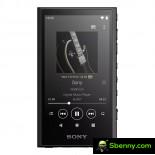
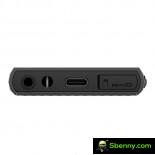


Sony Walkman NW-A300 and NW-ZX700
The latter is no joke, costing JPY 104,500 in Japan (€720) and has features like support for 24-bit 96kHz FLAC and a balanced 4.4mm output for headphones. The A300 is a little more reasonable at €400, but still clearly in audiophile-only territory.
Of course, most people use wireless headphones these days, and if they want to listen to music on the go, but don’t want to carry their smartphone with them, they can play music on their smartwatches.
Do you think there is still a market for Android-based portable media players, or is this something extremely niche (for example, people who know what a 4.4mm balanced output is)?


Start a new Thread