
Nothing has yet to expand into more phone lines: at the moment the Nothing Phone (2) is its flagship, the older Phone (1) remains the mid-range model. You can pick it up for €320 for an 8/128GB model, although for a small upcharge you can get the 12/256GB option, which is probably the better choice. The additional RAM will help keep the phone snappy in the future, and there’s no way to expand the memory later.

Costing around €200 more than the 12/256 GB model, the Nothing Phone (2) with the same memory configuration offers a faster Snapdragon 8+ Gen 1 (compared to 778G+), better display (6.7″ LTPO OLED vs. 6.55″ OLED), both FHD+ 120 Hz), and a slightly larger battery that helps compensate for the more power-hungry chip and display (with 45W wired and 15W wireless vs. the Dell’s 33W/15W ‘original). The rear cameras are essentially the same, the selfie camera has doubled its resolution to 32MP.

The Poco F5 is equipped with the Snapdragon 7+ Gen 2, which is a sort of “lite” version of the 8+ Gen 1. Here it is paired with a 6.67″ OLED display at 120 Hz, not LTPO but with color 12 bit and Dolby Vision. It has an even bigger 5,000 mAh battery and beats both Nothings in terms of battery life and is also quick to charge at 67W (but lacks wireless charging). The 64+8 rear camera +2 MP can’t compete with the Nothing duo’s 50MP dual cameras.

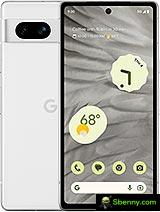
Not everyone is a fan of MIUI, so you may prefer the Pixel skin. The Pixel 8 is smaller than the above phones with a 6.2″ OLED display (FHD+ 120Hz HDR10+). It is powered by the Tensor G3 chipset and a 4,575mAh battery with 27W wired and 3.5W wireless charging support. 18 W. Speaking of support, Google plans to keep it going for 7 years after launch with software updates and replacement parts.

However, if the price is too high, the Pixel 7a is also an option. It is also small with a 6.1-inch display (OLED FHD+ at 90 Hz) and uses the older Tensor G2, plus the 4,385 mAh battery charges more slowly (18 W wired, 7.5 W wireless). Also, support for it will be shorter: 3 OS updates and 5 years of security patches after launch. But who will actually keep the same phone for 7 years?
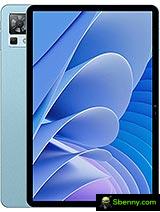
Next up, a gaming tablet dubbed the Doogee T30 Pro. It’s powered by the Helio G99, so don’t expect to run AAA titles at full capacity. However, it has an 11-inch IPS LCD with a 60Hz refresh rate (the chipset isn’t up to par for HRR gaming), which is pretty sharp at a resolution of 2,560 x 1,600 px (16:10). It has a built-in 8,580mAh battery and four speakers, so it can also be used to watch streaming shows (there’s also a microSD slot for local content).
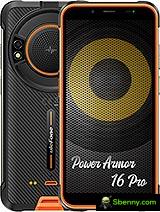
Finally, the Ulefone Power Armor 16 Pro is meant to be a work phone. It’s durable, resistant to drops to concrete from a height of 1.5 m and IP69K for dust and water resistance (the K means it can withstand hot water jets, so it should be easy to clean). Look at the back: it’s not decorative, it’s actually a really powerful speaker. There’s also a built-in flashlight with a dedicated button. The accessory port allows you to connect an endoscope or microscope, which could be useful in your work. Plus, a massive 9,600mAh battery is built in, so you can use it as a power bank too (with 5W output).


Start a new Thread