
A phone’s screen is incredibly important because it is your primary point of interaction with it and all of its guts. Your phone may have the best chipset and the best cameras, but if the screen isn’t very good, you’ll definitely notice – after all, you look at it every time you use your phone.
At the moment, as you may know, there are two main screen technologies on the market and IPS panels have mostly lost traction in favor of OLEDs, especially at the high end. But not all OLEDs are the same: yes, they all have blacks like ink, thanks to the way the pixels work, but other than that, one OLED is not necessarily the same in quality as the other.

Oppo obviously knows this, which is why it has chosen to equip its latest flagship smartphone, the Find X5 Pro, with a very high quality OLED panel, very suitable for its still accessible price. We have the numbers on our spec pages but they only tell half the story – sure, this is a 120Hz panel with a resolution of 1440×3216, so it has the most traditional refresh rate and one of the highest resolutions around.

And yes, you may have heard of LTPO2 and you may have an idea that it is all about dynamically varying the refresh rate, but to what exact extent? Likewise, what about the fact that this panel can display 1 billion colors? How does this affect your daily experience of using the Find X5 Pro? We were curious and luckily Oppo gave us some answers.
Going beyond just the number, 1 billion colors means Find X5 Pro can show you natural rendered skin tones, undiluted by shades that make people look unrealistic. But that’s not all: your perception of color changes based on the color temperature and the intensity of the ambient lighting around you. Then Find X5 Pro automatically shifts its color reproduction to accommodate even the slightest changes in ambient light, while also adapting the range of colors used to match the content.

The panel is capable of showing 100% of the DCI-P3 color space, which is significantly wider than the previous standard, sRGB. Careful calibration ensures that the target is hit very accurately, as our lab tests can confirm. Find X5 Pro has multi-point color calibration, so its screen isn’t made to look its best at just a specific brightness level, but it can adapt to all conditions and still deliver exceptional quality.
Speaking of brightness, there’s also a lot to offer, as I was able to test in real-world conditions on a trip to Paris last month. It might “only” peak at 1,300 nits, but it’s still unmatched by most phones ever made and it’s also enough to make the screen visible even on the sunniest days.
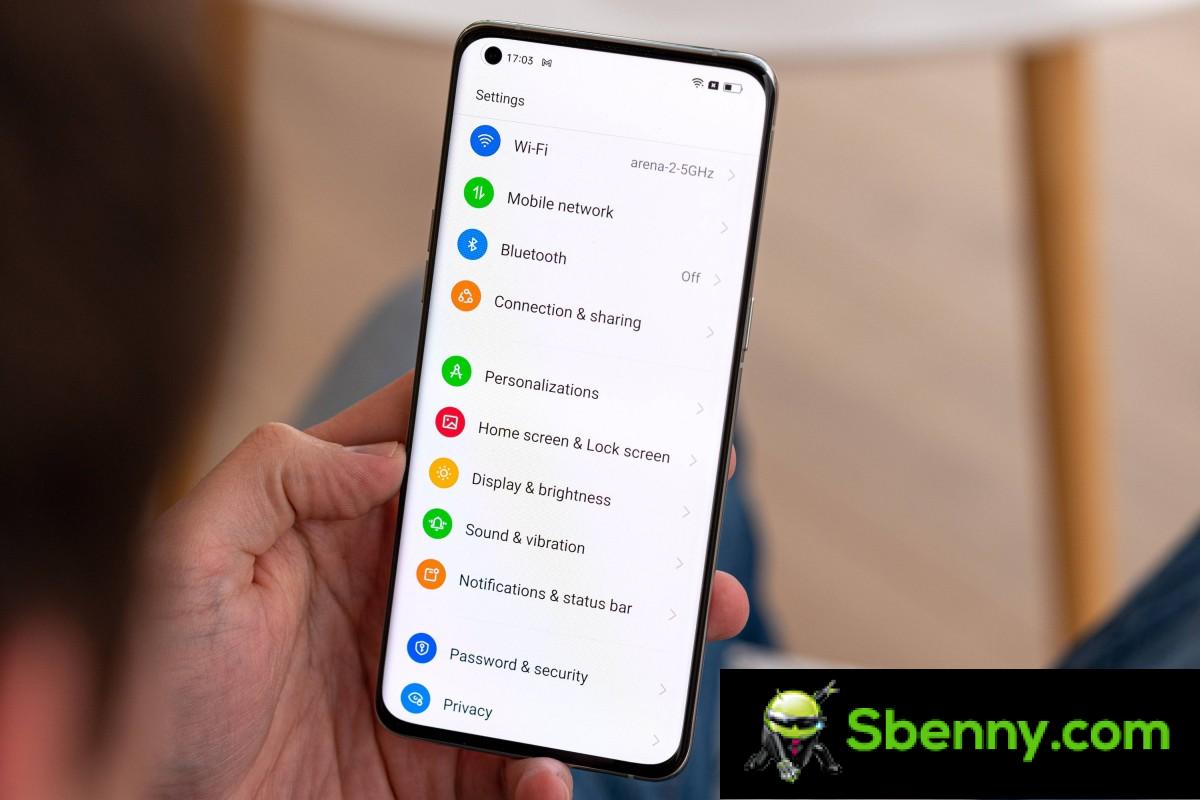
On the other end of the spectrum, in a dark room at night you want your phone’s screen to dim as much as possible, so it’s not painful to look at. This display drops to 20 nits, which allows for comfortable reading or video viewing even in total darkness, without any burning sensation in the eyes. Adding to all of this is the blue light filter, which works well to suppress cold, hard light and give you a warmer tone that doesn’t affect your sleep.
The auto brightness has 8192 levels to overcome, which basically means you’ll never hear it jump too much in either direction – the number of levels allows for extensive fine-tuning. The panel is even tuned to match the way our eyes perceive light, which is logarithmic: in a dark room every slightest change is perceived as huge, while outdoors on a bright sunny day no jumps are recorded. much larger.

There are 12 resizing modes for altering brightness, each changing how quickly the display power changes depending on the current level. The end result of all this science encased on the screen is that you will always feel that it fits seamlessly into its surroundings, never offending for being too bright or too dim when it shouldn’t be.
Now let’s dive into LTPO2 technology. The 120Hz dynamic refresh rate can drop to 1Hz for static content, use 60Hz for apps that specifically want that refresh rate, and go up to a full 120Hz for ultra-smooth scrolling wherever possible.
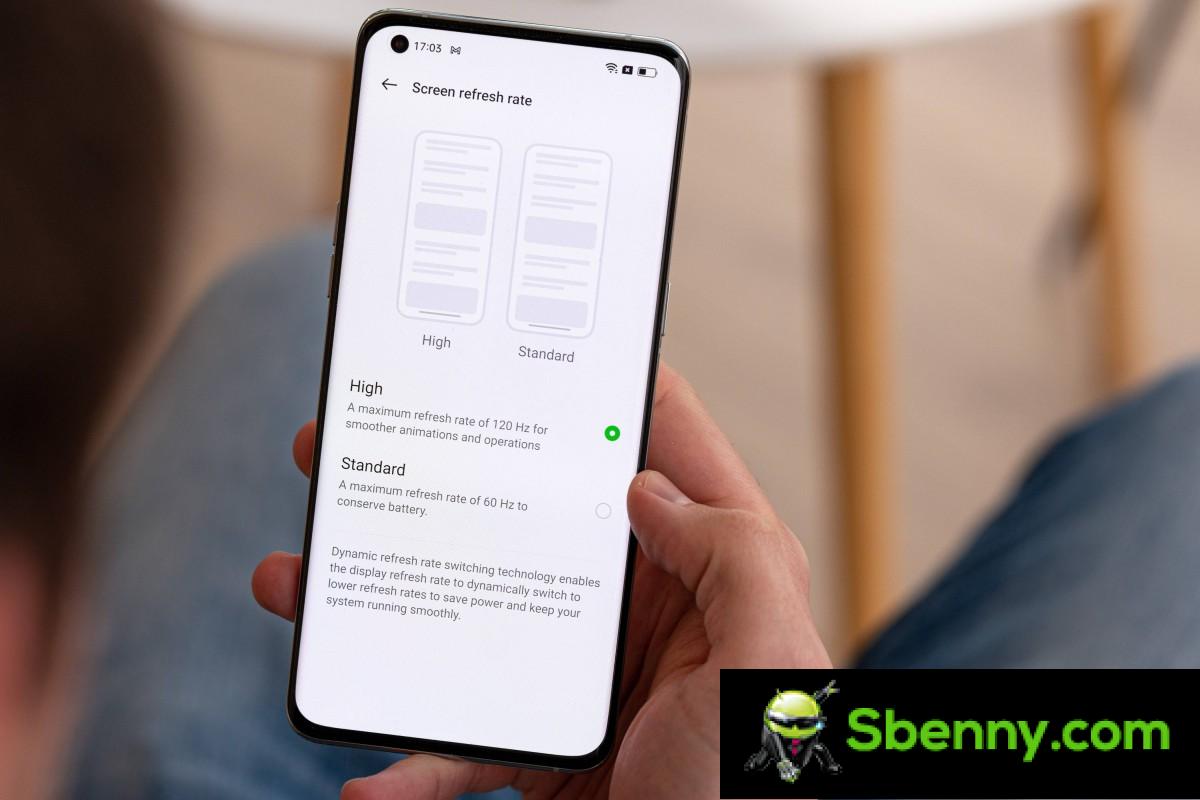
Since it’s not always stuck at 120Hz, you’re not consuming associated power when it’s not needed and that, coupled with the 5,000mAh cell, results in great battery life. And it’s without any compromise in perceived fluidity, as even with all this energy savings, the Find X5 Pro remains one of the smoothest smartphones of the year. All of this background refresh rate change isn’t something you’ll ever notice.
Unsurprisingly, this is the best screen Oppo has ever had on a phone, and it also has one of the most adaptable refresh rates on the market right now. It also supports HDR10 +, as well as HDR upscaling for non-HDR content if you like. And above it sits a sheet of Gorilla Glass Victus, the strongest display glass available to Android device makers, which protects the gently curved screen from drops and scratches.
If you want to know more about the Oppo Find X5 Pro, don’t miss our in-depth review.


Start a new Thread