
Unlike other manufacturers, Google is not saturating the market with constant releases: the newly unveiled Pixel 7 duo brings the total of new phones for 2022 to just three (the other being the 6th). They are fewer phones even than Apple.

Like last year, there are two models: a smaller vanilla phone and a larger Pro, and they play the same roles as last year. The smaller one is cheaper ($ 600) and, well, smaller, the Pro has the best display and camera (dedicated telephoto), but you pay extra ($ 900). It’s almost as if there could have been a Plus model between the two, but not this year. Let’s take a closer look at the phones we have received.
Google Pixel 7 Pro
The Pixel 7 Pro is Google’s best phone for the next 12 months or so and has the features of a true flagship: a sharp, high refresh rate display, large camera sensor, wide angle lens combination / ultra wide / telephoto, a distinctive appearance, safety features and promises of long software support.




Google Pixel 7 Pro
That said, the differences from last year’s Pro aren’t that many. Everything runs on the new Tensor G2 chipset and the revamped telephoto lens. Let’s take a look at the chipset first.
It is famous as Samsung’s 4nm process, not much loved but still an improvement over the 5nm node used for the original chip. The CPU is the same: 2x Cortex-X1 + 2x A76 and 4x A55, albeit with a slight increase in clock speed. The GPU is more interesting, a Mali-G710 MC10, which promises an increase in performance and efficiency over the G78 for graphics but also a 35% increase for machine learning activities (something the Pixel Camera app takes advantage of. Very). There is also a new Tensor core and a new modem to boot.
The next generation Tensor processing unit can perform machine learning tasks 60% faster and 20% more efficiently. It’s responsible for features like Photo Unblur, which is exclusive to the Pixel 7 and 7 Pro – it uses Google’s advanced AI to remove blur and noise from old photos taken years ago with any old phone. It also works to improve the Pixel 7’s cameras, of course, more on that in a second.

Like last year, the phone comes with 12GB of RAM, and you can choose from 128GB, 256GB, and 512GB of storage. There is no microSD slot, of course, what you get is a nano-SIM slot and an eSIM for a second line.
Let’s take a look at the cameras later. The main module still uses a 50MP 1 / 1.31 “(1.2 µm) sensor with the option for 4-in-1 binning. The f / 1.85 lens has an 82 ° field of view. more scenes, there is the 12MP (1.25 µm) ultra wide angle camera with FoV of 125.8 °. An update this year is that the ultra wide angle lens has autofocus, which allows it to take macro photos.
The main camera has optical image stabilization (OIS) and electronic stabilization, it can record 4K video at 30fps and 60fps. The “speech enhancement” function can now also be enabled in 4K / 60fps mode. The phone can record 10-bit HDR video, and Google has partnered with app makers like Snapchat and TikTok to enable higher quality videos for them as well. The camera app takes advantage of the machine learning capabilities of the Tensor G2 chipset to create cinematic blurring or further stabilize handheld footage.

Next, the telephoto lens. It now has a longer lens with 5x optical magnification, compared to 4x. The extra range comes at the cost of a slightly smaller sensor (0.7 µm pixels instead of 0.8 µm), but still has a resolution of 48 MP, which allows it to further digitally zoom in with special Pixel magic. There’s the selfie camera to talk about, but we’ll leave it at the Pixel 7 report below.
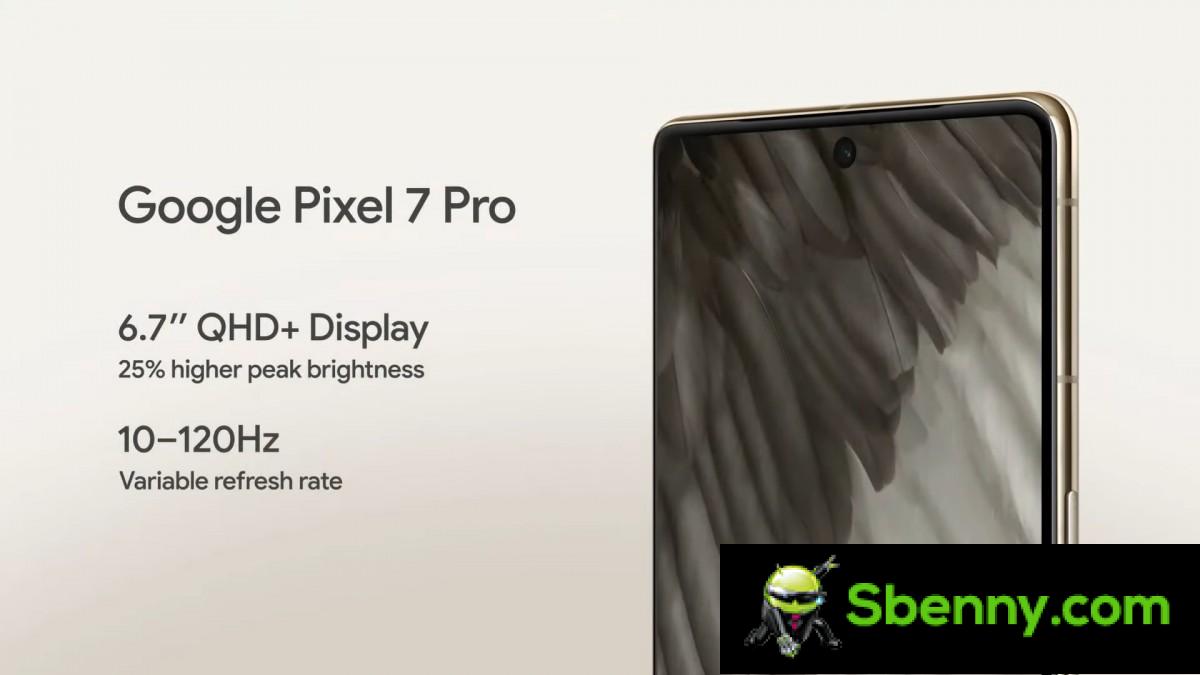
The Pixel 7 Pro’s 6.71 “AMOLED display makes it stand next to its vanilla sibling. Not only because of its size, but also because it is a QHD + LTPO panel with variable refresh rates of 10-120Hz. The sides of the display are not. curved like last year, even if they are still protected by Gorilla Glass Victus.
There is also an in-display fingerprint reader, which is fast and secure. Alternatively, you can use the more convenient Face Unlock.
There are still a few things to mention, such as the 5,000mAh battery, the same capacity as last year. It supports fast charging (fast in Pixel terms), wireless and reverse wireless charging.

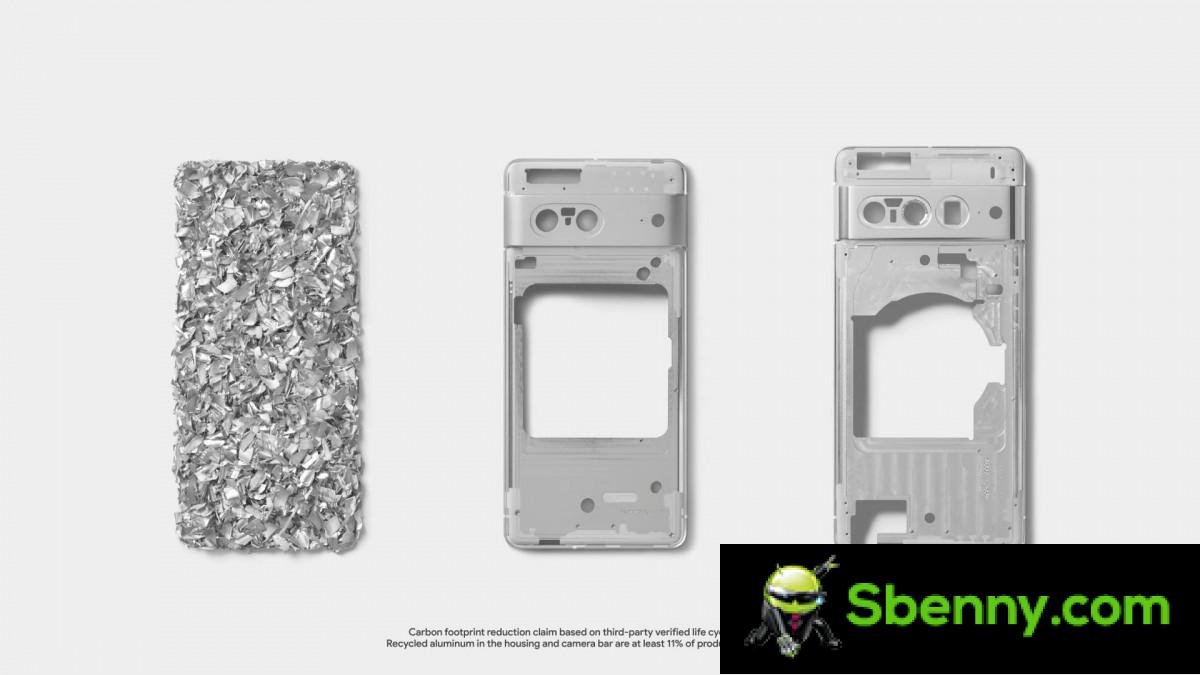
The phone has an IP68 rating for dust and water resistance. While it’s a millimeter shorter, it’s nearly a millimeter wider than last year’s model (we assume that’s the price you pay for the flattest display). The metal frame of the phone is made from 100% recycled aluminum.
For pricing and pre-order offers, check below. Before that we will cover the smaller model.

Google Pixel 7 Pro in obsidian, hazelnut and snow
Google Pixel 7
The Pixel 7 is much cheaper than the Pro model and noticeably smaller too. Not as small as the cheaper 6a, but it’s as small as the premium Pixels. As with the Pro, a lot is driving on the Tensor G2 chipset (the 6a uses the original Tensor chip).
Google has kept the RAM at 8GB, and you can choose between 128GB and 256GB of storage. Like the previous models, Pixel 7 and 7 Pro are guaranteed to receive 3 major OS updates (bringing them to v16) and 5 years of security patches.




Google Pixel 7
The 7 is slightly smaller than the 6, thanks to its 6.3 “(instead of 6.4”) display. The physical dimensions of the phone are 155.6 x 73.2 x 8.7mm and 197g, compared to 158.6 x 74.8 x 8.9mm and 207g of its predecessor. The Galaxy S22 and the iPhone 14 are smaller, so let’s call it medium-sized.
The display is still a flat AMOLED panel with FHD + resolution but has 25% higher peak brightness than the Pixel 6 display. However, this new panel still has a refresh rate of just 90Hz. We would have liked to see 120Hz this one. year, even without LTPO, but for what it’s worth this phone is cheaper than the Galaxy S22 and the iPhone 14 (which has a 60Hz display).
The leaner build of the Pixel 7 also means it has a smaller battery, 4,355mAh (instead of 4,614mAh). However, the more efficient hardware means that Extreme Battery Saver mode can last 72 hours (up to 48 hours). Without it, you’re looking at 31 hours or so of regular use.
Like the Pro, the Pixel 7 uses a 50 MP main camera (1 / 1.31 “, 1.2 µm before binning). It is joined by a 12 MP ultra wide-angle camera and that’s it. Next, the phone relies on Google’s high-resolution main sensor and Super Res Zoom image processing (which has been updated, thanks to the extra processing power available on the G2 chipset).
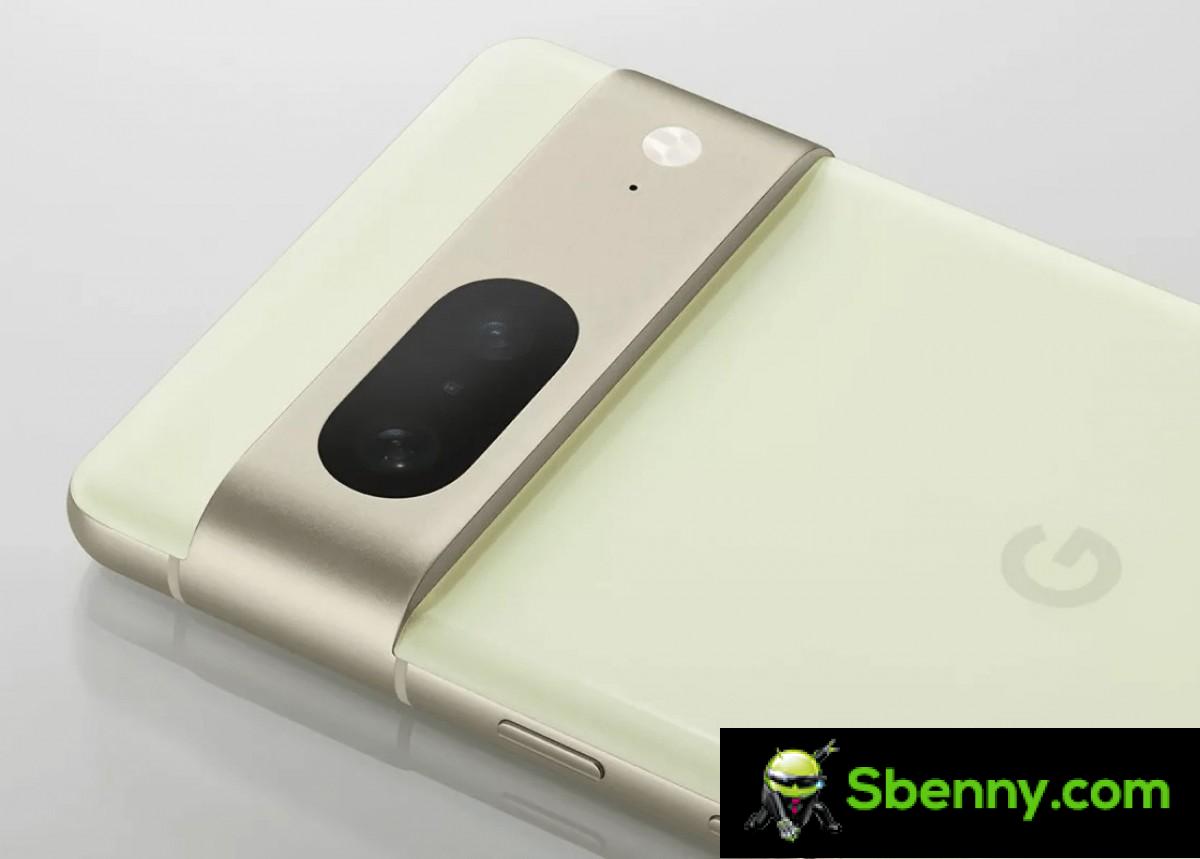
As promised, let’s talk about the selfie camera. It has a higher resolution sensor, 10.8MP (compared to last year’s 8MP) and also a wider field of view: 92.8 ° (compared to 84 °). The lens still has a fixed focus, though. The same goes for the Pro, which uses the same camera module.

Google Pixel 7 in obsidian, lemongrass and snow
Prices and offers
The Google Pixel 7 starts at $ 600 / € 650 / £ 600 for a 128GB drive, the Pixel 7 Pro will set you back at $ 900 / € 900 / £ 850 (again with 128GB of storage). Pre-orders start today, open sales will begin in a week from 13. There are also some perks for pre-ordering: the 7 Pro is paired with a free Pixel Watch (the LTE version no less), while a Pixel 7 pre-order will get you earn a couple of free Pixel Buds Pro.

For more details on pricing and availability for the new Pixel 7 phones (and some pre-order perks too), check out this post.


Start a new Thread