
The iPhone 7 and 7 Plus arrived in late 2016 with one major omission: the 3.5mm headphone jack was gone. Competitors mocked Apple in ads, but followed suit soon after. These days the only flagships that still offer a headphone jack are Sony, Asus and Red Magic. The jack is more common in the mid-range, but there are still plenty of phones in that segment without one selling in the millions of units.
So our question for today is this: Have you already bought a phone without a headphone jack, are you going to buy one without a wired port?
There have been a few prototype devices that have done away with the use of cables of any kind, but there hasn’t yet been a mass-market phone without ports. What does USB do these days, anyway? It is mostly in charge. Most data transfers are over the Internet and, if you’re an Apple user, over local wireless (Android’s nearby sharing isn’t as reliable or popular).
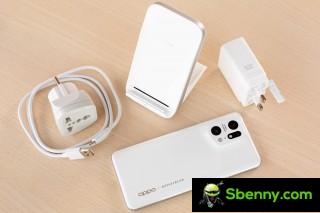

Oppo’s AirVOOC is one of several fast wireless chargers • Infinix Prototype 110W wireless charger
There are features like desktop mode, but today many phones are sold with USB 2.0 ports and some of those that have USB 3.0 don’t have support for DisplayPort Alt Mode or the software to create a proper desktop multitasking environment (we’re looking at you, Google, OnePlus, Asus, Sony and others).
USB-C supports audio output, two versions, in fact. One is a digital standard that requires you to connect an active device with its own DAC and amplifier (usually these are small adapters, but there are also large, powerful units). The other actually connects analog audio over several USB-C pins, so a passive adapter is all you need. However, looking at the ever-growing sales of Bluetooth headphones, we’re starting to think that few people are using wired headphones with their smartphones.
Okay, so charging is then and now the question is whether wireless charging is good enough. Let’s look at some numbers. The phone with the fastest wireless charging currently in our database is the Honor Magic4 Pro, which claims to make an impressive 100W. In our tests, it fully charged its 4,600mAh battery in 40 minutes (compared to 30 minutes when using 100W charging via USB-C). Companies like Infinix are working on even faster systems.
A Samsung Galaxy S23+ with a comparable 4,700mAh battery and support for 45W wired charging goes from zero to 100% in just over an hour. Google Pixel 7 Pro and iPhone 14 Pro Max need about 2 hours. Even something like an older 2020 OnePlus 8 Pro with just 30W wireless and a 4,510mAh battery keeps pace with the wired charging performance of some of the most popular flagships out there.
With the new Qi2 standard, Android phones will get the more secure magnetic attachment that iPhone users have come to appreciate with MagSafe. This makes the loaders easier to line up which in turn makes them more efficient and more reliable to start.
This means that portless phones are technologically possible today. Not only that, any physical connection could become obsolete: microSD slots are as rare as 3.5mm jacks these days, and eSIM-only phones are already here (Apple is on it again). The industry is looking into an even more integrated standard called iSIM, built directly into the phone’s chipset (eSIMs are separate chips).
What do you think, are portless phones the future, whether we like it or not? Or will the efficiency and ease of use of physical connections win out in the end?


Start a new Thread