
We subjected the Apple iPhone SE (2022) to our rigorous SBMARK Audio test suite to measure its performance both when recording sound using its built-in microphones, and when playing audio through its speakers.
In this review, we’ll break down how it fared across a variety of tests and several common use cases.
Overview
The Apple iPhone SE (2022) is the least expensive iPhone model offered by the brand and offers audio performance equal to its predecessor, the iPhone SE (2020). Whether it’s playback or recording, the audio on this high-end 2022 phone is relatively free of artifacts. Playback was particularly good at maximum volume compared to other devices. The dynamics of the sound were good, especially when playing and watching movies. But the audio performance really stood out in the recording, with consistent results in every use case. The correct tonal balance of the voices produced exceptional audio in life and selfie videos; microphone occlusions due to finger movements near the microphones were well handled and had only a minor impact on vocal recording.
Key audio specs include:
- Stereo playback, bottom firing and top front
- No audio output Jack
- Dolby Digital Plus
- User configurable maximum volume limit
- Spatial audio
- Voice isolation and wide-spectrum microphone mode
Reproduction
Pros
- Good dynamic performance with precise attack
- Few artifacts overall
- Good tonal performance, especially with well balanced mids and highs
- Particularly good performance at maximum volume compared to other devices
Cons
- Inverted stereo in landscape orientation when playing music
- Tonal balance lacks bass extension
Registration
Pros
- Good overall performance and very consistent in every use case
- Excellent artifact-free performance even at high SPL compared to reference devices
- Good Envelope and SNR performance in every app thanks to a correct tonal balance of the voices
- The explosives in the content of the voices and in the attack of the instruments are well reproduced thanks to a good tuning of the treble
- Very good performance in spectral artifacts with little noticeable distortion
- Great performance in life video and selfie video regarding microphone occlusions; well reduced finger noise
Cons
- Compared to other high-end devices, a slight lack of bass and high extension
- Some pumping could be heard on loud vocal content and slow automatic gain control at high SPL was audible
- The volume was lower for the memo app
Test summary
Learn about SBMARK audio tests: For scoring and analysis in our smartphone audio reviews, SBMARK engineers perform a series of objective tests and undertake more than 20 hours of perceptual assessment under controlled laboratory conditions.
(For more details on our reproduction protocol, click here; for more details on our registration protocol, click here.)
The following section collects the key elements of our exhaustive tests and analyzes performed in SBMARK laboratories. Detailed performance evaluations in the form of reports are available upon request. Do not hesitate to contact us.
How the audio playback score is composed
SBMARK engineers test playback through smartphone speakers, whose performance is evaluated in our labs and under real-life conditions, using apps and default settings.
The playback attributes on the iPhone SE (2022) were pretty consistent, meaning there were no extremes between timbre, dynamics, space and volume, with the exception of the artifacts, which scored much higher than the other attributes. Looking at each attribute individually, however, in timbre, the tonal balance of the iPhone SE (2022) was compromised by the lack of bass. The lack of high-end extension reduced treble instrument definition and the brilliance of the sound, especially when gaming. Dynamics, overall, were very good, with an attack performing at nominal volume, particularly in game and movie use cases. But the lack of low-end extension affected bass accuracy and punch when the volume was low. The weakness of the iPhone SE among the attributes was spatial. The device showed good amplitude compared to other devices of similar size, but the sound was unbalanced due to the stereo channels being reversed when using the music app and because the centered elements would shift to the sides. But the sound balance issues did not affect distance and localizability, thanks to the good balance between the midrange and high frequencies.
Audio was highly dynamic and distinguishable at minimum volume, but maximum volume was lower than on most high-end devices.
Artifacts were the strongest attribute of the device, with a temporal performance that exhibited no pumping or compression artifacts. Considering that the iPhone SE’s maximum volume isn’t as loud as on other devices, it was surprising that the distortion affected the user experience as much as it did with the volume at its highest level. Other artifacts surfaced during gameplay, such as the ease with which the bottom speaker can be occluded by the user, which impacted the overall audio experience. The music listening experience was also affected by the perceived latency when playing Play / Pause in the music app.
Hear about the playback performance of the smartphone tested in this comparison with some of its competitors:
Here’s how the Apple iPhone SE (2022) fares in Playback use cases compared to its competitors:
The Timbre score represents how well a phone reproduces sound across the audible tonal range and takes into account bass, midrange, treble, tonal balance and volume dependence. It is the most important attribute for reproduction.
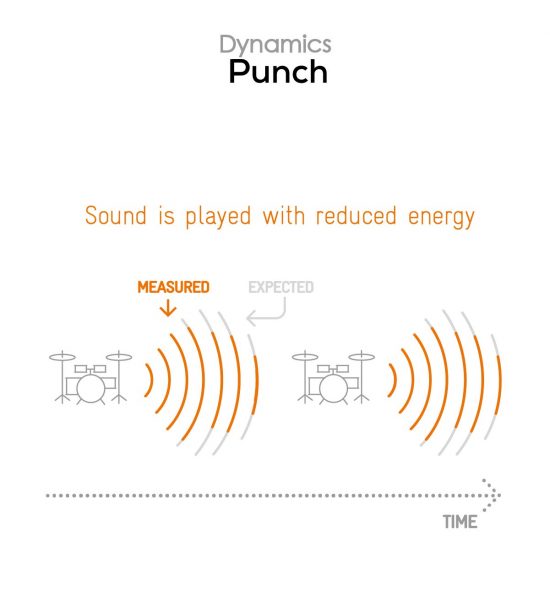
The Dynamics score measures the accuracy of changes in the energy level of sound sources, such as the precision with which a bass note or the impact sound of drums is reproduced.

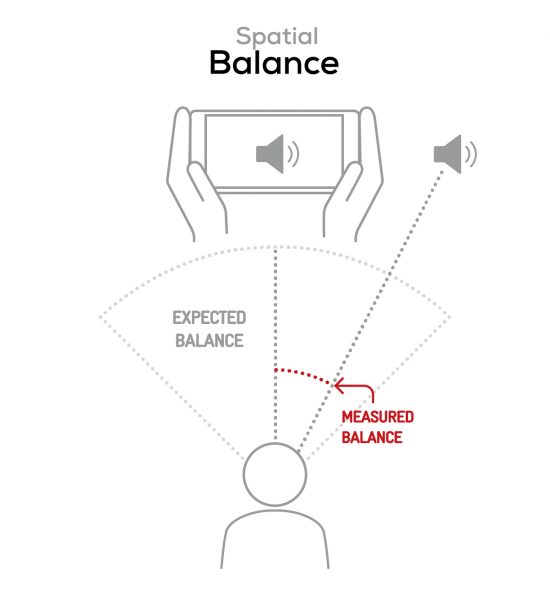
Secondary attributes for spatial tests include identifying the position of a specific sound, its positional balance, distance and amplitude.

The volume score represents the overall volume of a smartphone and how the volume gradually increases and decreases based on user input.
Here are some sound pressure levels (SPLs) measured while playing our sample recordings of hip-hop and classical music at maximum volume:
| Hip-Hop | Classic | |
| Apple iPhone SE (2022) | 73.9 dB | 69.9 dB |
| Xiaomi 11T | 71.3 dBA | 68.6 dB |
| Google Pixel 6 | 74.8 dBA | 69.7 dB |
The graph below shows the gradual changes in volume from minimum to maximum. We expect these changes to be consistent across the range, so that all volume levels match user expectations:
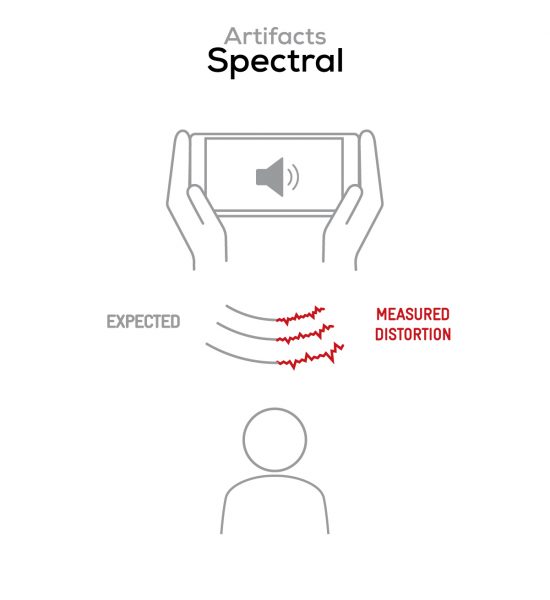
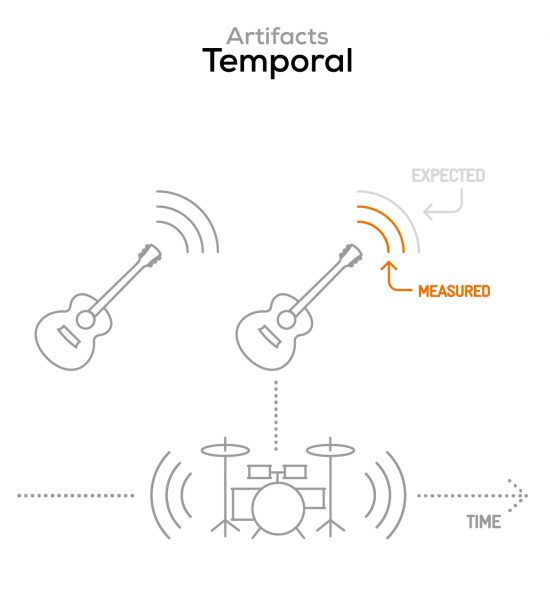
The Artifacts score measures the extent to which sound is affected by various types of distortion. The higher the score, the less noise you notice. Distortion can occur due to the sound processing in the device and the quality of the speakers.
How the audio playback score is composed
SBMARK engineers test the recording by evaluating the files recorded on reference audio equipment. These recordings are performed in our labs and in real-life conditions, using apps and predefined settings.
When looking at the recording attributes individually, the stamp and artifacts were the highest scoring sections of the iPhone SE. The tone showed a great performance overall, with an excellent tonal balance, particularly in the midrange, despite the lack of extension in the high and low frequencies. Tonal balance was handled well by the device in high SPL environments such as an electronic gig and there was very little distortion. The good tonal balance of the voices also aided the dynamics of the iPhone SE, creating a good envelope and good signal-to-noise ratio in each app. As in playback, the iPhone SE’s spatial performance was its weak point. Despite the good breadth and localizability in life and selfie videos, spatial results have been poor in the memo app because these are mono recordings. When evaluating the recorded volume, the volume in the videos and life reminders is good, but slightly lower when recording selfie videos. On top of that, the iPhone SE (2022) will provide excellent recording of any loud concert or other high SPL scenarios. Not only is the volume great, but the audio will have very few perceptible distortions. But the content of loud voices at high sound pressure levels caused some pumping.
In the background attribute, the recordings showed good tonal balance, although there was a slight lack of high- and low-frequency content.
Here’s how the Apple iPhone SE (2022) fares in use case registration compared to its competitors:
The Timbre score represents how well a phone captures sounds across the audible tonal range and takes into account bass, midrange, treble and tonal balance. It is the most important attribute for registration.
The Dynamics score measures the accuracy of changes in the energy level of sound sources, such as how accurately the explosives of a voice (p, tek, for example) are reproduced. The score also considers the Sound-to-Noise Ratio (SNR), such as how loud the main voice is compared to the background noise.


Secondary attributes for spatial tests include identifying the position of a specific sound, its positional balance, distance and amplitude on recorded audio files.


The volume score represents the normalization level of the audio on the recorded files and how the device handles noisy environments, such as electronic concerts, during recording.
Here are the sound levels recorded in the audio and video files, measured in LUFS (Loudness Unit Full Scale); as a reference, we expect loudness levels to be higher than -24 LUFS for recorded content:
| Encounter | Life video | Selfie video | Memo | |
| Apple iPhone SE (2022) | -24.7 LUFS | -21.7 LUFS | -19.9 LUFS | -19 LUFS |
| Xiaomi 11T | -26.8 LUFS | -21.2 LUFS | -19.5 LUFS | -20.3 LUFS |
| Google Pixel 6 | -27.8 LUFS | -17.9 LUFS | -16.3 LUFS | -19.8 LUFS |
The Artifacts Score measures the extent to which recorded sounds are affected by various types of distortions. The higher the score, the less noise you notice. Distortions can occur due to the sound processing in the device and the quality of the microphones, as well as user handling, such as the way the phone is held.
Hear about the artifacts in this excerpt, which was recorded in a fast-paced home environment:
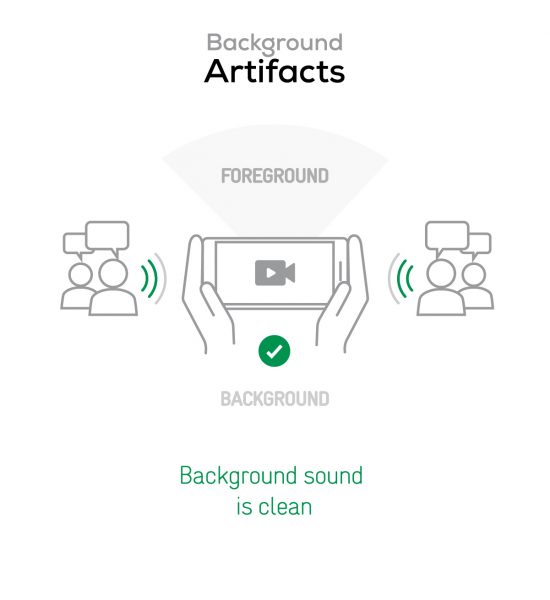
Background evaluates how naturally the various sounds around a voice blend into the video recording file. For example, when recording a speech at an event, the background should not interfere with the main voice, but should provide context for the surrounding environment.


Start a new Thread