
After a 13 year hiatus Avatars is back in theaters: the original film revolutionized the industry and transformed 3D from a gimmick to a must-have for every blockbuster. But what happened once a 3D movie left the big screen and was released on Blu-ray? The rise in popularity of 3D movies created a need for televisions that could play them in the comfort of your home.
Only this version of events doesn’t tell the whole story, 3D is much older than Avatars. Seriously, the first color film came out in 1908, the first stereoscopic 3D film came out in 1922 (or maybe earlier). However, up until James Cameron’s 3D film was just an occasional gimmick that was revived and quickly forgotten several times over the years. And while 3D movies at the theater are still the norm, they drop down to two dimensions for home release.

The charitable interpretation is that the 3D effect does indeed benefit from a bigger screen, while even the biggest home TVs don’t see enough benefit. But if the 3D effect doesn’t work on a 40+ inch TV, what chance does it have on a screen you can fit in your pocket? (the least charitable interpretation is that 3D tickets cost more, by the way)
Phones with 3D screens predate the upheaval that Avatars caused in Hollywood. British publication The Guardian has a 2002 article titled The Return of 3D – This isn’t the latest series of gimmicky 3D horror movies (there weren’t any shortages), it was the first phone ever with a 3D display.
That phone was the Sharp mova SH251iS for NTT DoCoMo and although it was only available in Japan, The Guardian I found it interesting because the screen technology was developed by a British team. It was an autostereoscopic display, meaning you didn’t need glasses to see the 3D effect, however it only worked from a specific perspective.

The Sharp mova SH251iS is so old that we couldn’t even find a good picture of it
If you have any experience with this type of display, it is most likely from a Nintendo 3DS. However, the 3DS only came out in 2010 – Sharp (as always) was way ahead of the curve. We must admit that the title of the article made us laugh, already in 2002 the attitude towards 3D was “ugh, it’s back”.

The Nintendo 3DS probably has the most popular autostereoscopic display out there
However, while the British had figured out how to build a 3D display, making a 3D camera was still an open question. The Sharp phone only had one camera, so to take a 3D image you had to take one picture, lean slightly to the side, and take a second picture. Next, the software would merge the two into a side-by-side 3D image viewable on your phone screen…and maybe any other screen you had. Or that your friends had, unless they also bought a mova SH251iS.
This means that the first phone ever with a 3D screen encountered the same problem that plagued other 3D phones to come: You can view 3D content on your phone and nowhere else. Want to view a photo on your computer? Unless you have specific hardware, you can only get a 2D image. The same goes for viewing it on TV or printing it (remember, this was 2002).

You can use an inexpensive pair of red-cyan glasses and special software to view 3D images on a 2D screen. Except those cheap glasses really spoil the colors of the picture, not ideal for movies or photography. And most image viewers didn’t know what to do with a 3D image anyway, so you had to surf the internet to find something that worked. All of this was more annoying than the 3D effect was worth.
Not that the basic 0.3MP camera can produce amazing images. And the phone’s dedicated 3D screen wasn’t exactly high-quality either: a tiny 2.2-inch picture with only 65,000 colors.
In 2007 came the Samsung SCH-B710, which solved the camera problem. It had a pair of 1.3MP cameras so you can take a 3D photo with just one click. This also solved the problem of photographing moving objects (the two-photo trick doesn’t work if the subject is moving). The Samsung also used an autostereoscopic display, and it wasn’t great either: another tiny 2.2-inch display with 240 x 320 px resolution (note that this type of display only shows half the resolution for each eye).

The Samsung SCH-B710, note: 3D view only works in one display orientation
There were other models, like the Samsung W960 AMOLED 3D and 2010’s Spice M-67 3D, but they didn’t catch on either.
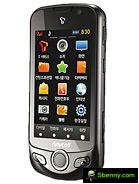

Samsung W960 AMOLED 3D • Spice M-67 3D
Moving on to the post-Avatar era, which also coincided with the rise of Android, we come to the LG Optimus 3D and HTC EVO 3D. These are probably the phones you thought of when you read the title.
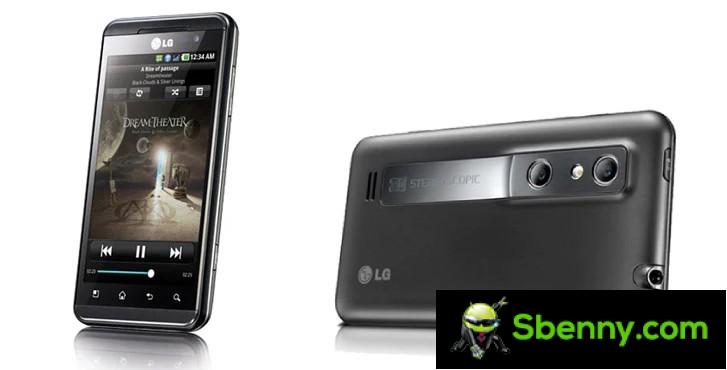
They may not have been the first, but they had the best shot at getting 3D to work. They had large displays, both 4.3″ and they were quite sharp: 480 x 800 px on the LG, 540 x 960 px on the HTC. And they had better quality cameras too, a pair of 5MP sensors on each telephone.

We think the “smartphone” aspect has been more important as has the evolution of the Internet. App stores have made it easier for your friends and family to download apps such as an image viewer that supports red-cyan glasses without a 3D phone. Plus, sharing photos over the Internet has been easier than ever. So what went wrong this time?
First, let us show you some 3D camera examples. Notice the problem? Whichever browser you’re using doesn’t support side-by-side 3D format. There used to be a site that supported various 3D displays and 2D displays + glasses, but that service died years ago.


3D photos side by side from the LG Optimus 3D
YouTube still supports 3D, interestingly enough, here’s a sample video:
And even if you were a 3D enthusiast who appreciated the added depth these images have, sharing these images with family and friends was difficult unless they were just as enthusiastic. Perhaps if 3D TVs caught on and then PC monitors and laptop displays started supporting 3D, things would have been different.
This brings us back to our point from the beginning: the 3D effect isn’t worth it on small displays.
So, is this the end for 3D phones? Or is there a chance they will make another comeback? The truth is they never went away, there are still new 3D phones (and even 3D tablets) coming out. It’s just that they’re flying so low under the radar that you probably never knew they existed.

The Elephone P11 3D is from 2019
In any case, we think 3D displays are best left in the past. A 3D photo is rather static, even a 3D video has a fixed perspective. Virtual reality is the “next big thing”, it allows you to look around freely and with the most advanced headsets you can even move around within the scene. It’s everything 3D was meant to be, but better. VR games are slowly but steadily increasing in popularity and VR has found many applications in professional settings.

Smartphones have also had a chance to be a part of the VR market – remember Google Cardboard and Samsung Gear VR and all the other similar attempts? Maybe those came out too soon, before there was enough worthwhile content to try. And perhaps there will be a resurgence after Sony’s PSVR2 launches (early next year) and Apple finally delivers its own headphones. And of course, Meta is pouring billions into the Metaverse. But even if VR phone kits make a comeback, we’re betting 3D phones never will.
PS. Like 3D, virtual reality has also been around for longer than one might expect. But he hasn’t had his yet Avatars moment.


Start a new Thread