
After 12 years, the time has finally come to retire our original battery test: the world of smartphones had evolved so much in that period that we believed it no longer produced relevant results. This is why we introduced the new Active Usage Score. But while we welcome the new protocol, we also want to throw a retirement party for the veteran.
Over the course of more than a decade, we tested 1,058 phones. The first was the Nokia N9, the last the Realme GT5 240W. 240 watts! This really puts things into perspective, the Nokia N9 charger only produced 5W – 5 volts, 1 amp was fine back then. But we’re not here to talk about charging speed.
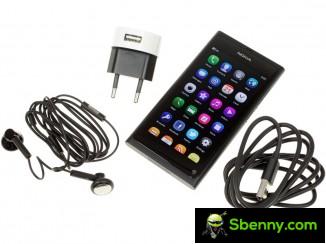

12 years of evolution in battery and charging technology
The mobile world has changed significantly since we started running the original test. 4G has spread around the world and 5G coverage has been growing in recent years. Videos have moved away from DVD resolution and into the high definition era. Another form of mobile entertainment, gaming, has also become popular.
Our original test scenario only involved voice calls, web browsing, and offline video playback: one hour each every day, the rest of the time the phone sat idle. What if we had to start over and retest everyone 1,058 phones back to back, it would take us 90,962 hours – this is 3,790 days or around 10 and a half years. In other words, if we took the time machine back to November 8, 2011 and reran the tests one after the other, we would already be in 2022 by the time we were done.
Cumulative trial time is 3 years of talking on the phone, 1.5 years of web browsing, and 1.6 years of watching videos. In the old days, we sometimes had to hover over the phone, waiting for the video to finish so we could press “play” again—the arrival of video players with “repeat” modes has been a blessing. Nowadays we rely on automation to handle such menial tasks.
Before we put the old test aside, we wanted to call out the phones at the top of the charts. The Ulefone Power Armor 13, which we reviewed in 2021, is an absolute beast: its massive 13,200 mAh battery gave it an endurance rating of nearly 300 hours. This is well beyond the reach of the closest competitor: the Doogee S88 Pro, which gets up to 202 hours on its 10,000 mAh battery.


It’s no surprise that the Power Armor 13 also tops the charts in individual tests. It is capable of providing over 100 hours of talk time on a single charge, which is once again above the second best phone – the Blackview BV8000 with an 8,380 mAh battery and around 66 hours of talk time. Nearly 40 hours of web browsing on a single charge is also an impressive feat for the Ulefone, although second place is much closer this time: it’s the S88 Pro with 35 hours.

Finally, for the video playback test… wait, we have a mishap! The small Sony Xperia 10 V with its 5,000mAh battery beats the Ulefone by an hour. Indeed, the phone with a thickness of 8.3 mm and a weight of 159 g (compared to 20.8 mm and 492 g of the Power Armor 13) is one of the best phones in terms of battery life and ranks at 5 ° place in the overall ranking in terms of endurance rating with a score of 175h. It beat the Xperia 10 IV, which previously occupied that spot with a score of 163h.

The only other “regular” phone to make the Top 5 is the 2020 Realme 6i. It too has a 5,000mAh battery and managed a monumental 186-hour endurance score – almost as much as the Blackview BV8800 (199 hours ). Unfortunately, the high power draw during video playback held it back. However, the Mark 5 and 6i prove that a huge battery isn’t the only way to maximize endurance.

We’ve sung the praises of some of the longest-lasting phones ever made, now let’s take a disappointed look at some of the lesser-performing phones. The HTC Titan II, a 2012 Windows Phone 7 device with a tiny 1,730 mAh battery and a large 4.7-inch display, managed a pitiful 23-hour endurance rating, not even a full day.

Another Windows Phone 7 handset, the Nokia Lumia 710, with an even smaller 1,300 mAh battery (and also a smaller 3.7″ display) had a slightly better 27-hour endurance rating, but pretty terrible in individual tests (web – 3:51, video – 3:27.) The Titan II didn’t perform much better for web browsing (4:05), but it lasted noticeably longer when playing videos ( 5:50am) and was much better as an actual phone (with just over 9 hours of voice calls in its tank).

That’s not to say that all Windows phones had poor battery life, some fared quite well. And let’s not pretend that the first Androids were better, there are Sony Xperia P and LG Nitro HD which are at the bottom of the ranking.
Those were some of the best and some of the worst. But a typical phone in this test would get an endurance score of 86 hours, with just over 24 hours of talk time, just under 12 hours of web browsing, and just under 14 hours of offline video playback.
Here’s a histogram showing the distribution of phones: almost all of them are clustered between 30 and 130 hours. There are outliers, of course. You can see the Ulefone Power Armor 13 All the road to the right and a few others that are in the abyss between 160 hours (the maximum lifespan of a typical phone) and 300 hours.
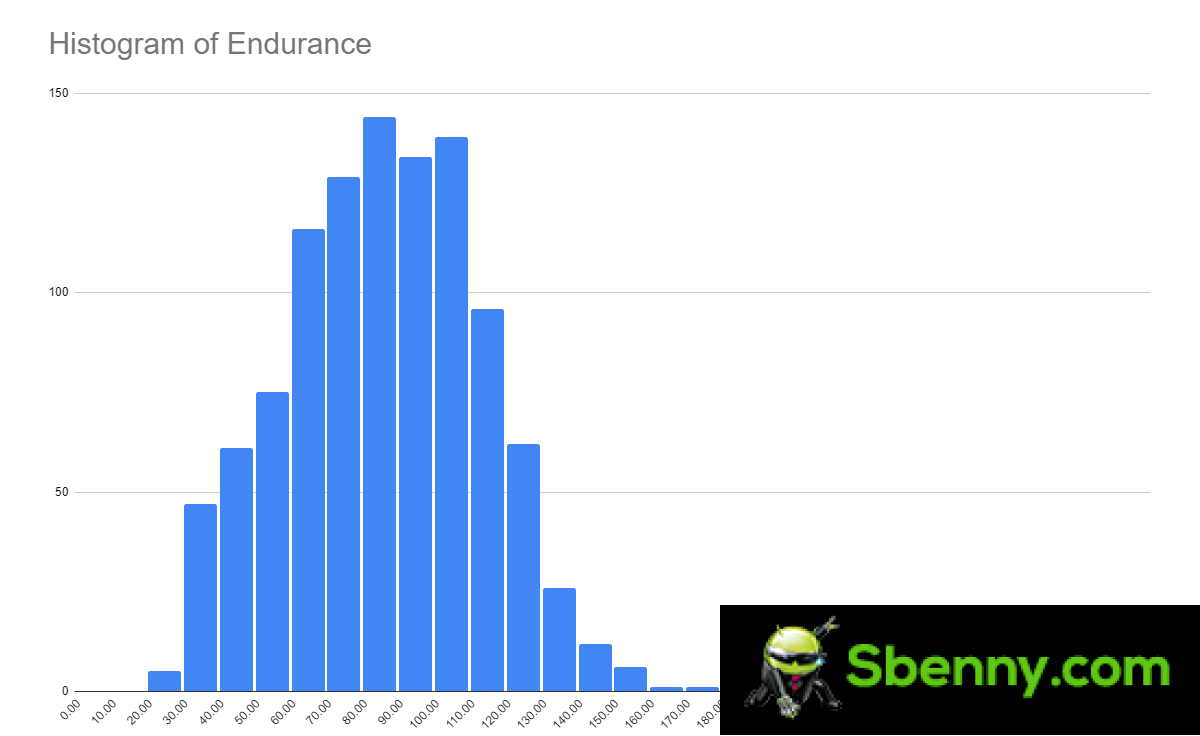
The graph: You can see all the results of the original strength evaluation test on this page. There’s a similar page for the new test here, where you’ll see some familiar faces.


Start a new Thread