
We subjected the Google Pixel 7 to our rigorous SBMARK Display test suite to measure its performance Cons six criteria. In this test roundup, we’ll break down how it fared across a variety of tests and several common use cases.
Overview
Main display specifications:
- 6.32-inch OLED (~ 85.6% screen-to-body ratio)
- Dimensions: 155.6 x 73.2 x 8.7mm (6.1 x 2.9 x 0.3in)
- Resolution: 1080 x 2400 pixels, (~ 416 ppi density)
- Refresh rate: 90Hz
Pros
- Well-managed and enjoyable HDR10 video experience
- The device exhibits good color fidelity in most lighting environments
- Brightness is well managed in low light and indoor conditions
versus
- The device sometimes lacks brightness in outdoor conditions
- The device does not have fluency at times when playing video games
- The colors change from pink to blue alternately with respect to the corner
While not quite on par with the Google Pixel 7 Pro, the Pixel 7’s performance is still superior to that of many other devices – and in fact, at the time of this writing, it ranks first among all end devices. high. -end, and is among the top 10 phones tested in the SBMARK database.
The Google Pixel 7 equals the Pixel 7 Pro in handling HDR10 video content, with both devices getting very well matched brightness and contrast, thus delivering a pleasing viewing experience. While both Google phones handle frame drops well, the Pixel 7 comes out ahead of its big brother in the motion attribute, as no stuttering is visible on the smaller device while gaming. For all other attributes, however, the Pixel 7 lags behind the Pro version, particularly in terms of color on angle and touch. That said, the Pixel 7 performs very well considering its segment, even surpassing the iPhone 14, even if the Apple product is in the Premium segment.
Test summary
Learn about SBMARK visualization tests: For scoring and analysis in our smartphone and other display reviews, SBMARK engineers perform a series of objective and perceptual tests in controlled laboratory and under real-life conditions. Please note that we evaluate display attributes using only the device’s built-in display hardware and related still image (gallery) and video apps with default settings. (For in-depth information on how we rate smartphones and other displays, see our articles, “How SBMARK Tests Display Quality” and “A Closer Look at SBMARK Display Tests”.
The following section collects the key elements of our exhaustive tests and analyzes performed in SBMARK laboratories. Detailed performance evaluations in the form of reports are available upon request. Do not hesitate to contact us.
How the screen readability score is composed
Readability evaluates the ease and comfort with which users can read stationary content (photos and web) on the display in various real-life conditions. SBMARK uses its Display Bench to recreate ambient light conditions ranging from total darkness to bright sunlight. In addition to laboratory tests, perceptual analysis is also carried out in real-life environments.
The brightness of the Google Pixel 7 offers excellent readability in indoor conditions. Its adaptation to changes in ambient lighting is fluid and legibility is preserved when viewed at an angle.
Brightness is adapted to 0 lux, although at a lower limit for Pixel 7 compared to Pixel 6. Pixel 7 exhibits the same behavior as the Pro version in harsh conditions, i.e. brightness reaches 1000 nits (compared to 2000 nits for the 7 Pro) , but rapidly decreases, thus severely degrading readability.
Readability in an indoor environment (1000 lux).

From left: Google Pixel 7, Google Pixel 6, Apple iPhone 14, Samsung Galaxy S22 (Snapdragon)
(Photo for illustrative purposes only)
Readability in an outdoor environment (20,000 lux).

From left: Google Pixel 7, Google Pixel 6, Apple iPhone 14, Samsung Galaxy S22 (Snapdragon)
(Photo for illustrative purposes only)
Like the Pro version, the Google Pixel 7 exhibits excellent brightness and color uniformity.
Measurement of luminance uniformity
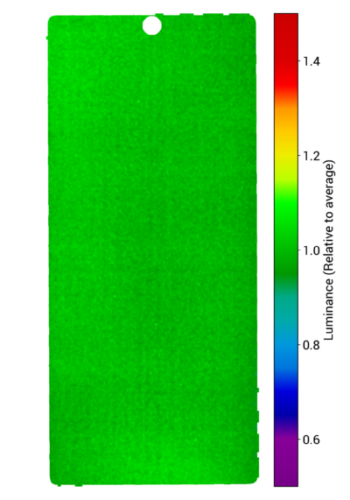
This graph shows the uniformity of the display with a gray pattern of 20%. The more green the color is visible, the smoother the display.
How the Display Color score is composed
The color attribute evaluates the device’s ability to accurately reproduce colors. The measurements made are for fidelity, white point color and gamma coverage. We perform color assessments for different lighting conditions to see how well the device can handle color in its surroundings. Colors are measured using a spectrophotometer in a controlled lighting environment. The perceptual analysis of the color rendering is compared to the reference model displayed on a calibrated professional monitor.
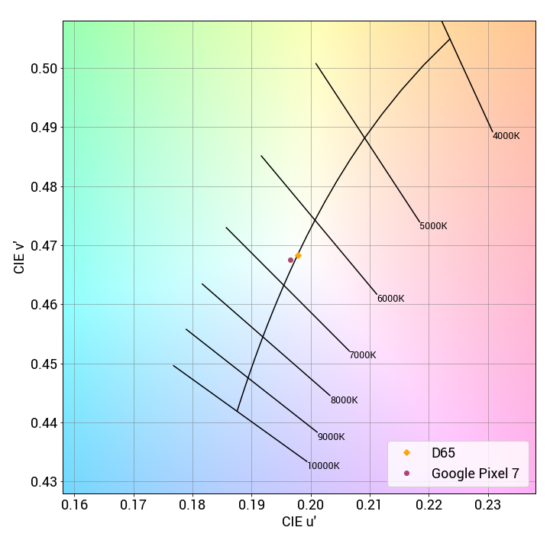
The color measurements for the Google Pixel 7 are close to those of the target audience and the device adapts its color gamut to the image content. Unlike the iPhone, however, the Pixel 7 doesn’t adapt its white point to the lighting environment.
White point under illuminant D65 at 1000 lux
Color rendering outdoors (20,000 lux)

Clockwise from top left: Google Pixel 7, Google Pixel 6, Apple iPhone 14, Samsung Galaxy S22 (Snapdragon)
(Photo for illustrative purposes only)
Color fidelity measurements

Google Pixel 7, color fidelity at 1000 lux in the sRGB color space
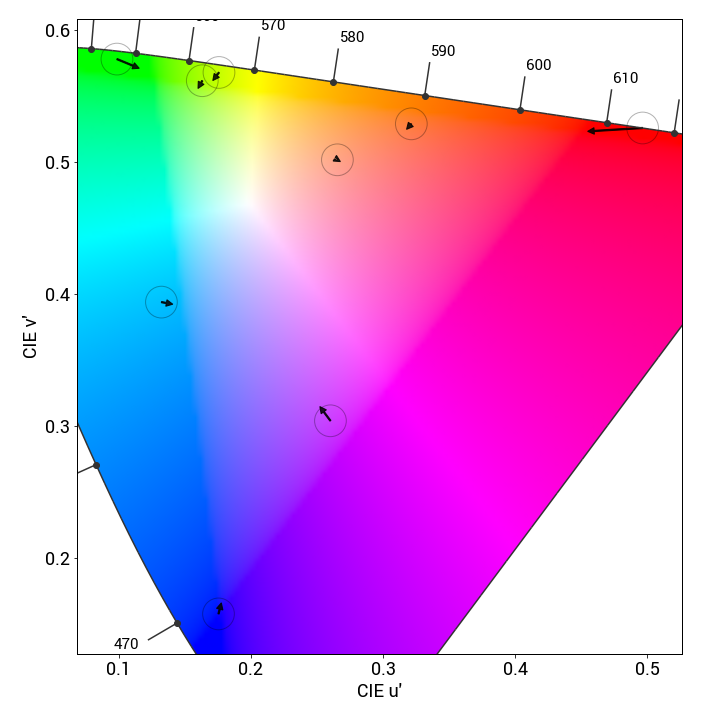
Google Pixel 7, color fidelity at 1000 lux in the DCI-P3 color space
Each arrow represents the color difference between a target color model (arrow base) and its actual measurement (arrowhead). The longer the arrow, the more visible the color difference. If the arrow stays inside the circle, the color difference will only be visible to trained eyes.
The biggest color issue on the Pixel 7 is that it shows alternating pink and blue streaks as the viewing angle changes, as seen in the photo below and the graph.
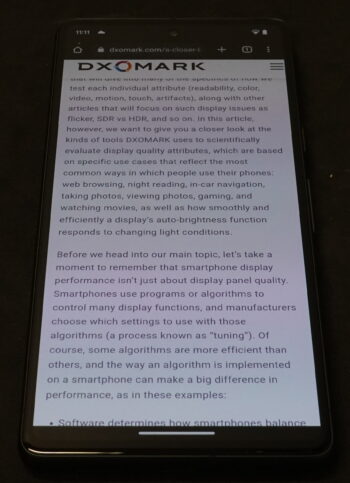
The Google Pixel 7 display shows pink and blue streaks when held in a corner.
(Photo for illustrative purposes only)
Behavior of the color on the corner
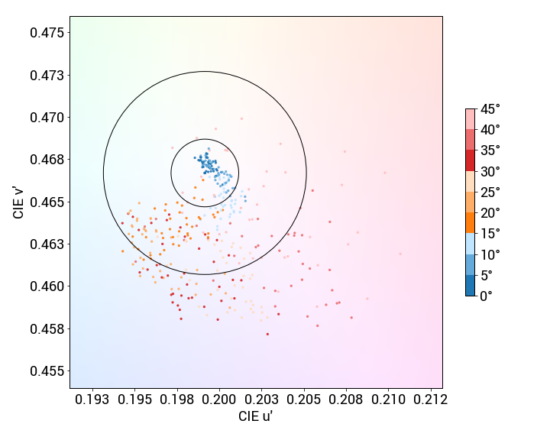
This graph shows the shift of color when the screen is tilted. Each point represents a measurement with a particular angle. The points inside the inner circle show no color change in the corner; those between the inner and outer circle have shifts that only trained experts will see; but those who fall outside the outer circle are noted.
How the Display Video score is composed
Our video attribute evaluates the Standard Dynamic Range (SDR) and High Dynamic Range (HDR10) video handling of each device indoors and in low light conditions. We measure the tone mapping, color gamut, brightness and contrast of the display. We perform perceptual analysis Cons our professional reference monitor (Sony BVM-HX310) to ensure that the rendering respects the artistic intent.
Pixel 7’s highest score for Video matches that of the Pro version, as both devices demonstrate finely tuned tone mapping, adapted brightness, and accurate colors on HDR10 content. However, users may want to increase the brightness for SDR content to better enjoy their entertainment.
Video rendering in a low light environment (0 lux).
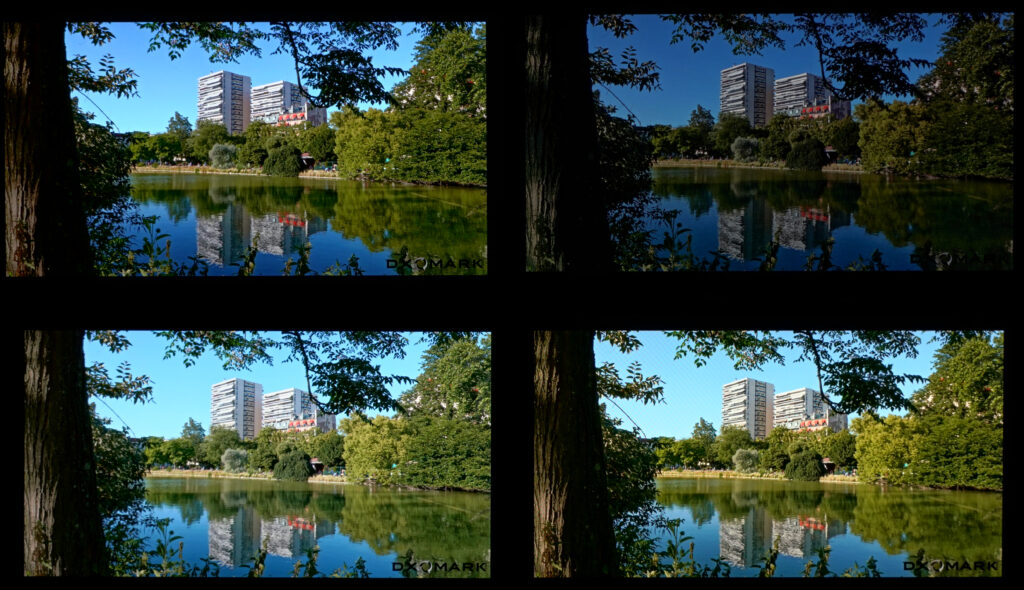
Clockwise from top left: Google Pixel 7, Google Pixel 6, Apple iPhone 14, Samsung Galaxy S22 (Snapdragon)
(Photo for illustrative purposes only)
Quantization is sometimes visible on both the Pixel 7 and Pixel 6, as exemplified by the halos around the sun in these screens from an HDR10 video.
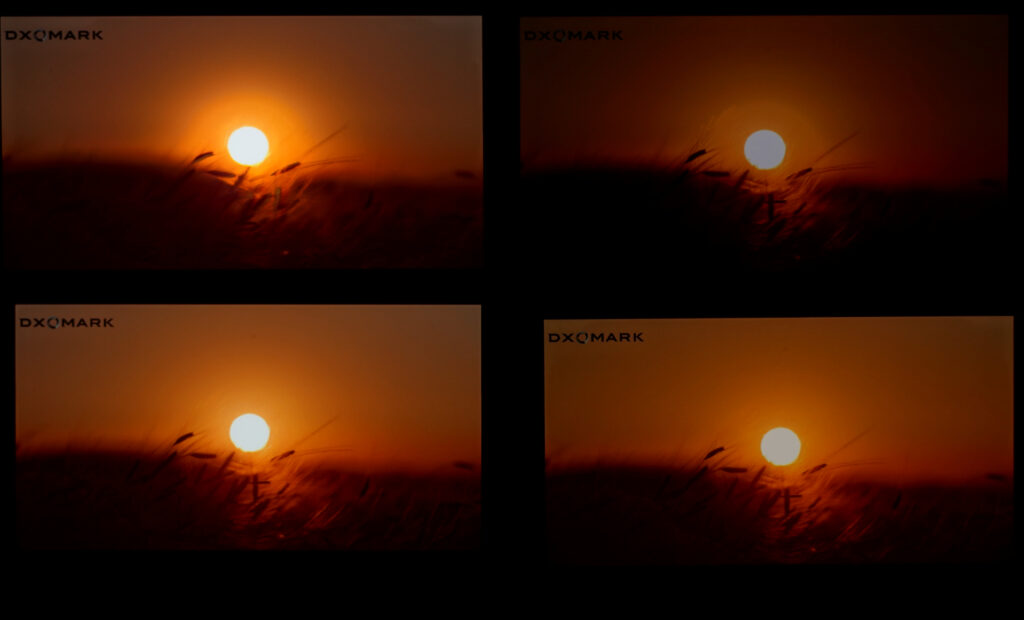
Clockwise from top left: Google Pixel 7, Google Pixel 6, Apple iPhone 14, Samsung Galaxy S22 (Snapdragon)
(Photo for illustrative purposes only)
Colors are accurate in HDR10, although the Pixel 7 sometimes makes skin tones slightly green.
Range coverage for video content
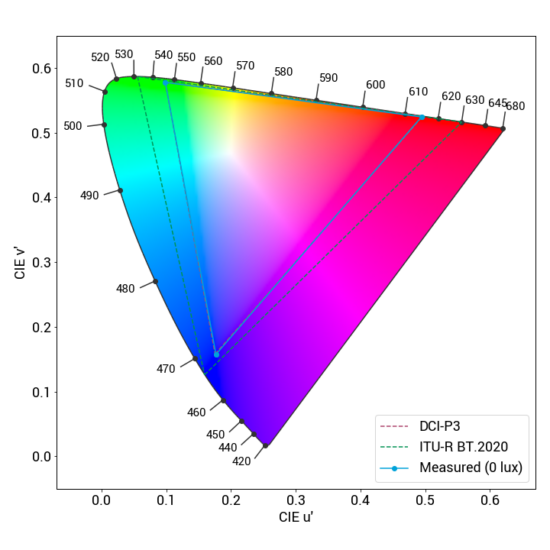

Primary colors are measured in both HDR10 and SDR. The extracted color gamut shows the extent of the color area that the device can render. To respect the artistic intent, the measured gamut should match the main color space of each video.
How the score of Display Motion is composed
The motion attribute evaluates the handling of dynamic content. Frame drops, motion blur, and playback artifacts are investigated using games and videos.
The Google Pixel 7 handles frame drops very well for FHD and UHD videos, and unlike the Pro version, no shots are visible during video games. But like the Pro version, long pauses occur when resuming the playback of downloaded videos.
The video frame drops
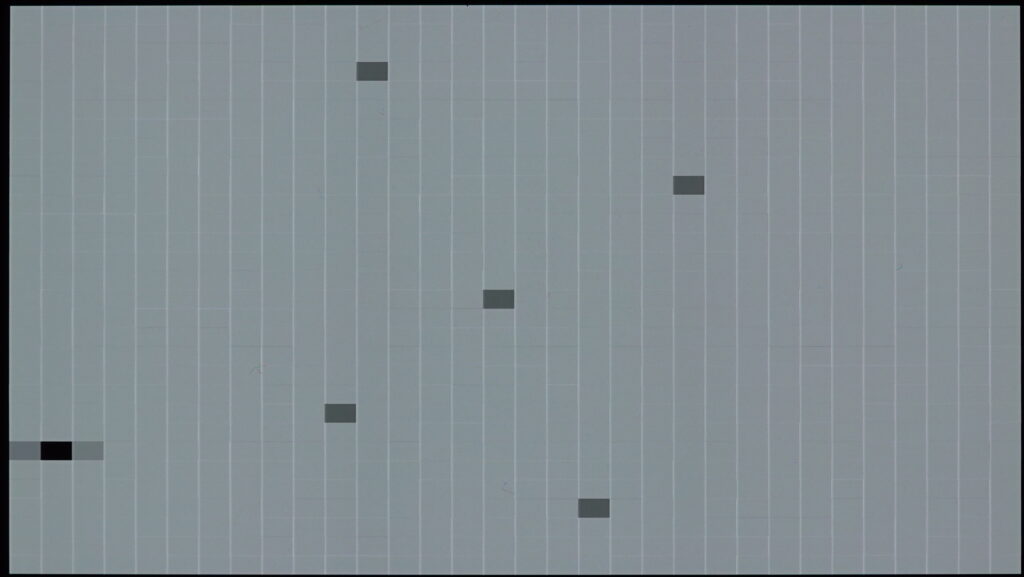

These long exposure photos present the number of frame irregularities in a 30 second video. A good performance shows a regular pattern (a flat gray image or a drop-down pattern).
How the Display Touch score is composed
To evaluate touch, SBMARK uses a touch robot and a high-speed camera to reproduce and record a series of scenarios for the evaluation of fluidity, accuracy and response time.
Touch is easy and precise on the Pixel 7, even on edges and corners. It’s smooth when browsing the web and scrolling through photos, but not as smooth as the Samsung Galaxy S22 (Snapdragon). Like its big brother, the Pixel 7 lacks fluency during video games compared to the Pixel 6, when tested on the Asphalt 9 Legends game.
This response time test accurately evaluates the time elapsed between a single tap of the robot on the screen and the action displayed. This test is applied to activities that require high responsiveness, such as play.
How the Display Artifacts score is composed
Evaluating artifacts means checking performance, image rendering, and motion defects that can affect the end-user experience. SBMARK accurately measures device reflectance and the presence of flickering and evaluates the impact of residual aliasing when playing video games, among other characteristics.
The Pixel 7 handles shake well, but as with the Pixel 7 Pro, shakes are noticeable at 24 fps. The Pixel 7 handles accidental touches well, and while the device handles flicker better than the Pro version, it’s still there.
Aliasing is visible on both Pixel 7 and Pixel 7 Pro.
Alias (foreground)
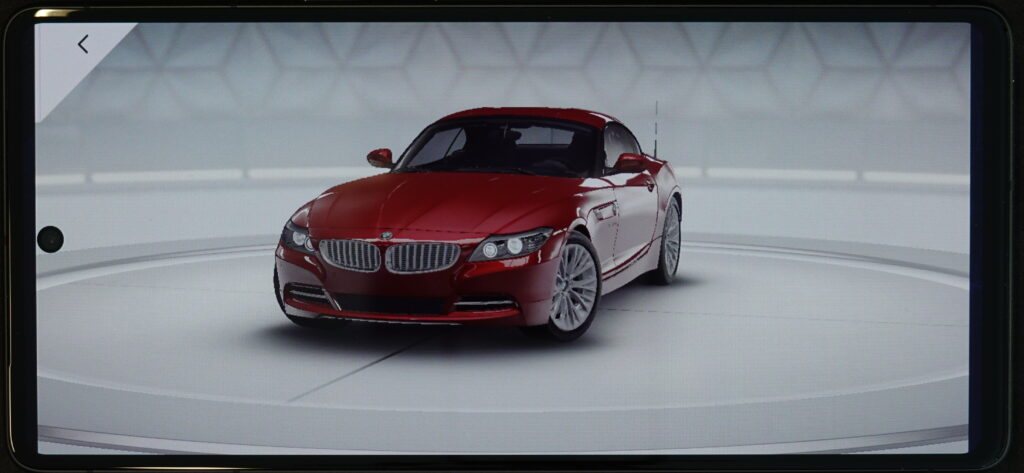
Google Pixel 7
(Photo for illustrative purposes only)


Google Pixel 7 – Crop 2



Start a new Thread