
We subjected the Oppo Find X5 Lite to our rigorous SBMARK Display test suite to measure its performance, and here’s how it did it.
Overview
Main display specifications:
- 6.43 inches AMOLED, (~ 86.0% screen-to-body ratio)
- Dimensions: 160.6 x 73.2 x 7.81mm
- Resolution: 2400 x 1080 pixels, (density ~ 409 ppi)
- Aspect Ratio: 20: 9
- Refresh rate: 90Hz (maximum)
Pros
- Precise touch
- Readable in low light conditions with a brightness adaptation according to the time of day
- Good uniformity of color and brightness
Cons
- Very saturated colors in HDR10 videos, showing a green cast, with barely noticeable dark tones
- Lack of brightness, which affects the level of detail when viewing images in indoor and outdoor conditions
- Blue and pink stripes visible when viewed from an angle
The web browsing of the Oppo Find X5 Lite lacked fluidity, which was a distraction when using the screen in its simplest function.
Display brightness levels are programmed to suit the time of day. While the brightness was suitable in low-light conditions during the day, we found it a bit dim during the night. However, the light transitions were correct. The BLF also gave the screen a noticeable orange cast.
In outdoor and indoor conditions, the device lacked sufficient brightness for comfortable reading. Also, pink and blue streaks were visible on the screen when viewing at an angle.
For gamers, the display offered an average experience, with only a few visible frame drops during gameplay and precise touch, which compensates for aliasing and lack of fluidity during gameplay.
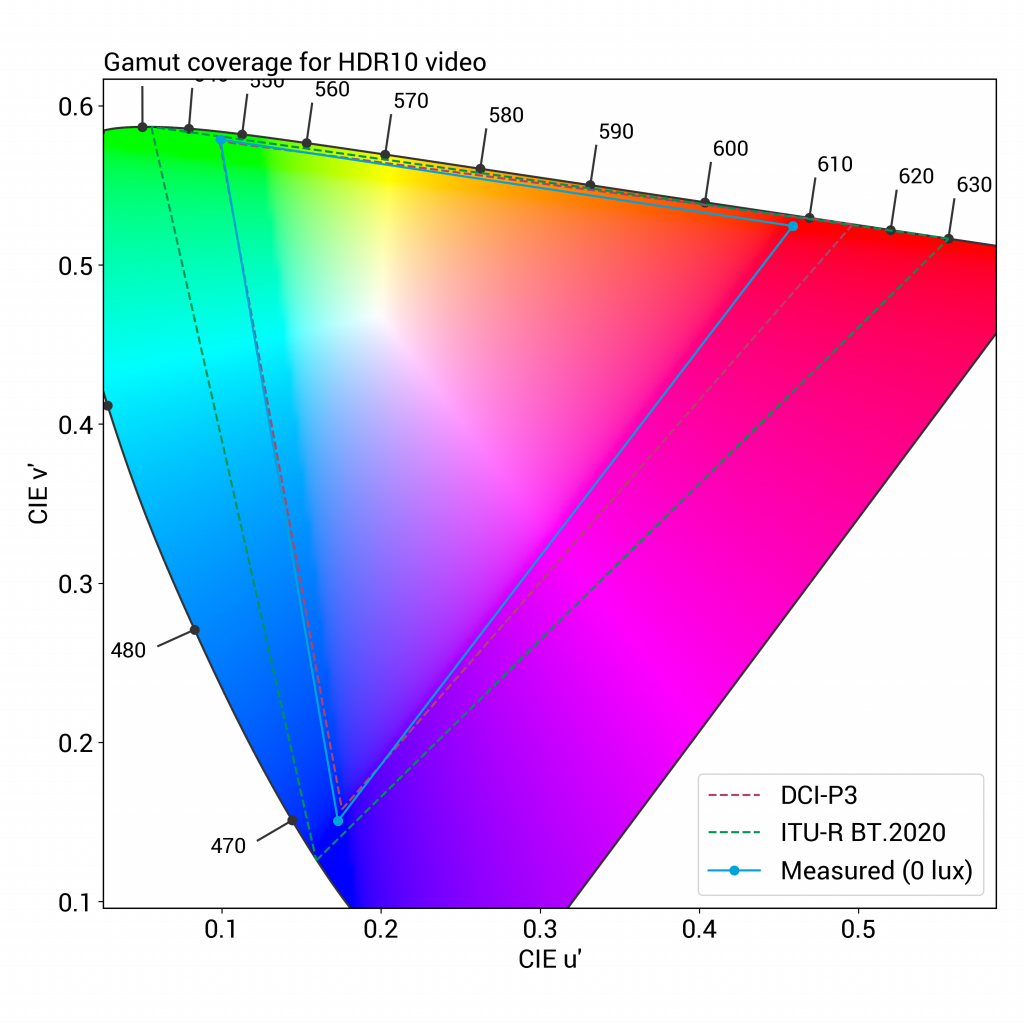
Watching HDR10 videos on the Oppo Find X5 Lite was a bad experience due to the green cast of the screen and the very saturated colors. Additionally, the low brightness and low level of detail in dark tones affected the HDR experience
Test summary
Learn about SBMARK visualization tests: For scoring and analysis in our smartphone and other display reviews, SBMARK engineers perform a series of objective and perceptual tests in controlled laboratory and under real-life conditions. Please note that we evaluate display attributes using only the device’s built-in display hardware and related still image (gallery) and video apps with default settings. (For in-depth information on how we rate smartphones and other displays, see our articles, “How SBMARK Tests Display Quality” and “A Closer Look at SBMARK Display Tests”.
The following section collects the key elements of our exhaustive tests and analyzes performed in SBMARK laboratories. Detailed performance evaluations in the form of reports are available upon request. Do not hesitate to contact us.
How the screen readability score is composed
Readability evaluates the ease and comfort with which users can read the display in different real-life conditions on static content (photos and web). SBMARK uses its Display Bench to recreate ambient light conditions ranging from total darkness to bright sunlight. In addition to laboratory tests, perceptual analysis is also carried out in real-life environments.

Indoor at 1000 lux, from left to right: Oppo Find X5 Lite, Oppo Find X3 Lite, Xiaomi 11T, Google Pixel 6
(Photo for illustrative purposes only)
False color luminance uniformity for 20% gray

This graph shows the uniformity of the display with a 20% gray model. More visibleand the the green color is, the more aImodule is the display.
How the Display Color score is composed
The color attribute evaluates the device’s ability to accurately reproduce colors. The measurements made are for fidelity, white point color and gamma coverage. We perform color assessments for different lighting conditions to see how well the device can handle color in its surroundings. Colors are measured using a spectrophotometer in a controlled lighting environment. The perceptual analysis of the color rendering is compared to the reference model displayed on a calibrated professional monitor.
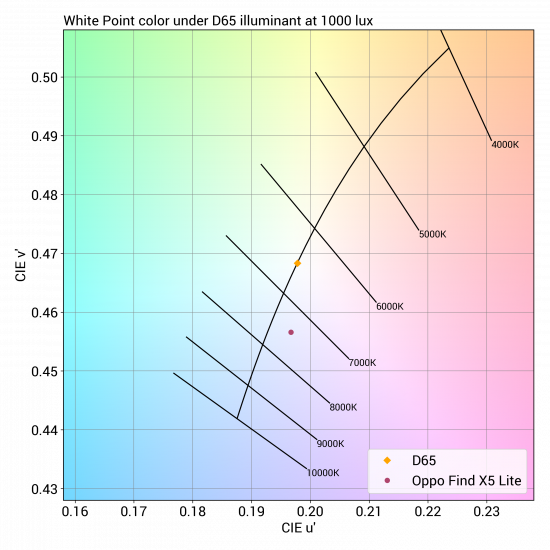
White point color temperature in indoor lighting conditions (1000 lux)
Each arrow represents the color difference between a target color model (arrow base) and its actual measurement (arrowhead). The longer the arrow, the greater the visible color difference. If the arrow stays inside the circle, the color difference will only be visible to trained eyes.

Oppo Find X5 Lite, color fidelity at 1000 lux in the sRGB color space
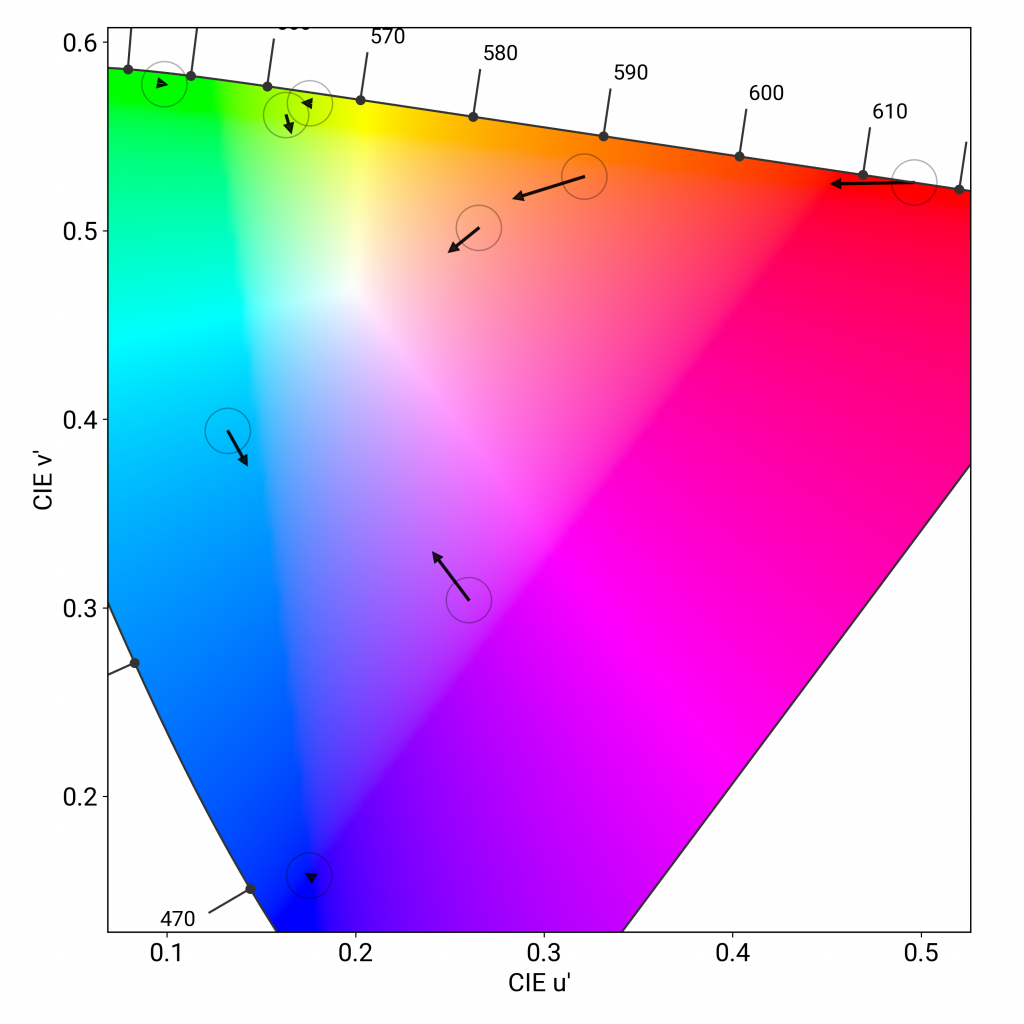
Oppo Find X5 Lite, color fidelity at 1000 lux in the DCI-P3 color space
This graph shows the color change when the screen is tilted. Andeach point represents a measurement with a particular angle. The points inside the inner circle show no color change in the corner; those between the inner and outer circle have shifts that only trained experts will see; but those who fall outside the outer circle are noted.

White dot on the corner, Oppo Find X5 Lite
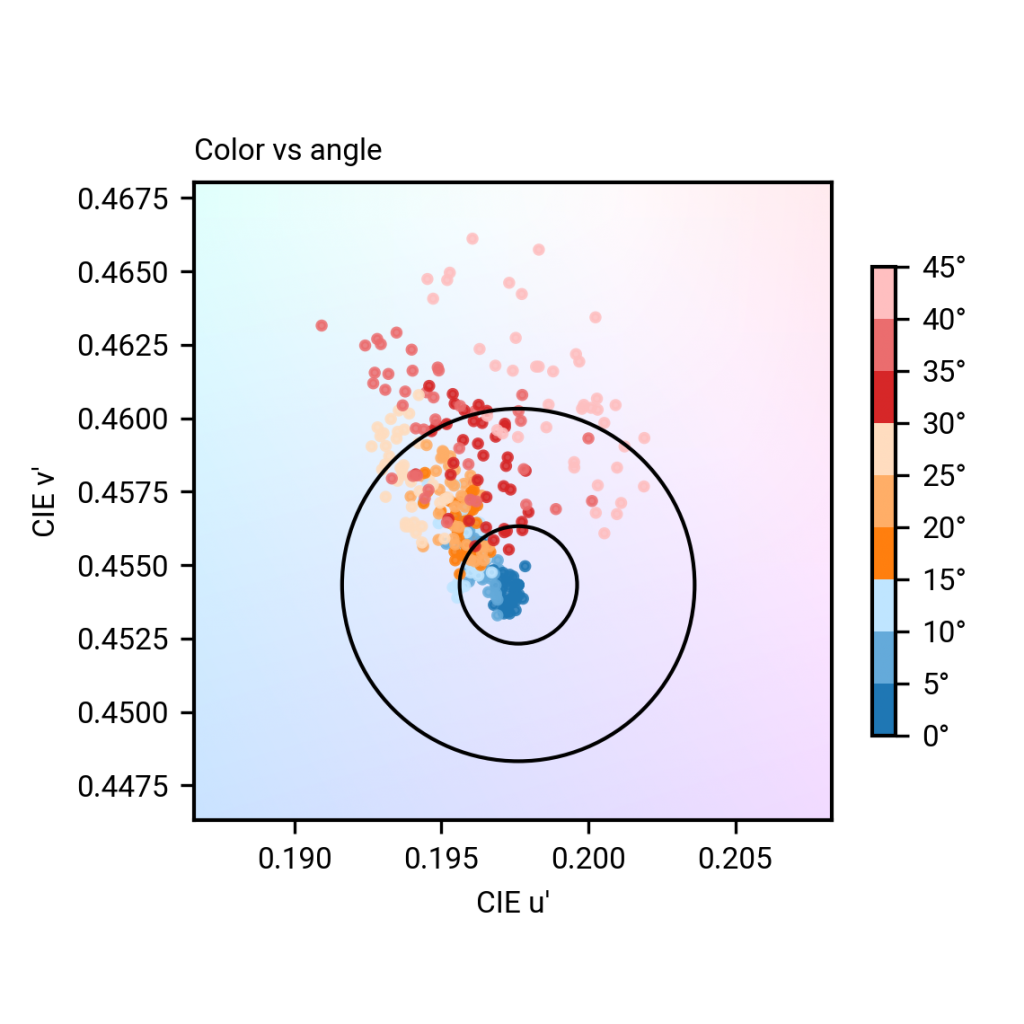
White dot on the corner, Oppo Find X5 Lite
How the Display Video score is composed
Our video attribute evaluates the Standard Dynamic Range (SDR) and High Dynamic Range (HDR10) video handling of each device indoors and in low-light conditions. We measure the tone mapping, color gamut, brightness and contrast of the display. We perform perceptual analysis Cons our professional reference monitor (Sony BVM-HX310) to ensure that the rendering respects the artistic intent.
Primary colors are measured in both HDR10 and SDR. The extracted color gamut shows the extent of the color area that the device can render. To respect the artistic intent, the measured gamut should match the mastering color space of each video.

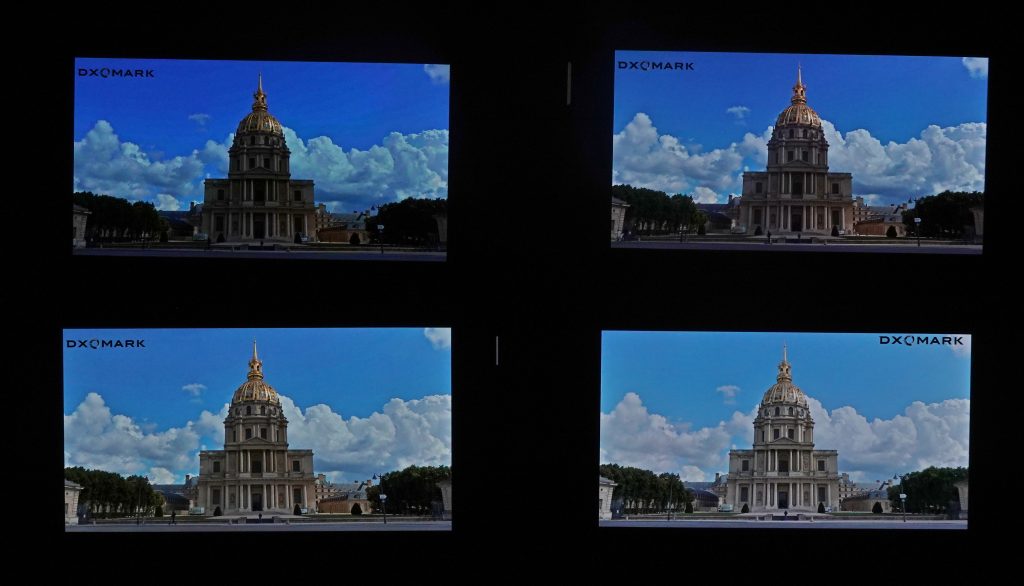
Clockwise from top left: Oppo Find X5 Lite, Oppo Find X3 Lite, Google Pixel 6 and Xiaomi 11T
(Photo for illustrative purposes only)
How the score of Display Motion is composed
The motion attribute evaluates the handling of dynamic content. Frame drops, motion blur, and playback artifacts are investigated using games and videos.
Drops of video frames


This long exposure photo presents the number of frame irregularities in a 30 second video. A good performance shows a regular pattern (a flat gray image or a drop-down pattern).
How the Display Touch score is composed
To evaluate touch, SBMARK uses a touch robot and a high-speed camera to reproduce and record a series of scenarios for the evaluation of fluidity, accuracy and response time.
This response time test accurately evaluates the time elapsed between the robot touching the screen and the displayed action. This test is applied to activities that require high responsiveness, such as play.
How the Display Artifacts score is composed
Evaluating artifacts means checking performance, image rendering, and motion defects that can affect the end-user experience. SBMARK accurately measures device reflectance and the presence of flicker, as well as evaluating residual aliasing when playing video games, among others.
The previous measurements show the reflection of the device within the visible spectrum range (400nm to 700nm). It includes both diffuse and specular reflection


Start a new Thread